
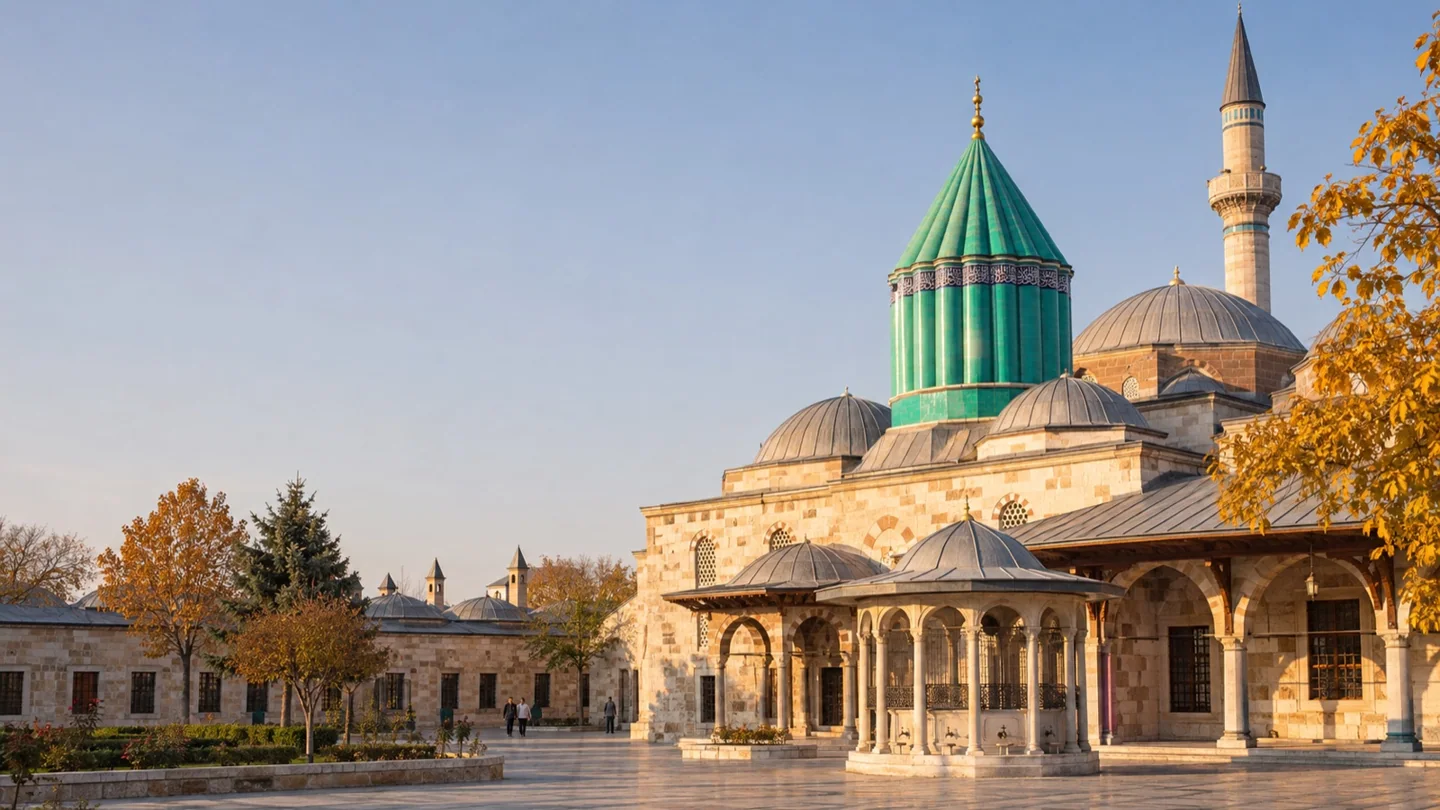
Tours featured in this guide
 12 days
12-Day Turkey Highlights Tour: Istanbul, Konya, Cappadocia, Pamukkale, Ephesus & Ankara
Shared group tour From €1,935 per person 3 days
3-Day Konya and Pamukkale Tour from Istanbul
Shared group tour From €795 per person 8 days
8-Day Istanbul, Konya, Cappadocia & Pamukkale Tour
Shared group tour From €1,490 per person 13 days
13-Day Discover Turkey: Istanbul, Konya, Cappadocia, Antalya, Pamukkale, Ephesus, Pergamon, Gallipoli & Troy
Shared group tour From €2,680 per person 11 days
11-Day Turkish Odyssey Tour: Istanbul, Konya, Cappadocia, Pamukkale, Ephesus, Pergamon, Gallipoli & Troy
Shared group tour From €2,280 per person 10 days
10-Day Turkey Highlights Tour from Istanbul
Shared group tour From €1,630 per personOn this page
Best sightseeing monthsApr–Jun · Sep–Oct
Suggested stay1–2 full days
Plan aroundDecember ceremonies
When should you visit Konya?
For comfortable sightseeing, choose April–June or September–October; May and September are especially good starting points. Come in December for Şeb-i Arus if the ceremonies are your priority, and plan for cold days and freezing nights. Weather and cultural calendars call for different travel dates.
Best for a first visit
May or September balance walkable days with time outdoors around Alaeddin Hill, the old bazaar and the Mevlana quarter.
Best for Mevlevi culture
December brings the annual Şeb-i Arus commemorations. Secure the specific ceremony session you want before fixing the rest of your trip.
Best for a quieter pace
Consider winter weekdays outside the ceremony period and holidays. Compare actual hotel rates; a quieter month does not guarantee the lowest price.
Konya weather & what to expect
Average daily highs and lows, plus the average number of days with precipitation. Highlighted months are our sightseeing picks.
| Month | High / low | Wet days | Plan your visit |
|---|---|---|---|
| January | 4.8° / -4.1°C | 9.6 | Build a museum-led visit; frost or snow can make early walks slippery. |
| February | 7.0° / -3.3°C | 8.1 | Cold mornings remain the norm. Keep a flexible arrival day if travelling overland. |
| March | 11.8° / -0.2°C | 8.8 | A changeable transition month: useful for indoor sightseeing, with a warm outer layer. |
| AprilGood pick | 17.6° / 4.4°C | 8.8 | Comfortable afternoons for the historic centre; keep a jacket for evenings and showers. |
| MayGood pick | 22.3° / 8.6°C | 10.3 | A strong all-round choice. Allow for spring rain rather than expecting uninterrupted sunshine. |
| JuneGood pick | 26.7° / 12.7°C | 6.6 | Longer days suit a two-day itinerary. Move exposed walks to the morning as afternoons warm up. |
| July | 30.2° / 16.0°C | 2.2 | Hot, dry afternoons make shaded breaks and an early sightseeing start worthwhile. |
| August | 30.3° / 15.8°C | 1.5 | Similar heat to July. Carry water and leave open squares for earlier or later in the day. |
| SeptemberGood pick | 26.1° / 11.1°C | 3.1 | Warm days and cooler evenings suit walking, photography and a Cappadocia combination. |
| OctoberGood pick | 19.9° / 5.9°C | 5.9 | A good autumn option, with noticeably cooler evenings and a greater chance of rain. |
| November | 13.2° / 0.9°C | 6.4 | Shorter, colder days favour museums, the bazaar and a relaxed food-focused visit. |
| December | 6.7° / -2.2°C | 10.0 | Choose for Şeb-i Arus, not mild weather. Check tickets, accommodation and winter transport. |
Source: Turkish State Meteorological Service (MGM), Konya, 1927–2025. Long-term averages, rounded for readability; these are not a forecast. Wet days may include snow. Conditions vary across the destination and on individual days. Seasonal recommendations are editorial guidance, not measured crowd or price forecasts.
Konya through the seasons
Spring · March–May
March can still feel wintry. April and May are better for walking between sights, with a light waterproof layer for changeable weather.
Summer · June–August
June offers a useful bridge into summer. In July and August, pair an early outdoor walk with museums and a long lunch break.
Autumn · September–November
September and October are comfortable choices for a first trip. November cools quickly, so plan more time indoors and earlier finishes.
Winter · December–February
Cold weather, frost and occasional snow shape the visit. The December ceremony period has a very different booking pattern from other winter weeks.
Planning Şeb-i Arus and a Mevlana visit
A museum visit and a Sema ceremony are separate experiences. Give each its own place in your itinerary.
Şeb-i Arus: check the year and session
The official 2026 programme runs from 7–17 December at the Mevlana Cultural Centre. The ministry directs ceremony ticket purchases to Biletinial. Confirm the date, time and venue on your booking; do not assume every event is free. Future editions need their own programme check.
Sema outside December
Look up the current local programme before arranging an overnight around a performance. Regular ceremonies can change venue, time or admission arrangements; an old Saturday listing is not a booking confirmation.
Mevlana Museum and other sights
The ministry currently lists Mevlana Museum admission as free. Check opening hours close to travel and dress respectfully. Its current fee list marks İnce Minare Museum as closed, so verify reopening before including an interior visit.
Seasonal highlights & events
December · Şeb-i Arus
The annual commemoration centres on 17 December. Use the official programme for the edition you intend to attend.
September · Mystic Music Festival
The festival is associated with September celebrations of Rumi’s birth. Check the organiser’s dates and concert venues for the year you plan to visit.
How long to stay in Konya
One full day · the historic centre
Begin with Mevlana Museum, then explore the surrounding streets and Bedesten area. Leave time for lunch and Alaeddin Hill. Choose an additional museum only after checking its current opening day and hours.
Two days · space for culture
Keep the first day for the centre. Use the second for a slower museum visit or a separately arranged excursion to Sille or Çatalhöyük. Add a Sema ceremony only when a suitable programme is confirmed.
Combine Konya with Cappadocia
An overnight in Konya gives more breathing room than a brief road stop. For a return day trip from Cappadocia, weigh the long road journey against your sightseeing time; confirm pickup, driving time and included stops.
These are suggested independent plans. Check each bookable tour for its exact route, timing and inclusions.
Getting there & practical planning
Arriving by train
TCDD operates an Istanbul–Konya high-speed train route. Check the current service, your Istanbul departure station and your Konya arrival station, then allow time for transfers.
Book around the occasion
For Şeb-i Arus, coordinate ceremony seats and rooms together. For other dates, compare the actual package inclusions rather than relying on a fixed seasonal price ranking.
Allow time for local food
Leave a proper lunch break for etliekmek or fırın kebabı. A relaxed meal fits naturally between the Mevlana area and your afternoon sightseeing.
What to bring to Konya
Spring & autumn
Comfortable walking shoes, layers, a light rain jacket and a warm layer for evenings.
Summer
A sunhat, sunglasses, sunscreen and water. Lightweight clothing that covers shoulders and knees works well for religious visits.
Winter & ceremonies
An insulated coat, gloves, scarf and shoes with good grip. Bring your own suitable covering for religious spaces and follow local guidance.
Explore Konya tours
Compare routes and current starting prices. Open each tour for availability, inclusions and booking conditions.
Konya travel questions
What is the best month to visit Konya?
May and September are useful first choices for a sightseeing trip. April, June and October also work well, with different trade-offs for rain, afternoon warmth and cool evenings.
Is December a good time to visit Konya?
Yes, if Şeb-i Arus is your main reason to travel. It is a cold-weather cultural trip: confirm a ceremony session and accommodation, pack winter clothing and allow flexibility for transport.
When is Şeb-i Arus in 2026?
The ministry lists 7–17 December 2026 at the Mevlana Cultural Centre. Check the official programme and the selected ticket session for the exact time and admission details.
Are Whirling Dervish ceremonies always free?
Do not assume that. The 2026 Şeb-i Arus Sema ceremonies are ticketed, while the official announcement describes other associated cultural activities as free. Check the current programme for events outside December.
Is Mevlana Museum free to enter?
The current ministry fee list shows free admission to Mevlana Museum. Opening hours and access arrangements should still be checked shortly before visiting.
How many days do you need in Konya?
Allow one full day for the central highlights or two days for a more relaxed visit. An additional excursion or a ceremony can justify another night.
Can you visit Konya and Cappadocia on the same trip?
Yes. An overnight stop in Konya often makes the journey easier to pace. A same-day return from Cappadocia involves substantial driving, so confirm the route and available sightseeing time.
What should I wear in Konya?
Dress for the season and bring modest clothing for religious spaces. Winter needs proper warm layers; spring and autumn evenings can also feel cold.
Find a season that fits your route
Best time to visit Cappadocia →Best time to visit Istanbul →
Sources & planning notes
Reviewed 9 November 2026. Check the official pages below for current schedules, access and event announcements. Tour prices and inclusions are shown on the linked tour pages.