
Madaba
 Jordan
Plan your visit at a glance
- Time to allow
- Three to four hours for the main city sights; a full day with Mount Nebo.
- Main highlight
- The sixth-century mosaic map inside St. George’s Greek Orthodox Church.
- Admission
- Site-specific arrangements; confirm current fees and pass eligibility separately.
- Access
- Church sightseeing may be limited by worship; confirm opening arrangements before visiting.
- Getting there
- Road access from Amman or Queen Alia International Airport; arrange onward transport in advance.
- Walking
- A compact historic center with uneven surfaces and potential steps at individual sites.
Why visit Madaba?
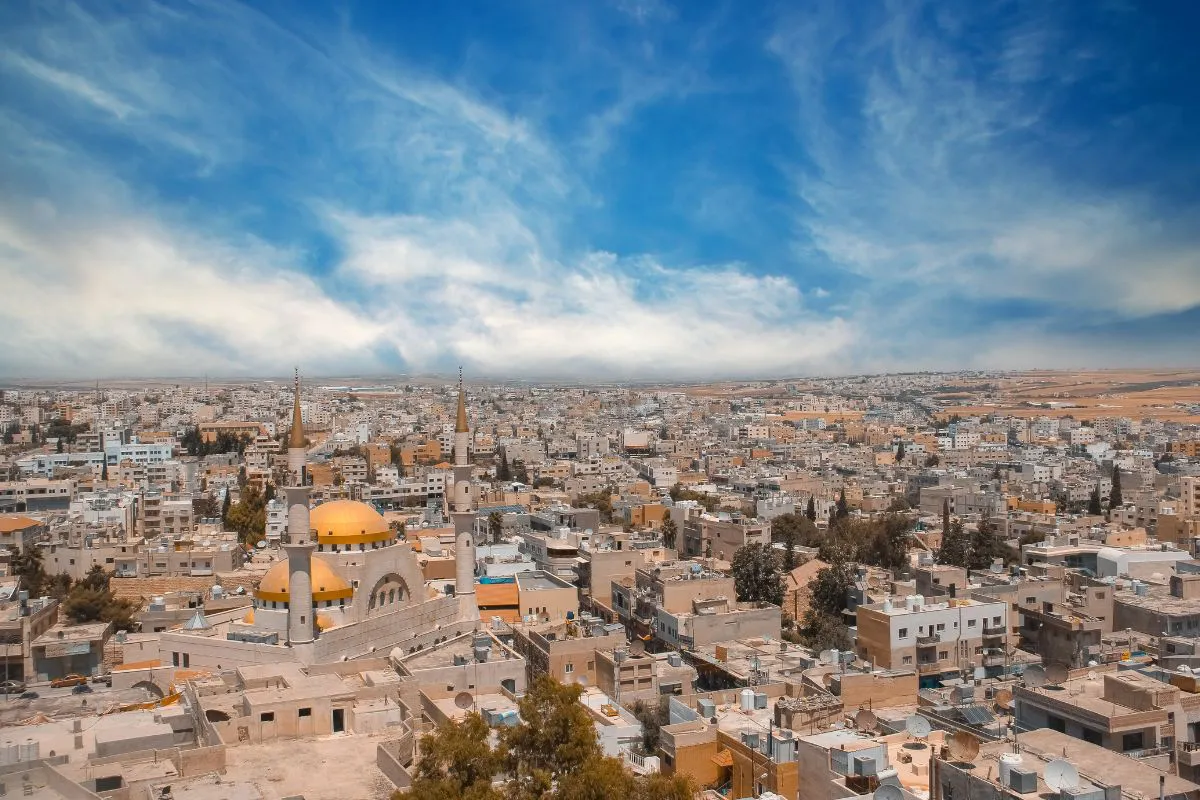
Madaba offers something different from Jordan’s monumental desert landscapes: history that rewards close looking. Its main attraction is a mosaic map, but the real pleasure is connecting that remarkable floor with other surviving mosaics, churches and the streets of a living city. It suits travelers who enjoy archaeological detail, religious history and a manageable sightseeing day.
A quick stop can cover St. George’s Church, but allow three to four hours to appreciate more than the headline attraction. A full day works well if you add Mount Nebo or spend longer over individual sites. If ancient art is only a passing interest, prioritize the map and one additional stop rather than visiting every mosaic collection.
Start with the Madaba Map at St. George’s Church
The Greek Orthodox Church of St. George preserves a surviving portion of a sixth-century mosaic map of the Holy Land. This is a floor mosaic, not a framed object: understanding its layout matters more than simply taking a photograph. Begin with any available explanatory plan, then compare the labeled places with the original below.
Look first for Jerusalem, represented as a walled city with streets and buildings. The Jordan River and Dead Sea help orient the surrounding geography. Greek inscriptions identify places, while pictorial details turn the landscape into something more expressive than a modern road map. You do not need to read Greek to appreciate how the makers combined geographic information with religious significance.
Only part of the original composition survives. The gaps are important: what you see is a fragment of a much larger work, not a complete image of the ancient region. Rather than trying to decode every settlement, choose a few recognizable features and notice how towns, water and routes are represented differently.
Allow roughly 30–45 minutes for the church and map as a planning estimate. It remains a place of worship, so sightseeing should give way to services and parish activity. If access is temporarily restricted, explore the surrounding streets and return only when church staff advise that visitors may enter.
Go beyond the famous map
Madaba Archaeological Park
The archaeological park adds essential context by placing mosaics alongside the remains of the buildings they decorated. Here, shift your attention from geography to design: look for repeating borders, plant forms, figures and the relationship between a decorated floor and its surrounding room. These details show how mosaic work served architectural spaces rather than existing as isolated artwork.
Madaba’s archaeological remains occupy more than one location. Confirm which areas your admission covers and which are accessible that day rather than assuming every site described as part of the park shares one entrance. Allow about 45–75 minutes for a focused visit, with longer if you enjoy reading interpretation.
Church of the Apostles and St. John the Baptist
The Church of the Apostles is another worthwhile choice for mosaic enthusiasts, particularly for its figurative and decorative floor imagery. Adding it helps distinguish Madaba’s broader artistic heritage from the map alone. Check its opening arrangements before making it the final stop of the day.
St. John the Baptist Church provides a different perspective on the city’s Christian heritage. If you are interested in its tower or other visitor areas, ask which sections are currently open and what climbing is involved. Do not make a tower ascent essential to your itinerary, especially with limited mobility or young children.
The history that makes the mosaics meaningful
Madaba, known in antiquity as Medeba, has a history extending well before the Byzantine period. For visitors, however, its late-antique mosaics provide the clearest visual connection with the past. Christianity shaped the churches, inscriptions and religious geography represented in these works, while the craftsmanship also reflects wider artistic traditions of the eastern Mediterranean.
The map is particularly revealing because it presents places through the concerns of its makers. Religious landmarks receive attention alongside cities and natural features. Treat it as evidence of how people understood a sacred landscape, not as a modern survey with consistent scale and orientation.
Mosaic production and use in the region continued into the early Islamic era. Comparing sites helps avoid the impression that Madaba belongs to one historical moment. The modern city’s Christian communities also matter: the churches are not simply archaeological exhibits, and respectful visiting recognizes their continuing religious role.
Plan a route that leaves room to look
Use St. George’s as the anchor for a walk through the historic center, then continue to the archaeological park and choose one further church or collection. Most visitors gain more from a few unhurried stops than from repeatedly entering sites without time to understand their mosaics. The following times are planning suggestions, not official visit slots.
| Time available | Suggested plan | Best fit |
|---|---|---|
| About 90 minutes | St. George’s and a short old-town walk | A brief stop during a transfer |
| Three to four hours | St. George’s, archaeological park, one additional site and a break | A balanced first visit |
| A full day | Madaba’s main sights plus Mount Nebo, with transport arranged | Art, religious history and landscape |
Check church access first, then adjust the order around worship and site opening arrangements. Leave time for lunch or a café rather than scheduling each stop back-to-back. A mosaic workshop or shop can add a contemporary dimension; ask whether demonstrations are available and whether an item is handmade locally before buying.
Admission, opening arrangements and respectful access
Madaba is a city, not a single ticketed attraction. Its churches and archaeological sites have separate management and access arrangements. Do not assume that one ticket, a city tour or a sightseeing pass covers every stop. Check current charges and any pass eligibility for each intended site before paying.
For St. George’s, confirm sightseeing hours and service-related restrictions with the church. For archaeological sites, consult Jordan’s Department of Antiquities or Ministry of Tourism and Antiquities visitor information and confirm details locally. Ask specifically about holiday schedules, closed sections and last admission. Published tourism descriptions should not be treated as guarantees of same-day access.
Dress modestly for churches, with shoulders and knees covered as a respectful default. Keep voices low, avoid entering worship areas without permission and follow staff directions around historic floors. Ask before photographing services or people; check posted photography rules and obtain permission before using flash or a tripod.
Getting there, walking and practical needs
Madaba lies southwest of Amman and can be visited by hired car, taxi, organized itinerary or public transport. Road travel time depends on your starting point and traffic, so use a live route estimate rather than planning around a fixed transfer duration. From Queen Alia International Airport, a prearranged transfer can make Madaba a convenient first or last stop.
If using public transport, confirm the current departure point, operating pattern and return options locally; do not assume a fixed timetable or a direct airport connection. With a driver, agree on waiting time, additional stops and the return fare. Drivers continuing toward Petra should account for sightseeing time as well as the journey itself.
The historic center is best explored on foot, but compact does not mean uniformly accessible. Expect uneven surfaces, curbs, traffic at crossings and potential steps at individual properties. Travelers using wheelchairs should ask each site about step-free entrances, internal routes and accessible restrooms. A nearby vehicle drop-off does not establish that the whole attraction is accessible.
Wear supportive shoes and carry water and sun protection for the streets between sites. For children, turn mosaic viewing into a search for fish, boats, buildings or geometric patterns. Alternate quiet indoor visits with breaks, and consider a carrier if steps make a stroller inconvenient.
Visit independently or with a guide?
Independent visiting works well for travelers who want an unhurried morning and can arrange their own transport. A guide adds most value by interpreting the map and linking the sites’ religious and artistic history. Guiding is separate from admission; an English-speaking driver is not automatically a specialist guide.
The 5-Day Jordan Adventure Tour lists Madaba, Mount Nebo and Shobak on the transfer toward Petra, followed later by Wadi Rum. It suits travelers incorporating Madaba into a broader road itinerary. Private air-conditioned transfers are listed, but the specified local guiding is at Petra rather than Madaba.
The 5-Day Magical Jordan Tour explicitly lists St. George’s and the archaeological park before Mount Nebo and a Dead Sea visit. It fits travelers wanting those Madaba stops within a longer package, though that is a busy travel day. Confirm the overnight sequence, current paid-site admission coverage and substitutions before booking either option.
What to combine with Madaba
Mount Nebo is the most natural nearby addition by road, pairing Christian heritage and mosaics with views toward the Jordan Valley when visibility allows. The Dead Sea is a separate onward outing requiring transport and its own access arrangements. Amman also deserves separate sightseeing time. Avoid treating these additions as short walks from Madaba or squeezing all three into an already crowded half-day.
Plan your visit
Tours to consider for Madaba
Compare the route, time available and what is included. A guided tour does not override venue closures, entry rules or security checks.

Starting prices vary by date and party size. Check admissions, optional extras and the final itinerary before booking.
Frequently asked questions
Is the Madaba Map inside the archaeological park?
No. The map is inside St. George’s Greek Orthodox Church. The archaeological park is a separate visit with other mosaics and architectural remains, so check access and admission for both.
Can I see Madaba during an airport layover?
Possibly, but only with enough time for immigration, both road transfers, sightseeing and your airline’s required return buffer. Confirm church access and arrange transport before committing; a short layover is not a reliable opportunity.
Does the Jordan Pass cover every attraction in Madaba?
Do not assume universal coverage. Check the current Jordan Pass site list for archaeological attractions and confirm church admission separately. A guide or package booking also does not automatically establish what is included.
Can tourists visit St. George’s during a church service?
Do not count on sightseeing access during worship. Ask the church about service times and visitor arrangements, follow staff instructions and be prepared to return later.
Is a guide necessary to understand the mosaic map?
No, but an explanatory diagram or guide helps you recognize the geography and religious landmarks. A guide is most useful if you want detailed interpretation rather than simply seeing the surviving mosaic.
Should I stay overnight in Madaba or visit from Amman?
A day trip is sufficient for the principal sights. An overnight stay makes sense if you prefer a slower visit, want to add Mount Nebo without rushing or have an airport transfer that fits the location. Check actual transfer times before choosing accommodation.