
 6 to 7 Day Turkey Tours
7-Day Highlights of Turkey Tour: Istanbul, Pamukkale, Ephesus and Cappadocia
Visit Istanbul, Pamukkale, Ephesus, and Cappadocia on this 7-day, 6-night group tour that starts and ends in Istanbul. The route…
Ephesus is one of the best-preserved ancient cities in the Mediterranean, a sprawling Greco-Roman metropolis whose marble streets, grand library facade, and vast theatre still evoke a place that was once among the largest cities in the Roman world. Walking its colonnaded avenues past temples, terraced mansions, and public monuments gives an unusually vivid sense of everyday urban life two thousand years ago. As a UNESCO World Heritage Site and home to the ruins linked to the Temple of Artemis, one of the Seven Wonders of the Ancient World, it draws visitors from around the globe.
The experiences worth building your trip around.
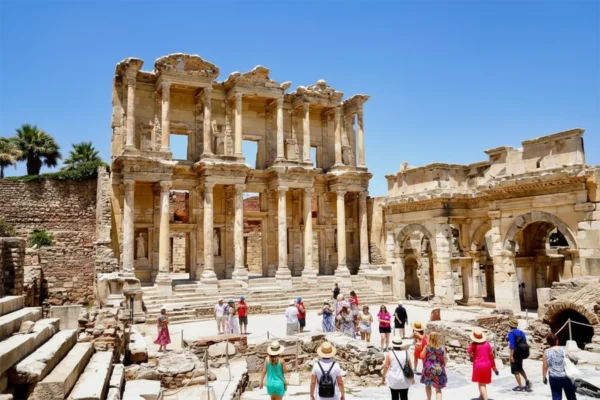
The iconic two-story marble facade is the emblem of Ephesus and one of the most photographed monuments in Turkey. Built in the 2nd century AD as a library and monumental tomb for the Roman senator Tiberius Julius Celsus, its restored columns and statue niches representing virtues like Wisdom and Knowledge glow best in soft morning or late-afternoon light.
Carved into the slope of Mount Panayır (ancient Pion), this immense theatre once seated roughly 25,000 spectators and hosted drama, concerts, and civic assemblies. Climb toward the upper rows for a sweeping view straight down the ancient Harbour Street toward the silted-up former port.
These well-preserved hillside homes of wealthy Ephesians reveal intricate floor mosaics, painted frescoes, and marble-clad rooms sheltered under a modern protective roof. A separate ticket is needed, but the walkways threading through the excavation offer a rare, intimate look at Roman domestic life.
Once one of the Seven Wonders of the Ancient World, this colossal temple is now marked by a single reassembled column standing in a marshy field on the edge of Selçuk. Little survives, but pairing the quiet site with the Artemis statues in the town museum makes the scale of what stood here easier to imagine.
This ornately carved facade on Curetes Street is one of the loveliest smaller monuments in Ephesus. Look for the arch with a figure often identified as the city-goddess Tyche and, deeper in, the relief head sometimes read as Medusa amid delicate floral scrollwork.
Set on Ayasuluk Hill in Selçuk, this ruined 6th-century Byzantine basilica was raised by Emperor Justinian over the traditional burial site of St. John the Apostle. The elevated ruins, with their reconstructed columns and marble tomb, give fine views over the town, the plain, and the lone column of the Artemision below.
In the centre of Selçuk, this superb museum gathers many of the finest finds from the site, including household objects, imperial statuary, and the two celebrated statues of Ephesian Artemis draped with rows of ornamental protuberances symbolizing fertility. It gives essential context to the ruins you walk through at the site.
A modest stone chapel on Mount Koressos (Bülbüldağı, or Nightingale Mountain) is venerated as a place where the Virgin Mary may have spent her final years. A tranquil pilgrimage site fed by a spring said to have healing powers, it has been visited by several popes and is honoured by both Christians and Muslims.
A relaxed, realistic plan you can adapt to your pace.
Devote the morning to the main archaeological site, entering early to beat both the heat and the tour-bus crowds. Enter at the upper (Magnesia) gate and walk downhill along Curetes Street past the Temple of Hadrian to the Library of Celsus and the Great Theatre, adding the Terrace Houses for a closer look at daily life. In the afternoon, rest through the midday sun, then wander the cafes and shops of nearby Selçuk.
Focus on the sites clustered in and around Selçuk, beginning at the Ephesus Archaeological Museum to give context to yesterday's ruins. Continue to the Basilica of St. John on Ayasuluk Hill, the solitary column of the Temple of Artemis just below it, and the hilltop House of the Virgin Mary a short drive up Bülbüldağı. Finish with a stroll through Selçuk's old streets and an unhurried local dinner.
Branch out into the surrounding region for a change of pace. Good options include the hillside village of Şirince, known for its stone houses, fruit wines, and olive oil; the beaches and seafront promenade of nearby Kuşadası; or a longer day trip to the white travertine terraces of Pamukkale and the ruins of Hierapolis. Pick according to your mood, whether that means unwinding by the sea or exploring a very different landscape.
The best times to visit Ephesus are spring, from April to early June, and autumn, from September to October, when temperatures are pleasant and the largely shadeless site is comfortable to explore on foot. High summer, especially July and August, brings intense heat and the heaviest crowds, so early-morning starts become essential. Winter is quiet and cool with occasional rain, but it can be a rewarding time for those who prefer far fewer visitors.
See the Month-by-Month Guide →Most visitors reach Ephesus via İzmir Adnan Menderes Airport, roughly an hour to the north, from which a train, intercity bus, private transfer, or rental car brings you to Selçuk, the small town at the gateway to the ruins. Selçuk is the most convenient base and is easily walkable, with the main Ephesus site about a 20-30 minute walk or a short taxi or minibus (dolmuş) ride away; the coastal town of Kuşadası is another popular base, especially for cruise passengers. The archaeological site has two entrances, upper and lower, and the classic approach is to enter at the upper gate and walk downhill so most of the route is gently descending. Wear sturdy shoes, as the site is large and paved in worn ancient marble and cobbles, and note that taxis and minibuses conveniently link the site, Selçuk, Şirince, and Kuşadası for exploring the wider area.
Best areas to base yourself in Ephesus.
The closest town to the ruins, within easy reach of Ephesus, the museum, and St. John's Basilica, with a relaxed, authentic small-town atmosphere and family-run guesthouses.
A picturesque hillside village a short drive inland, prized for its old Greek-era houses, boutique guesthouses, and homemade fruit wines, ideal for a quieter, scenic stay.
A lively coastal resort roughly 30 minutes away offering beaches, a busy marina, and a broad range of hotels and restaurants, well suited to travelers wanting seaside amenities.
Expertly guided tours and packages that cover the highlights above.
6 to 7 Day Turkey ToursVisit Istanbul, Pamukkale, Ephesus, and Cappadocia on this 7-day, 6-night group tour that starts and ends in Istanbul. The route…
 4 to 5 Day Turkey Tours
Four days, three domestic flights and some of Turkey's best-known ancient sites. You'll fly from Istanbul to Denizli for the…
 Turkey Tour Packages
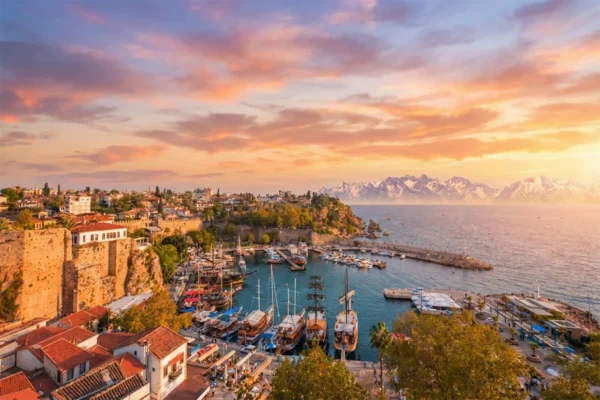
Experience the best of Turkey on this 7-Day Antalya, Pamukkale, Ephesus and Cappadocia Guided Tour, a comprehensive multi-day journey through…
 From Izmir Port
This private day trip packs thousands of years of Aegean history into a single trip from Izmir. You'll start at…
 Turkey Tour Packages
The 9-Day Turkey Tour: Istanbul, Pamukkale, Ephesus, Cappadocia and Ankara guides you through Turkey's most celebrated cities, ancient sites, and…
 4 to 5 Day Turkey Tours
Visit Istanbul, Ephesus, Gallipoli, and Troy on this 5-day tour through some of Turkey's most important historical sites. The journey…
Arrive right at opening for cooler air and thinner crowds, since there is very little shade on the site and the midday sun can be punishing. Carry water, a hat, and sunscreen.
Ephesus is large, and its ancient marble and stone paths are often uneven and can be slippery when polished. Sturdy, closed walking shoes make the visit far more comfortable than sandals.
The Terrace Houses need a separate ticket on top of the main entrance, but their layered mosaics and frescoes are among the site's highlights and reward the extra time and cost for many visitors.
At the House of the Virgin Mary or any nearby mosque, cover your shoulders and knees; packing a light scarf or layer is a simple way to stay ready and show respect.
The main archaeological site typically takes two to three hours at a relaxed pace, or longer if you add the Terrace Houses. To combine Ephesus with the museum, St. John's Basilica, and other nearby sites, plan for a full day or two.
Ephesus lies on Turkey's Aegean coast beside the town of Selçuk, about an hour south of İzmir. Most travelers fly into İzmir Airport and continue by train, bus, private transfer, or car.
Yes. It is one of the best-preserved ancient cities in the Mediterranean and a UNESCO World Heritage Site, with landmarks like the Library of Celsus and the Great Theatre that bring the Roman world vividly to life.
Many visitors enter at the upper gate and walk down through the site to the lower gate, keeping the route mostly gently descending. Either works, but the downhill direction is easier on the legs.
The site has uneven ancient paving and some slopes that can be challenging, though the main marble streets are relatively level. Entering at the upper gate to walk downhill helps, and it is wise to go slowly and allow extra time.
Yes, it is commonly done as a day trip from İzmir, Kuşadası, and by cruise passengers docking nearby. Staying overnight in Selçuk, however, lets you start early and explore the surrounding sites at a more relaxed pace.
Let All Istanbul Tours build your Ephesus trip — transfers, hand-picked hotels, and licensed local guides, all in one package.