
 2 to 3 Day Turkey Tours
2-Day Ephesus & Pamukkale Tour from Istanbul by Plane
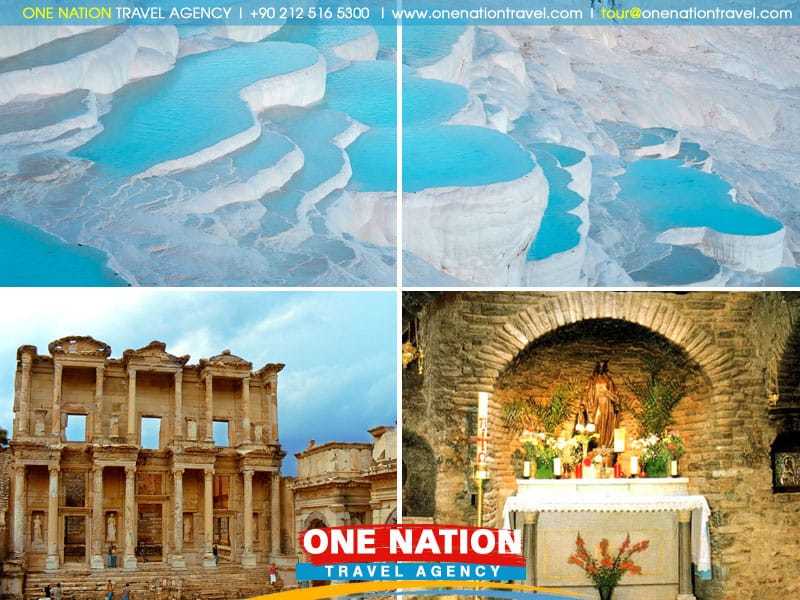
Travel from Istanbul by plane on this efficient 2-Day Ephesus and Pamukkale Tour, combining two of Turkey’s most important ancient…
Ephesus and Pamukkale are the two star attractions of Turkey's Aegean region and a classic pairing on almost every western Turkey itinerary. Ephesus is a vast ancient port city of marble streets crowned by the Library of Celsus; Pamukkale is a hillside of dazzling white mineral terraces with the Roman spa city of Hierapolis on top. They lie only about 190 km apart, so the real question is often not which one to pick, but how to fit in both.
Ephesus
Best-preserved ancient Greco-Roman city
Pamukkale
White travertine terraces & Hierapolis
Choose Ephesus if you love archaeology and want to walk the marble streets of a great classical city. It is also the easy pick from Kuşadası, Selçuk or Izmir, and the only realistic one on a cruise stop. Choose Pamukkale for a one-of-a-kind natural landscape, a thermal swim among Roman columns and a large ancient city of its own. With two days you can see both, as they are about three hours apart by road.
Distance apart
≈190 km
About 3 hours by road
Entrance tickets (2026)
€40 vs €30
Ephesus vs Pamukkale-Hierapolis
Time on site
3–4 h vs 4–6 h
Allow longer at Pamukkale for a swim and sunset
UNESCO World Heritage
2015 vs 1988
Year each site was inscribed
| Ephesus | Pamukkale | |
|---|---|---|
| Main draw | Library of Celsus, Great Theatre, Curetes Street, Terrace Houses | White travertine terraces, Hierapolis, Cleopatra's Antique Pool |
| Type of site | Ancient city & archaeology | Natural wonder + ancient spa city |
| UNESCO status | World Heritage Site since 2015 | World Heritage Site since 1988 (natural & cultural) |
| Time needed | 3–4 hours; a full day with the Selçuk sights | Half a day; a full day with the pool, necropolis and sunset |
| Entrance fee (2026) | About €40, plus about €15 for the Terrace Houses | About €30; the Antique Pool swim is extra |
| Best for | History, architecture & early-Christian sites | Photography, nature, thermal bathing & families |
| Walking | About 2–3 km on uneven marble, mostly downhill from the upper gate | Barefoot on the terraces; slopes and long distances in Hierapolis |
| Shade | Very little. Only the Terrace Houses are covered | Very little, and the white terraces reflect strong glare |
| Swimming | None on site (beaches at Kuşadası, about 20 km away) | Paddle in designated terrace pools; swim in the Antique Pool |
| Busiest time | Late morning, when cruise groups arrive from Kuşadası | Midday, when day-trip coaches arrive |
| Nearest base | Selçuk (3 km), Kuşadası (20 km) or Izmir | Pamukkale village, Karahayıt or Denizli (20 km) |
| Nearest airport | Izmir Adnan Menderes (ADB), about 1 hour | Denizli Çardak (DNZ), about 1 hour |
| Best months | April–May and September–October | April–May and September–October |
Entrance tickets for foreign visitors are priced in euros and charged in Turkish lira at the day's exchange rate, and paying by card is the easiest option. The figures below are 2026 planning prices. Official tariffs can change at short notice, so check before you go.
| Ephesus | Pamukkale | |
|---|---|---|
| Main entrance ticket | About €40 for the ancient city | About €30 for the terraces, Hierapolis & museum |
| Optional extra tickets | Terrace Houses, about €15 | Cleopatra's Antique Pool swim, paid on site |
| Nearby sites (separate) | Ephesus Museum, House of the Virgin Mary | Laodicea, Aphrodisias |
| Both main tickets | About €70 in total, or about €85 with the Terrace Houses | |
Both sites are covered by Museum Pass Türkiye and the regional Aegean museum pass. Because the two main tickets come to about €70, a pass usually only pays off if you add more sites such as Aphrodisias, Laodicea, Pergamon or the Ephesus Museum. Joining a guided tour? Check whether entrance fees are included in the tour price.
Live starting prices for our guided tours. Prices update automatically and may vary by date and group size.
| Ephesus | Pamukkale | |
|---|---|---|
| Day trip from Istanbul | From: €328.00Ephesus Day Trip from Istanbul → | From: €385.00Pamukkale Day Trip from Istanbul → |
| Day trip from Izmir | From: €160.00Ephesus Day Trip from Izmir → | From: €170.00Pamukkale Day Trip from Izmir → |
| Tour from Kuşadası or Selçuk | From: €160.00Ephesus Tour from Kusadasi or Selcuk → | From: €160.00Pamukkale Tour from Kusadasi or Selcuk with Daily Departures → |
The best time for both. Days of about 20–27°C, wildflowers among the ruins at Ephesus, and bright terraces that are comfortable to walk barefoot.
Hot, with highs around 35°C. Ephesus has almost no shade, so arrive at opening time. At Pamukkale the white surface reflects heat and glare, so visit the terraces early or for sunset.
Excellent for both. Warm but manageable, thinner crowds and soft golden light. September is a favourite month for photographing the travertines.
Cool and sometimes rainy, but the quietest months. Wet marble at Ephesus can be slippery. The warm Antique Pool at Pamukkale feels best on a cold day.
Average daily high / low in °C and the typical number of rainy days. The best months for both are highlighted.
| Month | Ephesus | Pamukkale |
|---|---|---|
| January | 12° / 4° 11 rainy days | 10° / 1° 10 rainy days |
| February | 13° / 4° 10 rainy days | 12° / 2° 9 rainy days |
| March | 16° / 7° 8 rainy days | 16° / 4° 7 rainy days |
| AprilBest | 21° / 10° 6 rainy days | 21° / 8° 6 rainy days |
| MayBest | 27° / 14° 4 rainy days | 27° / 12° 5 rainy days |
| June | 32° / 18° 1 rainy day | 32° / 16° 2 rainy days |
| July | 35° / 22° 0 rainy days | 36° / 19° 1 rainy day |
| August | 35° / 22° 0 rainy days | 35° / 19° 1 rainy day |
| SeptemberBest | 30° / 18° 2 rainy days | 30° / 14° 2 rainy days |
| OctoberBest | 24° / 14° 5 rainy days | 24° / 10° 5 rainy days |
| November | 18° / 9° 9 rainy days | 17° / 6° 7 rainy days |
| December | 13° / 5° 12 rainy days | 12° / 3° 10 rainy days |
More detail, month by month: Best time to visit Ephesus · Best time to visit Pamukkale
Ephesus sits on the Aegean coast next to Selçuk, while Pamukkale lies inland near Denizli. The road between them follows the Büyük Menderes (Meander) valley.
| Route | How | Time |
|---|---|---|
| Selçuk (Ephesus) → Pamukkale | Car, private transfer or tour bus, about 190 km | About 3 hours |
| Selçuk → Pamukkale by public transport | Regional train from Selçuk to Denizli, then a minibus (dolmuş) to Pamukkale | About 3.5 hours + about 30 minutes |
| Kuşadası → Pamukkale | Car or guided tour, about 210 km | About 3 hours |
| Istanbul → Ephesus | Fly to Izmir (ADB), then drive about 60 km to Selçuk | 1h15 flight + about 1 hour |
| Istanbul → Pamukkale | Fly to Denizli Çardak (DNZ), then drive about 65 km | 1h15 flight + about 1 hour |
| Istanbul → either site by bus | Overnight intercity bus to Selçuk or Denizli | Roughly 9–11 hours |
Flying from Istanbul? Fly into Izmir and home from Denizli, or the other way round, so you never have to double back.
Ephesus and Pamukkale are natural partners. The classic plan is Ephesus and Selçuk on day one, then the three-hour drive inland to Pamukkale and Hierapolis on day two, with an overnight stay so you can see the terraces at sunset. Short on time? Both can be squeezed into one very long guided day, but most travellers find two days far more enjoyable.
Start at the upper gate and finish at the lower gate, and have your driver meet you at the exit.
Be at Ephesus when it opens. Cruise groups from Kuşadası usually arrive mid to late morning.
Shoes are not allowed on the travertines. Bring a bag to carry them, and expect some rough and some slippery patches underfoot.
Bring a hat, sunscreen, sunglasses and plenty of water. Neither site has much shade.
Bring a swimsuit and a towel if you plan to swim in the Antique Pool. Lockers are available for a small fee.
The town gate in the village is the start of the classic barefoot walk up the terraces. The south gate lets you start at the top, closer to Hierapolis and the terrace viewpoints.
2 to 3 Day Turkey ToursTravel from Istanbul by plane on this efficient 2-Day Ephesus and Pamukkale Tour, combining two of Turkey’s most important ancient…
 4 to 5 Day Turkey Tours
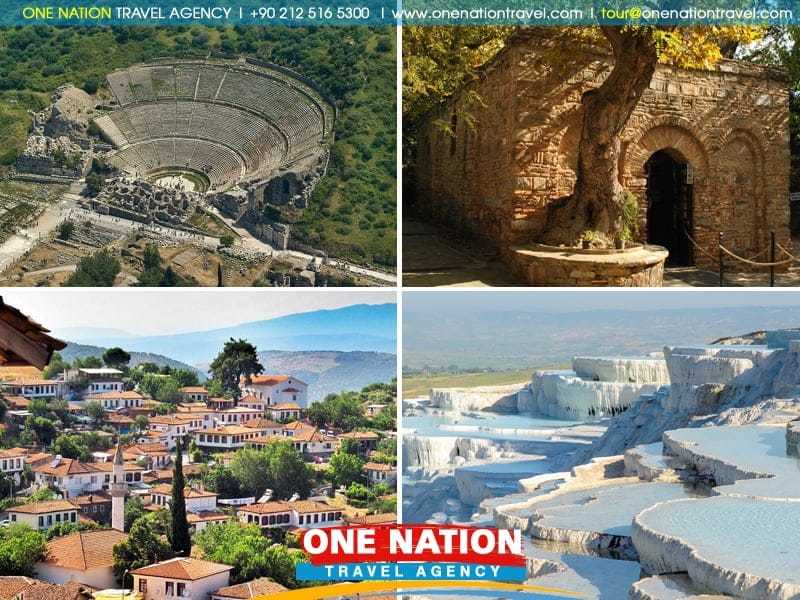
Embark on a fascinating journey from Istanbul to explore the timeless marvels of Ephesus and Pamukkale, utilizing local bus services…
 2 to 3 Day Turkey Tours
The 3 Days Tour of Pamukkale and Ephesus from Kusadasi or Izmir combines Turkey's most popular landmarks into one well-paced…
 4 to 5 Day Turkey Tours
Discover Cappadocia, Pamukkale and Ephesus on this 4-day group tour from Istanbul, travelling by plane and bus before returning to…
 4 to 5 Day Turkey Tours
Discover Turkey’s iconic landscapes and ancient sites on this 4-Day Cappadocia, Pamukkale and Ephesus Tour from Istanbul by plane. Begin…
 6 to 7 Day Turkey Tours
Spend 7 days traveling across Turkey on this group tour that starts and ends in Istanbul and takes in Cappadocia,…
Yes, but it is a very long day: about three hours at Ephesus, three hours on the road and three to four hours at Pamukkale, plus the journey back. Staying overnight in Pamukkale, or spreading the visit over two days, is far more comfortable and lets you see the terraces at sunset.
About 190 km. Allow roughly three hours by car or tour bus. By public transport, the regional train from Selçuk to Denizli takes about three and a half hours, followed by a short minibus ride to Pamukkale.
Neither is objectively better, because they are very different. Ephesus is the pick for ancient history and architecture. Pamukkale is the pick for a unique natural landscape, and it adds the ruins of Hierapolis. That contrast is why so many travellers visit both.
Plan on about €40 for Ephesus, plus about €15 if you add the Terrace Houses. Pamukkale-Hierapolis costs about €30, and swimming in Cleopatra's Antique Pool is charged separately. Prices are set in euros but paid in Turkish lira at the day's rate, so check the current official tariff before you go.
Either order works. Ephesus first suits travellers arriving via Izmir, Kuşadası or Selçuk. Pamukkale first suits those coming from Antalya or Cappadocia, or flying into Denizli.
Ephesus takes about three to four hours, or a full day with the Terrace Houses, Temple of Artemis and House of the Virgin Mary. Pamukkale takes half a day for the terraces and main ruins, or a full day with the Antique Pool, the necropolis and sunset.
You can paddle in the designated shallow pools along the marked barefoot path on the travertines, but the natural terraces are protected and much of the surface is off-limits. For a real swim, Cleopatra's Antique Pool at the top has warm thermal water, with an extra ticket.
Ephesus. It is only a 20–25 minute drive from Kuşadası port and fits easily into a port call. Pamukkale is about three hours away in each direction, which leaves very little time on site during a typical cruise stop.
Children usually love Pamukkale, with its warm shallow pools on the terraces and the thermal Antique Pool. Ephesus is fascinating but involves a long walk on hot, uneven marble. Whichever you choose, go early and bring hats and water.
Yes. Both are open all year and far quieter in winter. Expect cool temperatures and some rain, so wear shoes with good grip on the marble at Ephesus. The warm water of the Antique Pool is especially inviting on a cold day.
Only if you add more sites. The two main tickets come to about €70 (€85 with the Terrace Houses). A Museum Pass starts to save money when you also visit places such as Aphrodisias, Laodicea, Pergamon or the Ephesus Museum.
Both involve uneven ancient surfaces. At Ephesus, starting from the upper gate keeps the route mostly downhill. At Pamukkale, the south gate gives access to the top of the terraces and the main part of Hierapolis without the barefoot climb from the village.
Tell us your dates and interests and All Istanbul Tours will build the ideal itinerary — often covering both options in one seamless trip.
Plan My Trip — Free Quote