
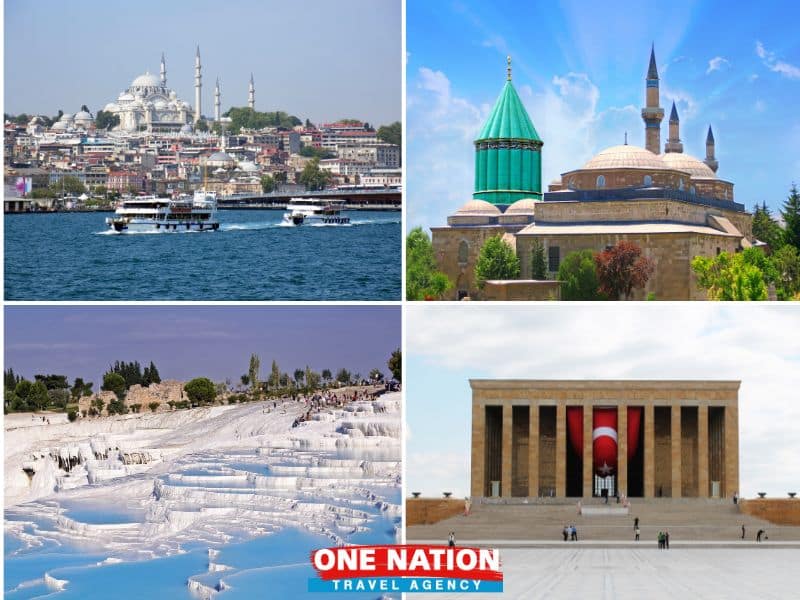
 Ankara Tours
12-Day Turkey Highlights Tour: Istanbul, Konya, Cappadocia, Pamukkale, Ephesus & Ankara
Follow a 12-day route across Turkey that begins in Istanbul and continues to Konya, Cappadocia, Pamukkale, Ephesus and Ankara. The…
Konya is one of Turkey's oldest continuously inhabited cities and the spiritual heart of the country, best known as the home of the 13th-century mystic poet Mevlana (Rumi) and the whirling dervishes of the Mevlevi order. A dignified, deeply traditional city on the Anatolian plateau, it blends Seljuk-era architecture and revered shrines with one of humanity's earliest settlements at nearby Catalhoyuk. Visitors come for its serene atmosphere, richly tiled medreses and mosques, and a genuine sense of Turkish heritage far from the coastal crowds.
The experiences worth building your trip around.
The turquoise-fluted-domed mausoleum of the poet and mystic Mevlana Rumi is Konya's most sacred and iconic site, housing his tomb alongside illuminated Qurans, dervish robes, and Mevlevi artifacts. It remains a place of pilgrimage and quiet reverence for visitors from around the world.
The Mevlevi Sema is a mesmerizing spiritual ritual in which dervishes spin in flowing white robes as an act of meditation and devotion to the divine. Ceremonies are held most reliably at the Mevlana Cultural Center, and reach their peak during the Seb-i Arus commemoration each December.
Crowning the tree-shaded hill at the city center, this Seljuk mosque was built in stages between the mid-12th and mid-13th centuries and holds the domed mausolea of eight Sultans of Rum. The surrounding park is a favorite spot for locals to stroll, sip tea, and escape the summer heat.
Built in 1251, this former Seljuk theological school is celebrated for its star-studded domed ceiling covered in intricate blue-and-black tilework and geometric calligraphy. Today it displays a fine collection of Seljuk-era ceramics and tiles.
Famous for its deeply carved Seljuk stone portal, one of the masterpieces of Anatolian architecture, this 1267 medrese now houses a museum of stone and wood carving. Its name refers to the distinctively slim minaret that once towered above it.
About 45 kilometers southeast of the city near Cumra, this UNESCO World Heritage Site is one of the world's oldest known settlements, dating back some 9,000 years to the Neolithic period. Protective shelters over the excavated mud-brick dwellings, plus reconstructed houses and a visitor center, offer a rare glimpse into early human civilization.
Just 8 kilometers from the center, this historic village blends Greek and Turkish heritage, with old stone houses lining a stream, the restored Byzantine church of Aya Eleni, and a peaceful, timeless atmosphere. It makes for a relaxed half-day escape.
Konya is renowned for etli ekmek, a long, thin flatbread topped with minced meat and baked in a wood-fired oven, and firin kebabi, oven-roasted lamb slow-cooked until it falls off the bone. Round off a meal with local sweets like sac arasi and Mevlevi-style desserts.
A relaxed, realistic plan you can adapt to your pace.
Begin at the Mevlana Museum to pay respects at Rumi's tomb and explore the Mevlevi collections, then wander the surrounding old bazaar streets for tea and browsing. In the evening, attend a whirling dervish Sema ceremony at the Mevlana Cultural Center to experience Konya's living spiritual tradition. Cap the day with a plate of etli ekmek at a classic local eatery.
Devote the morning to Konya's Seljuk masterpieces, starting on Alaeddin Hill with the historic Alaeddin Mosque and a walk through its shaded park. A short stroll downhill brings you to the Karatay Medrese, with its dazzling tiled dome, and the Ince Minareli Medrese, with its carved stone portal, both flanking the hill. Spend the afternoon at an unhurried Anatolian pace among the city's museums and cafes.
Take a half-day trip southeast to Catalhoyuk to walk among the excavated remains of one of the world's earliest settlements and visit its interpretive center and reconstructed dwellings. Back near the city, detour to the historic village of Sille to see its stone houses and the Byzantine church of Aya Eleni. Return to Konya for a final evening enjoying its calm streets and traditional sweets.
Spring (April to June) and autumn (September to October) are the most comfortable times to visit, with mild days ideal for walking and sightseeing. Summers on the Anatolian plateau can be hot and dry, while winters are cold and can bring snow. For those drawn to the whirling dervishes, mid-December is especially meaningful, as the Seb-i Arus festival marks the anniversary of Rumi's death with major Sema ceremonies and draws visitors from around the world.
See the Month-by-Month Guide →Konya has its own airport with domestic flights to Istanbul and other Turkish cities, and it sits on Turkey's high-speed rail (YHT) network, with fast, comfortable trains connecting it to Ankara in about 1.5 hours and to Istanbul in roughly 4-5 hours via Ankara. Trains stop first at the modern Selcuklu high-speed station and then at the older Konya station closer to the historic core. Once in the city, the compact center around the Mevlana Museum and Alaeddin Hill is easily explored on foot, while two tram lines and city buses link the center with the stations and outlying districts; note that trams and buses are cashless and require a KonyaKart travel card. For day trips to Catalhoyuk and Sille, which are not well served by public transport, a rental car, taxi, or organized tour is the most practical option. Konya's flat, walkable center and orderly layout make it one of the more relaxed Turkish cities to navigate.
Best areas to base yourself in Konya.
Staying near the Mevlana Museum and the bazaar puts you within walking distance of nearly all the main sights, restaurants, and the Sema ceremony venue.
The leafy district around the central hill offers a pleasant, well-connected base with a tram stop at Zafer/Alaaddin and a mix of hotels near the Seljuk medreses.
The modern Selcuklu district around the YHT station suits travelers arriving by train who want convenient connections, newer hotels, and a quick tram ride to the center.
Expertly guided tours and packages that cover the highlights above.
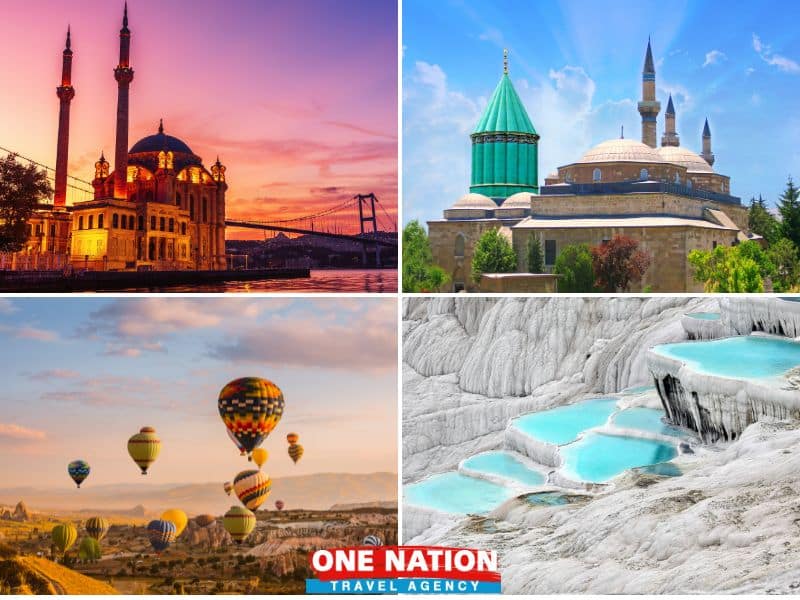
Ankara ToursFollow a 12-day route across Turkey that begins in Istanbul and continues to Konya, Cappadocia, Pamukkale, Ephesus and Ankara. The…
 Turkey Tour Packages
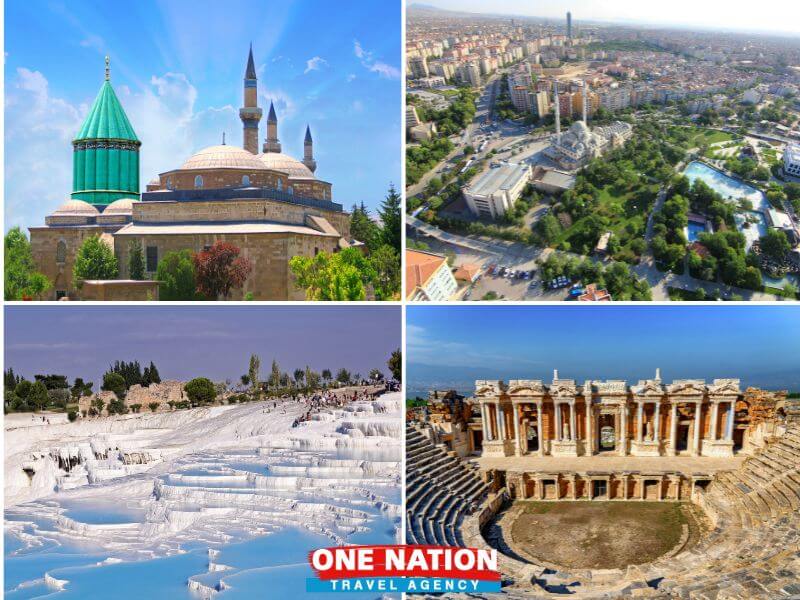
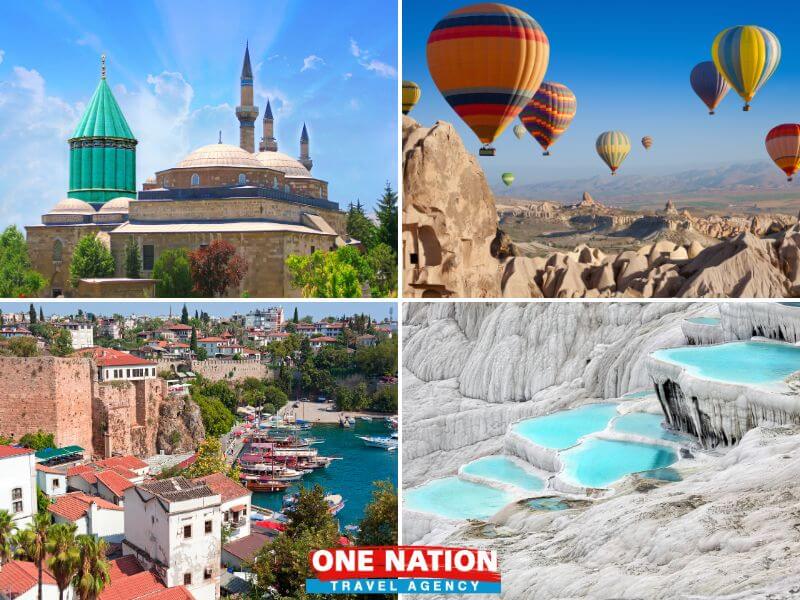
Rumi’s tomb, Seljuk architecture, and mineral-white terraces give this three-day group tour two very different settings. In Konya, you'll explore…
 Turkey Tour Packages
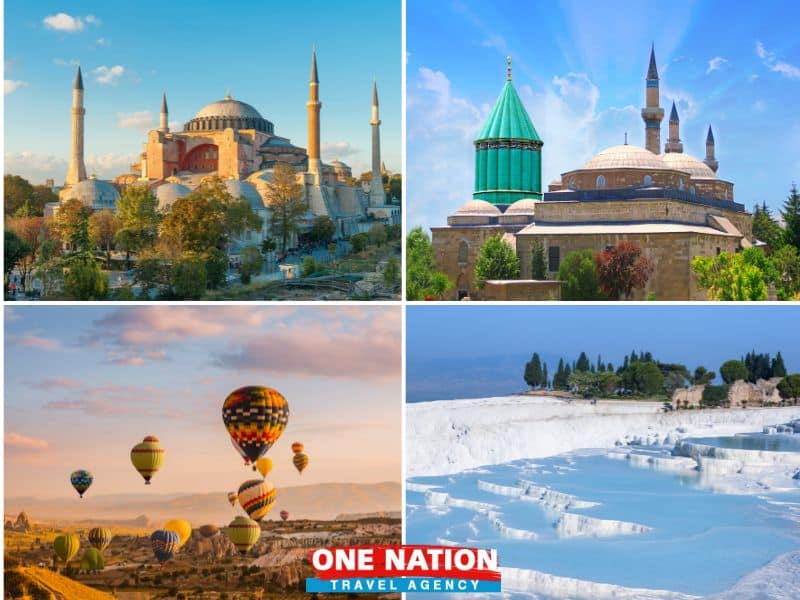
This tour follows an 8-day Istanbul, Konya, Cappadocia and Pamukkale route, starting with an airport transfer from Istanbul New Airport…
 Turkey Tour Packages
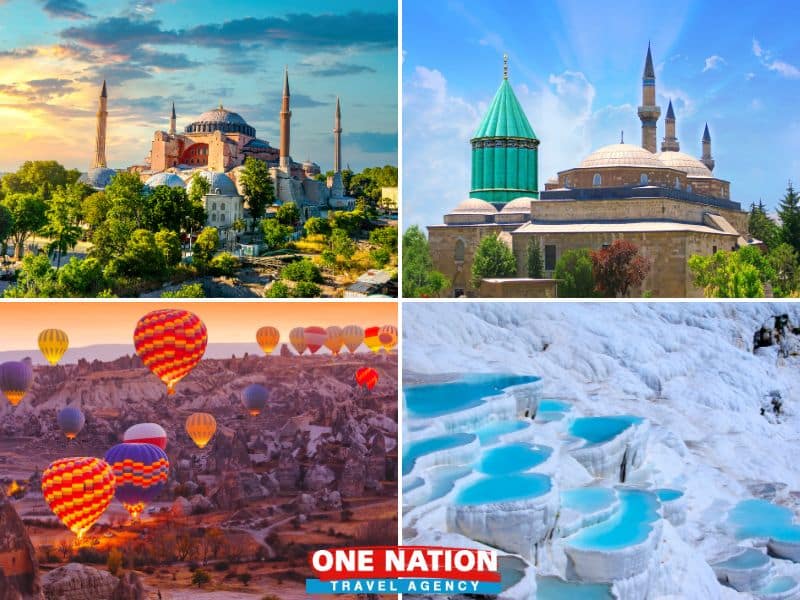
Discover Hagia Sophia, the Blue Mosque, and the Bosphorus on a 13-day Turkey tour starting in Istanbul, with a route…
 Turkey Tour Packages
Begin in Istanbul, where an airport meet-and-greet starts this 11-day Turkey tour package that runs west to east across the…
 Turkey Vacation Packages
Follow a 10-day Turkey Highlights Tour from Istanbul that begins with a morning flight to Konya, continues by coach to…
Konya is a religiously conservative city, so modest clothing is appreciated everywhere and expected in mosques and shrines. Women should carry a scarf to cover their head, and everyone removes their shoes before entering prayer areas.
Sema ceremonies are not held daily, and seats fill up fast around the December Seb-i Arus commemoration, so check the schedule and arrange your visit in advance. Arrive early and stay quiet and respectful throughout the ritual.
Catalhoyuk and Sille have limited public transport, so organize a car, taxi, or tour rather than relying on buses. Confirm return timing in advance, as outlying sites can keep shorter off-season hours.
Trams and city buses are cashless, so buy a rechargeable KonyaKart at a station or kiosk if you plan to use them. Comfortable walking shoes make exploring the central sights and archaeological sites much easier.
Yes, especially if you are interested in Turkish spirituality, history, and Seljuk architecture. It offers the Mevlana Museum, whirling dervishes, richly tiled medreses, and the ancient site of Catalhoyuk in a calm, authentic setting away from the coastal crowds.
One to two days is enough to see the main city sights, while a third day lets you add day trips to Catalhoyuk and Sille at a relaxed pace.
Yes, Konya is the home of the Mevlevi order, and Sema ceremonies are held regularly, most reliably at the Mevlana Cultural Center. The most significant performances take place during the Seb-i Arus commemoration in mid-December.
You can fly directly to Konya Airport, or take a high-speed YHT train, which connects Istanbul and Konya via Ankara in roughly four to five hours. Both are comfortable and convenient options.
Konya is one of Turkey's more religiously conservative cities, so modest dress is recommended throughout, and covering up is required in mosques and shrines. Women should bring a headscarf for religious sites.
Konya is best known for etli ekmek, a long thin meat-topped flatbread, and firin kebabi, slow oven-roasted lamb. The city also has excellent traditional sweets and hearty Anatolian dishes.
Let All Istanbul Tours build your Konya trip — transfers, hand-picked hotels, and licensed local guides, all in one package.