
 Pin it
For U.S. travelers looking beyond Western Europe, the most popular destinations right now are Turkey, Egypt, Jordan, Morocco and Thailand — five countries that combine major ancient sites, easy connections through Istanbul or the Gulf hubs, and prices well below Paris or Rome. This guide compares those five popular destinations for US travelers on the things that actually decide a trip: flight time, season, how many days you need, and what a guided package costs in euros. Egypt gets the deepest treatment, because it’s the one most people book first and plan worst.
It’s written for first-timers and second-timers planning 6 to 14 days, traveling as a couple, a family or a small group of friends. If you already know you want the pyramids and a Nile cruise, skip ahead to the cost and timing tables.
Quick Facts
| Best time to visit | Egypt: October–April. Turkey, Jordan, Morocco: April–May and September–October. Thailand: November–February |
| Time needed | 6–7 days for Cairo plus Luxor; 8–10 days to add Aswan, Abu Simbel or a Nile cruise; 9–12 days to pair Turkey with Egypt |
| Getting there | Nonstop from several U.S. East Coast cities to Istanbul, then a short connection to Cairo; also reachable via Gulf and European hubs |
| Entry / typical cost | Guided Egypt packages start from €1,460 per person; site admissions and the Egypt entry visa are separate — confirm current fees on the official ticketing and visa pages before you travel |
| Good for | History-first travelers, multigenerational families, first-time visitors to the Middle East and North Africa |
Why these five countries keep topping U.S. travel lists
They deliver landmarks people have wanted to see since grade school, at a cost per day that still makes sense after a long-haul flight. Here’s the short version of what each one is actually like.
Egypt
Giza, Saqqara, Karnak, the Valley of the Kings, Abu Simbel, and the stretch of Nile between Aswan and Luxor. Distances are long and internal flights do the heavy lifting, which is why most people travel with a guide and a fixed itinerary rather than improvising.
Turkey
Istanbul alone justifies the flight: Hagia Sophia, the Blue Mosque, Topkapi Palace and the Grand Bazaar sit within walking distance of each other in Sultanahmet. Add Cappadocia’s rock valleys and Ephesus and you have a full week. See Turkey itineraries if you’re combining it with Egypt.
Jordan
Petra is the anchor, with Wadi Rum’s desert camps and the Dead Sea within a few hours’ drive. Jordan is compact, which makes it a good four-to-five-day add-on rather than a standalone two-week trip. Browse Jordan options.
Morocco
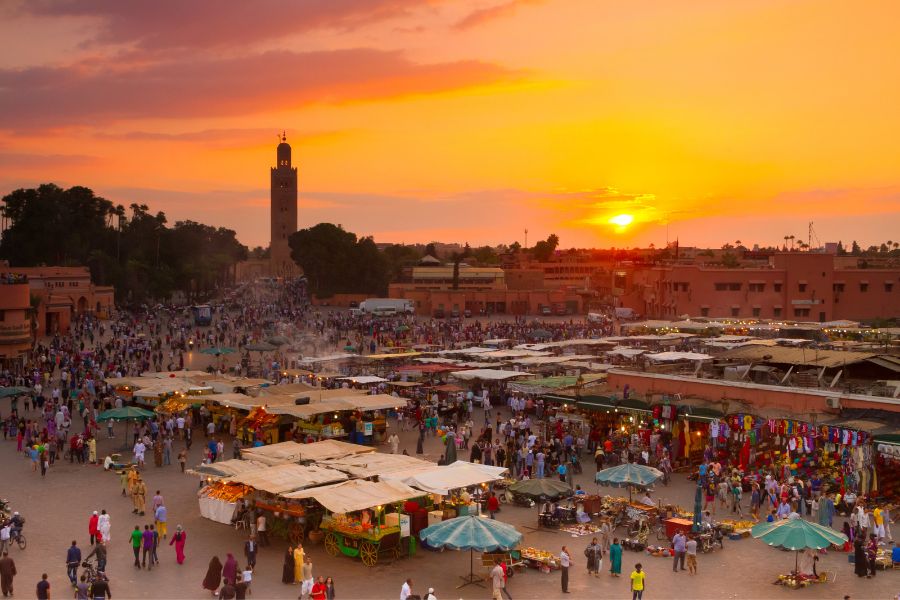
Marrakech’s medina, the blue lanes of Chefchaouen, Fez’s tanneries and a night in the Sahara. Driving times between cities are longer than the map suggests — Marrakech to the dunes is a full day each way. Morocco rewards a slower pace.
Thailand
The outlier: tropical, farther from the U.S., and better suited to two weeks than one. Bangkok’s temples, Ayutthaya’s ruins, and the Andaman islands. Have a look at Thailand if you’re planning a longer break.
How to get there from the U.S., and how long it takes
Istanbul is the practical hub for four of these five countries. Nonstop flights run from several U.S. East Coast and West Coast airports, and East Coast departures typically land in Istanbul in roughly ten to eleven hours. From there, Cairo, Amman and Casablanca are all short onward hops of a few hours. Bangkok is the long one — expect two flight legs and close to a full day of travel door to door.
Inside Egypt, don’t drive between Cairo and Luxor. Guided packages use domestic flights instead: the 7-Day Egypt Tour: Cairo, Nile cruise from Aswan to Luxor includes the domestic flight tickets listed in its itinerary, along with airport transfers, three nights in Cairo and three nights full board on the cruise. International flights and the Egypt entry visa are not included on that package — budget for both separately.

What it costs in EUR
Package prices below are starting prices per person and change with travel date, hotel category and party size. They do not include international airfare or entry visas. Site admissions that aren’t listed in an itinerary, plus optional excursions, are extra.
| Package | Length | From (per person) | Best for |
| 6-Day Splendid Egypt: Cairo and Luxor | 6 days / 5 nights | €1,460 | Short trips, no cruise |
| 7-Day Egypt: Cairo + Nile cruise Aswan to Luxor | 7 days | €1,790 | First-timers who want a cruise |
| 8-Day Egypt: Cairo, Aswan, Abu Simbel, Luxor | 8 days | €1,915 | Hotels instead of a cruise ship |
| 9-Day Egypt with Abu Simbel | 9 days | €2,380 | Deeper Egypt, Abu Simbel by land |
| 10-Day Wonders of Egypt & Nile cruise | 10 days | €2,490 | Adding Alexandria |
| 9-Day Highlights of Turkey and Egypt | 9 days / 8 nights | €2,480 | Two countries, group format |
| 12-Day Turkey & Egypt | 12 days | €2,740 | Istanbul, Ephesus, Pamukkale, Cappadocia plus Egypt |
Two cost details worth knowing before you book. On the six-day Cairo and Luxor package, the evening Pyramids Sound and Light show is an optional extra listed at €70 per person and must be reserved before travel. On the seven-day Nile cruise itinerary, Abu Simbel is an optional early-morning excursion at additional cost, while the nine-day Egypt tour includes the Abu Simbel visit by land in its price. If Abu Simbel is non-negotiable for you, check which column it sits in on the tour page before comparing headline prices.
Pro Tip
Cross-country packages don’t always include every flight. On the 9-Day Highlights of Turkey and Egypt Tour, the Istanbul to Cairo international leg is not included in the tour price. Read the day-by-day inclusions on the tour page and price that flight yourself before you compare it to a rival quote.
Best time to visit each country
| Country | Sweet spot | Avoid or plan around |
| Egypt | October–April; Luxor and Aswan are pleasant, Cairo mild | June–August, when Upper Egypt gets punishing by mid-morning. Christmas and Easter weeks are the busiest at Giza |
| Turkey | April–May, September–October | July–August heat on the coast; January fog can disrupt Cappadocia balloon flights |
| Jordan | March–May, September–November | Midsummer at Petra and Wadi Rum; desert nights get cold in winter |
| Morocco | March–May, October–November | High summer inland at Marrakech and Fez |
| Thailand | November–February cool season | The wettest monsoon months, which differ between the Gulf and Andaman coasts |
Time of day matters as much as season in Egypt. Giza is hot and crowded by 11 a.m., so guided days there typically start around 8:00 to 8:30 a.m. Abu Simbel excursions leave very early — some itineraries have you meeting your guide at around 3:30 to 4:00 a.m. for the drive from Aswan. That’s not a typo, and it’s why an afternoon nap gets built into the day after.

A sensible order for a first Egypt trip
- Land in Cairo and do nothing. Most itineraries leave arrival day free for a reason. Jet lag plus Giza on the same morning is a bad trade.
- Giza, the Sphinx and Saqqara. One long guided day covers the three main pyramids, the Step Pyramid of Djoser and often Memphis. Entering a pyramid’s interior is usually a separate ticket.
- Egyptian Museum and old Cairo. The museum first, then the Citadel of Salah el-Din, the Hanging Church, Ben Ezra Synagogue and Khan El Khalili.
- Fly south. Cairo to Luxor or Aswan by air, then either a cruise or hotel nights.
- Luxor’s two banks. East bank for Karnak and Luxor Temple, west bank for the Valley of the Kings, the Temple of Hatshepsut and the Colossi of Memnon.
- Aswan extras. The Aswan High Dam, the Unfinished Obelisk and Philae Temple, with Abu Simbel as a long day trip.
Practical tips before you go
Visas and entry
Entry rules differ by country and change without much warning. Egypt, Turkey and Jordan have historically required a visa or e-visa for U.S. passport holders, while Morocco and Thailand have allowed visa-free short stays — but confirm your own case on the official government or embassy site for each country close to your travel date. Egypt tour prices from us do not include the entry visa.
What to pack
- Broken-in walking shoes with grip; temple floors and tomb ramps are uneven
- Sun hat, sunglasses, high-SPF sunscreen and a refillable water bottle
- Light long sleeves and long trousers or a skirt for mosques and churches, plus a scarf
- Small bills for restrooms, tips and market purchases
- A power bank — you’ll photograph more than you expect and shade is scarce
Families and mobility
Kids do well at Giza, on a felucca and on a cruise ship with a pool. They do less well on 4 a.m. Abu Simbel drives. For limited mobility, the Valley of the Kings and pyramid interiors involve steep, narrow, low passages with no lift; Karnak, Luxor Temple and the Egyptian Museum are far more manageable. Tell us before booking so we can flag which stops are realistic.
Group tour, private tour or DIY?
Group departures cost less and handle every internal flight and transfer for you; you trade some flexibility on timing. Private guiding costs more but lets you linger at Karnak or skip Memphis entirely. Doing Egypt independently is possible and cheaper, but you’ll spend real hours on domestic flight logistics, ticket lines and negotiating transport at each site.
Rough guidance on fit: if you have a week and want the Nile, the seven-day Cairo and cruise itinerary is the efficient answer. If you’d rather sleep in hotels than on a ship and still want Abu Simbel, the 8-Day Egypt Tour: Cairo, Aswan, Abu Simbel, and Luxor uses hotel nights in Cairo, Aswan and Luxor. If this is a bucket-list trip and you want Istanbul, Ephesus, Pamukkale and Cappadocia attached to Egypt, the 12-Day Turkey & Egypt Tour covers both countries in one booking. Planning the Turkey half in more detail? Our Istanbul guide and Pamukkale write-up go deeper.
Pro Tip
Egypt itineraries can shuffle. Tour operators, including us, note that the day-by-day order may change with domestic flight availability and site opening or closing schedules. Don’t book a non-refundable Cairo dinner reservation for a specific evening in week one of planning.

Combining two countries without wrecking your trip
Turkey plus Egypt is the easiest pairing because Istanbul and Cairo are a short flight apart and both hold your interest for several days. Jordan slots in neatly with Egypt too, since Petra and Wadi Rum need only four or five days. Morocco and Thailand are better kept separate — the flying is long and the pace is different. As a rule, don’t attempt three countries in under twelve days unless you’re comfortable changing hotels every second night.
🎫 Recommended Egypt Tours
Compare the itinerary, inclusions and optional extras. Starting prices vary by date and party size.
- 7-Day Egypt Tour: Cairo, Nile cruise from Aswan to Luxor →7 Days · from €1,790.00
- 9-Day Highlights of Turkey and Egypt Tour →9 Days / 8 Nights · from €2,480.00
- 6-Day Splendid Egypt Tour: Cairo and Luxor →6 Days / 5 Nights · from €1,460.00
- 9-Day Egypt Tour: Explore Cairo, Luxor, Aswan & Majestic Abu Simbel →9 Days · from €2,380.00
Frequently Asked Questions About Egypt
How much does a trip to Egypt cost?
Guided packages in our catalog start from €1,460 per person for six days covering Cairo and Luxor, rising to about €2,490 for a ten-day itinerary with a Nile cruise. Those are starting prices that shift with date and party size. Add international airfare, the entry visa, drinks with meals, travel insurance and any optional excursions.
How many days do I need in Egypt?
Six days is enough for Cairo and a quick Luxor visit. Seven to eight days lets you add a Nile cruise or Aswan. Nine or ten days gives you Abu Simbel and Alexandria without rushing. Below six days you’ll spend a disproportionate share of the trip in airports.
What’s the best month to visit Egypt?
October through April. Luxor and Aswan are comfortable in that window, while June to August in Upper Egypt is genuinely hard going by late morning. Late December and Easter bring the largest crowds at Giza and the Valley of the Kings, so late October, November, February and March tend to hit the best balance.
Is Egypt good with kids?
Yes, with planning. Giza, a felucca sail and cruise-ship days work well for families. Very early Abu Simbel departures and the narrow tomb passages in the Valley of the Kings suit older children better than toddlers. Tell us the ages when you enquire and we’ll advise which itinerary makes sense.
Can I combine Egypt with Istanbul in one trip?
That’s one of the most common requests. Our nine-, ten- and twelve-day Turkey and Egypt itineraries do exactly that, starting in Istanbul and continuing to Cairo. Check the inclusions carefully — on the nine-day version the Istanbul to Cairo flight is not part of the tour price.
Are entrance tickets included in your Egypt tours?
The entrance fees listed in each itinerary are included. Extras such as going inside a pyramid, the Pyramids Sound and Light show, or optional excursions carry additional charges. Individual site admission prices are set locally and change, so check the official ticketing page for any site you plan to visit on your own.
Do I need a visa for Egypt as a U.S. traveler?
Egypt requires an entry visa for most visitors and it is not included in our tour prices. Requirements and processing routes change, so confirm the current rules and fees on the official Egyptian government visa portal or your nearest consulate before booking flights.
Pick your length first, then decide between a cruise and hotel nights — that single choice narrows the options faster than anything else. When you’re ready, compare the full lineup of Egypt Tours and check the day-by-day inclusions on the tour page before you book.