
Rumi (Mevlana)
Mevlana Celaleddin-i Rumi, known as Rumi in the West, was a 13th-century Persian poet, Islamic scholar, and Sufi mystic. His teachings and poetry, renowned for their universal themes of love, tolerance, and self-discovery, continue to inspire millions worldwide. Born in Balkh, present-day Afghanistan, Rumi later settled in Konya, Turkey, where he founded the Mevlevi Order, also known as the "Whirling Dervishes". The Mevlana Museum in Konya, his final resting place, is a significant pilgrimage site and a must-visit for those seeking to connect with his profound legacy.
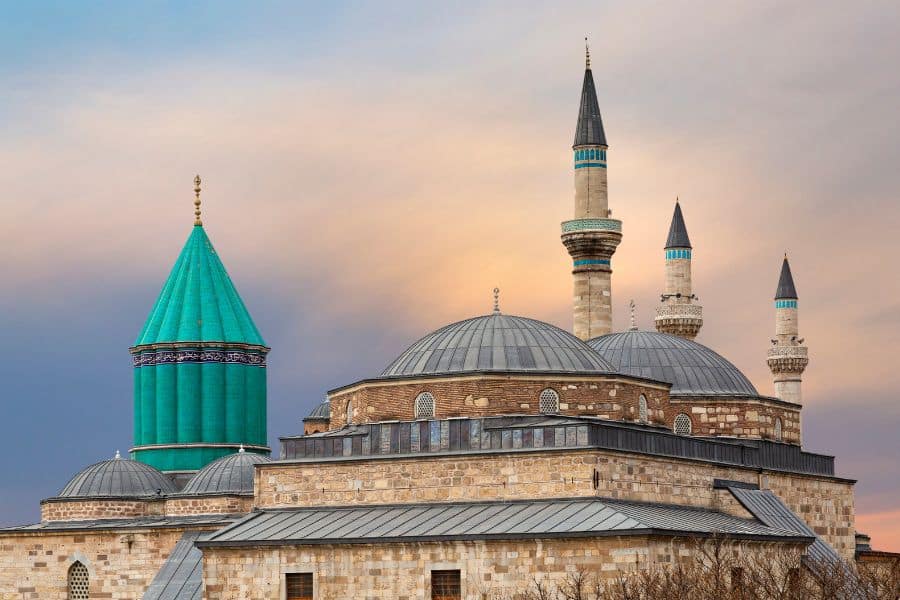
The Mevlana Museum in Konya is the resting place of Mevlana Jalal ad-Din Rumi, one of history’s most beloved poets and Sufi mystics. Crowned by a striking turquoise-tiled dome known as the “Green Dome” (Kubbe-i Hadra), the site blends a profound spiritual destination with a world-class museum of Islamic art. It is the symbolic heart of Konya and a place of pilgrimage for visitors from across the globe.
History & Significance
Rumi was born in 1207 and settled in Konya, where he composed the celebrated Masnavi and inspired the Mevlevi order, famous for the Sema whirling dervish ceremony. After his death in 1273, his tomb became a shrine and the order’s lodge, or dergah. In 1925 the Turkish Republic converted the complex into a museum, preserving its sacred character while opening it to all. Rumi’s message of love, tolerance, and unity continues to resonate with millions worldwide.
What to See
The centerpiece is the tomb chamber, where Rumi and his family rest beneath ornate, gold-embroidered cloth-covered sarcophagi. Surrounding galleries display illuminated Qurans, priceless calligraphy, antique prayer rugs, musical instruments, and dervish robes. Don’t miss the recreated dervish cells showing daily life of the Mevlevi monks, and the tranquil courtyard with its fountains and rose gardens that fill the air with fragrance in spring.
Many travelers combine this visit with Cappadocia’s wonders on the 7-Day Istanbul, Pamukkale, Konya and Cappadocia Tour, which makes Konya an inspiring stop between Pamukkale and the fairy chimneys.
Visitor Tips
The museum is open daily, typically from 9:00 AM to 6:30 PM (often opening at 10:00 AM on Mondays), with longer summer hours. Entrance is free as the site is a designated place of worship, though donations are welcome. As an active religious shrine, modest dress is required: cover shoulders and knees, and women should bring a headscarf. Visitors must remove shoes or use provided plastic covers before entering the tomb chamber.
Pro Tip: Visit on a Saturday evening to attend an authentic Sema (whirling dervish) ceremony at the Mevlana Cultural Center nearby — it’s a mesmerizing, deeply spiritual experience and not a tourist show.
Photography is allowed in most areas but flash is prohibited inside the tomb chamber out of respect. Allow at least 1 to 1.5 hours to explore fully and absorb the peaceful atmosphere.
Nearby Attractions
Konya is rich in Seljuk-era monuments, including the Alaeddin Mosque and the Karatay Medrese. Travelers continuing their Turkey journey often pair Konya with the dazzling Pamukkale Travertines or panoramic city viewpoints like Çamlıca Hill in Istanbul. The city’s central location makes it an ideal cultural waypoint on any Anatolian itinerary.
Plan your visit
Tours to consider for Rumi (Mevlana)
Compare the route, time available and what is included. A guided tour does not override venue closures, entry rules or security checks.

7-Day Istanbul, Pamukkale, Konya and Cappadocia Tour

8-Day Cappadocia, Konya, Antalya, Pamukkale & Ephesus Tour

8-Day Istanbul, Konya, Cappadocia & Ankara Tour
Starting prices vary by date and party size. Check admissions, optional extras and the final itinerary before booking.
Frequently Asked Questions
Is the Mevlana Museum worth visiting?
Absolutely. The Mevlana Museum is one of Turkey’s most significant spiritual and cultural sites, housing Rumi’s tomb beneath its iconic turquoise dome. Its stunning Islamic art, peaceful gardens, and profound history make it a must-see, even for those new to Sufism.
How much does the Mevlana Museum cost?
Entrance to the Mevlana Museum is free, as it is recognized as a place of worship. Donations are appreciated to help maintain the site. Separate Sema (whirling dervish) ceremonies may have a ticket fee of around €10–15.
How long should I spend at the Mevlana Museum?
Plan for about 1 to 1.5 hours to explore the tomb chamber, museum galleries, dervish cells, and gardens. If you attend a whirling dervish ceremony nearby, allow an additional hour for the full experience.
What should I wear at the Mevlana Museum?
Modest dress is required as the museum is an active shrine. Cover your shoulders and knees, and women should bring a headscarf to cover their hair. You’ll also need to remove your shoes or wear provided covers inside the tomb chamber.