

Temple of Hadrian, Ephesus
Plan your visit at a glance
- Time at the temple
- About 10–20 minutes; allow several hours for Ephesus overall
- Admission
- Within the Ephesus archaeological site; check current fees and any separate-area charges
- Access
- Reached on foot inside the archaeological site; expect uneven ancient paving
- Location
- Curetes Street, Ephesus, near Selçuk, İzmir
- Best for
- Roman architecture, carved reliefs and visitors exploring Ephesus
What to look for at the Temple of Hadrian
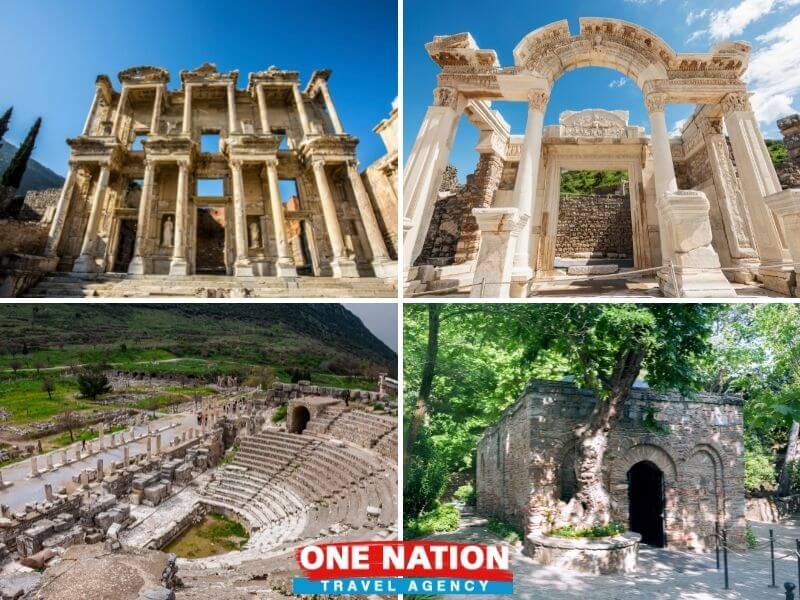
This monument is best appreciated as a close-up stop along Curetes Street, rather than as a freestanding temple with a large interior to explore. Its ornamental façade and surviving architectural details make it one of the most visually distinctive structures on this part of Ephesus’s main route. Pause to examine the arched entrance, decorative columns and carved details around the doorway.
Inside the arch, look for reliefs depicting figures and scenes from local myth and tradition. The carving associated with Medusa is a notable detail, although the present remains do not amount to a complete, furnished temple interior. Some reliefs at the site are replicas; display and conservation arrangements may change, so check what is visible during your visit rather than assuming every carved panel is an original in place.
Take a moment to look along the street, too. The monument’s position helps explain how Ephesus’s public buildings and ceremonial spaces were arranged beside a busy urban thoroughfare. Its scale is modest compared with the Great Theatre or Library of Celsus, but the decorative work rewards a slower look.
Historical context
The Temple of Hadrian belongs to the Roman period of Ephesus. It is generally associated with the second century CE and dedicated to Emperor Hadrian, who visited the city. Ephesus was a major urban center in the Roman Empire, and monuments such as this expressed civic identity as well as religious and imperial associations.
The name can be misleading if you picture a large classical sanctuary built solely for the emperor. The surviving structure is commonly described as a small temple or monument, and its decorative program draws on local stories as well as Roman imperial culture. Its reliefs connect visitors to the city’s legendary past, including accounts of its founding, while the imperial dedication places Ephesus within the wider Roman world.
Like the rest of the ancient city, the building has been affected by centuries of change, excavation and conservation. What visitors see today is a remnant within a larger archaeological landscape, not an untouched building preserved exactly as it stood in antiquity.
Planning your visit and site access
The temple is inside the archaeological site of Ephesus, near Selçuk; it is not a separate ticketed attraction with its own entrance. Plan and pay for access to the wider site, and check the official Ephesus visitor information for current opening hours, admission arrangements, closures and any restricted areas before setting out. Hours, prices and access conditions can change, and the sources available for this guide do not establish current details.
A brief stop at the temple may take 10–20 minutes, but it is only one part of a substantial outdoor archaeological visit. Allow several hours for Ephesus if you want time to walk the main route and see other major remains. Add extra time if you plan to visit additional paid areas, spend time reading site information or take a break. If the site has temporary closures or a route change, follow posted instructions and staff guidance.
| Visit element | What to plan for |
|---|---|
| Temple stop | About 10–20 minutes for the exterior, arch and visible reliefs |
| Wider Ephesus visit | Several hours for the archaeological site; allow longer for a relaxed pace |
| Admission | Access is through Ephesus; confirm current fees and any separate-area charges with the official site |
| Conditions | Outdoor walking on ancient paving; routes and open areas may be affected by conservation work |
A guide is optional, not a requirement for visiting. You can explore independently, but a licensed guide can add context to the reliefs and help connect the temple to the street and the wider city. Guided access does not remove normal site admission, security procedures or closures; confirm what any tour price includes before booking.
Getting there and arranging your route
The Temple of Hadrian is within Ephesus, outside the modern town center of Selçuk. First make your way to the archaeological site’s visitor entrance, then follow the signed route through the ruins. Ephesus is commonly explored on foot along its ancient streets, so check your transport drop-off and entrance plan before arrival rather than expecting a vehicle to take you to the monument itself.
Many visitors combine Ephesus with other stops in the Selçuk area. If you have a full day, prioritize the archaeological site first and leave time for transport and any additional visits. The House of the Virgin Mary, the Temple of Artemis and the Basilica of St. John are separate sites, not part of the Temple of Hadrian or necessarily included in Ephesus admission. Check travel times and opening conditions before combining them. The Temple of Artemis is a brief separate stop with limited remains; the Basilica of St. John is another distinct archaeological visit.
Travelers based in Izmir or Kuşadası can arrange their own transport or consider a day tour. For example, the listed Ephesus Day Trip from Izmir describes a group itinerary that includes the Temple of Hadrian along with other regional sights, transport and lunch. Its listing says entrance fees are included, but confirm current paid-site coverage and the route before booking. The Private Ephesus Tour from Izmir Airport lists a private vehicle and guide, plus several stops; verify its current itinerary and inclusions as well. Both are day-long regional excursions, not short temple visits.
Walking, heat and accessibility
Expect uneven ancient paving, exposed stone and some slopes across the broader site. Wear sturdy, comfortable shoes with grip. The temple itself is a short stop, but reaching it involves walking through the archaeological area. Do not assume the route is fully step-free or suitable for every mobility device; ask the official site about current accessible routes and facilities before visiting if you have mobility needs.
Shade can be limited on open stretches, and summer conditions in the region can be hot. Carry water, sun protection and any medication you may need. Take breaks, especially when visiting with children or older travelers. Strollers may be difficult to maneuver over uneven surfaces, so a carrier can be more practical for very young children. Keep children close around stone edges and follow barriers intended to protect fragile remains.
Photography and respectful visiting
Visitors commonly photograph the temple’s façade and reliefs, but comply with posted rules and staff directions. Avoid touching carvings, climbing on masonry or crossing barriers for a better angle: contact and foot traffic can damage the remains. If conservation work, equipment or restricted access is present, do not photograph beyond the permitted area. This is an archaeological monument, not an active place of worship, so religious dress requirements are not generally the main planning issue; comfortable clothing suited to sun and walking is more useful.
Is the Temple of Hadrian worth a stop?
Yes, if you are already visiting Ephesus and enjoy architectural detail, ancient stories or Roman urban history. It is a compact landmark rather than a destination that justifies a separate trip on its own. Visitors short on time should see it as part of a broader route through the site, balancing the stop with Ephesus’s larger monuments. If intricate reliefs are your priority, slow down and inspect the doorway details; if you mainly want sweeping views or monumental scale, spend more time at the Great Theatre and other major structures nearby.
Plan your visit
Tours to consider for Temple of Hadrian
Compare the route, time available and what is included. A guided tour does not override venue closures, entry rules or security checks.
Starting prices vary by date and party size. Check admissions, optional extras and the final itinerary before booking.
Frequently asked questions
Is the Temple of Hadrian a separate attraction with its own ticket?
It is inside the Ephesus archaeological site, rather than a standalone venue. Check the official Ephesus visitor information for current admission arrangements and any separate charges for additional areas.
How much time should I allow?
About 10–20 minutes is reasonable for the temple itself. Plan several hours for Ephesus if you want to see the wider site at a comfortable pace.
Can I visit the temple without going to Ephesus?
The temple is within the archaeological site, so reaching it requires access to Ephesus. It is not a separate street-side attraction.
Is the site suitable for visitors with limited mobility?
The route involves walking over uneven ancient paving, and a fully step-free route should not be assumed. Ask the site operator about current accessible routes and facilities before visiting.
What should I bring for the visit?
Wear sturdy walking shoes and bring water and sun protection. Much of the archaeological site is outdoors, and shade may be limited.
Are the Temple of Artemis and Basilica of St. John part of the same visit?
They are separate sites in the Selçuk area, not part of the Temple of Hadrian itself. Check their individual access arrangements and allow time for travel between stops.