TurkeyTravel guide10 min read
1 Day in Ephesus: The Perfect Itinerary & Guide
Spend one day in Ephesus walking the main ruins route, then choose nearby sights with practical timing and transport advice.
 By All Istanbul ToursPublished · Updated
In this guide 7 sections
One day in Ephesus is enough to walk the main route through the ancient city and add a few nearby sights, if you keep the schedule focused. Start at the upper entrance and walk downhill toward the Great Theatre; after lunch, choose nearby stops according to your time and interests.
This guide is for travelers with one day in the Ephesus area who want a practical order for the ruins, a lunch break, and optional sights around Selçuk. Your starting point matters: a day trip from Istanbul involves flights and a very early start, while starting in Izmir leaves more of the day for visits on the ground.
How should you plan one day in Ephesus?
Give the ancient city the first and largest part of your day. It’s an extensive archaeological site, and the main route includes several stops worth seeing slowly, not just photographing from the path. UNESCO describes Ephesus as a sequence of settlements shaped by the coastline’s movement, with major Roman-period monuments including the Library of Celsus and Great Theatre. UNESCO’s Ephesus listing also explains why the nearby sites belong to different periods and parts of the wider heritage area.
Before you set out, choose between two approaches:
- More time in the ruins: Walk the main route at an unhurried pace, stop at the major buildings, and leave nearby sights for another visit.
- More variety in the day: See Ephesus in the morning, take a break in Selçuk, then add one or two nearby places by vehicle.
Trying to fit every nearby sight into one day can turn the afternoon into a rush. The House of the Virgin Mary is about seven kilometers from Ephesus, according to UNESCO. The Temple of Artemis, Basilica of St. John, and Isa Bey Mosque are also separate visits, not stops along the main walking route.
Where should you start the Ephesus walking route?
Enter near Magnesia Gate and walk downhill
The upper entrance near Magnesia Gate is a practical place to begin. From there, the main route runs downhill through the ruins toward the lower end of the site. This order avoids having to retrace the route uphill after reaching the Great Theatre. Confirm which entrance is operating for your visit, since access arrangements can change.
Arriving early gives you a cooler start and more room to pause before the day gets busier. It doesn’t guarantee an empty route; groups may also arrive in the morning. Much of the ancient city is exposed, so carry water and sun protection rather than expecting shade whenever you need a break.
Wear closed shoes with a firm grip. The stone and marble are uneven, and worn surfaces can be slippery. Thin-soled sandals are uncomfortable for a long walk, especially where there are steps or rough paving. If you find stairs or uneven ground difficult, keep to the route at a pace that works for you and skip climbs that aren’t comfortable.
Follow Curetes Street to the Library of Celsus
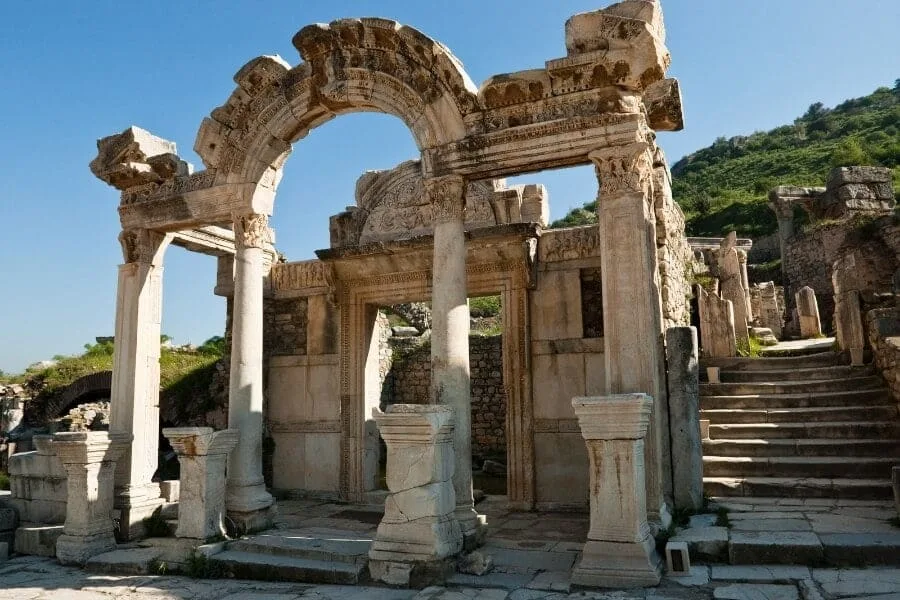
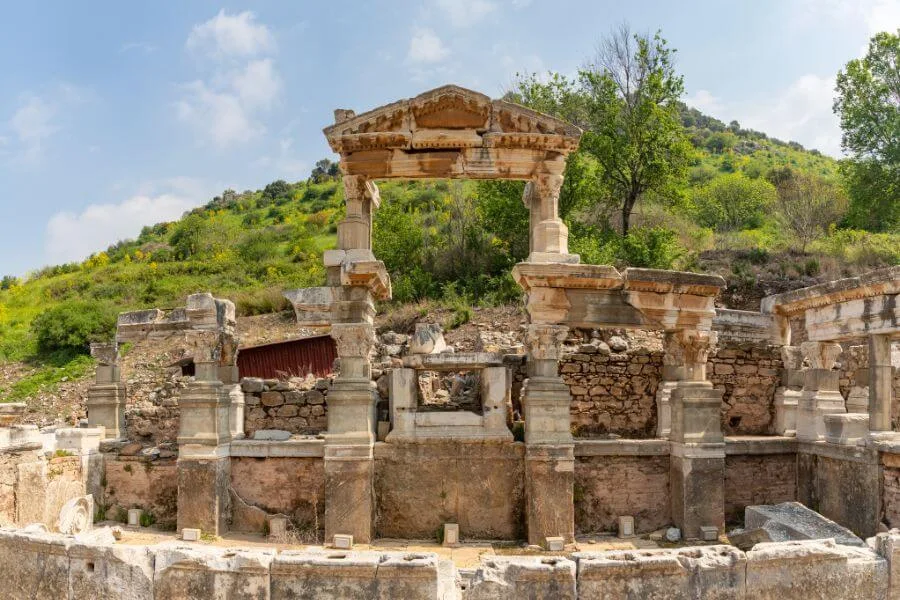
As you walk toward the center of the site, look for the Odeum, Fountain of Trajan, and Temple of Hadrian. Curetes Street connects many of the best-known stops, but it’s easy to miss carved details if you keep moving with the crowd. Pause when there’s room to do so and look at the reliefs, columns, and remains around the main path.
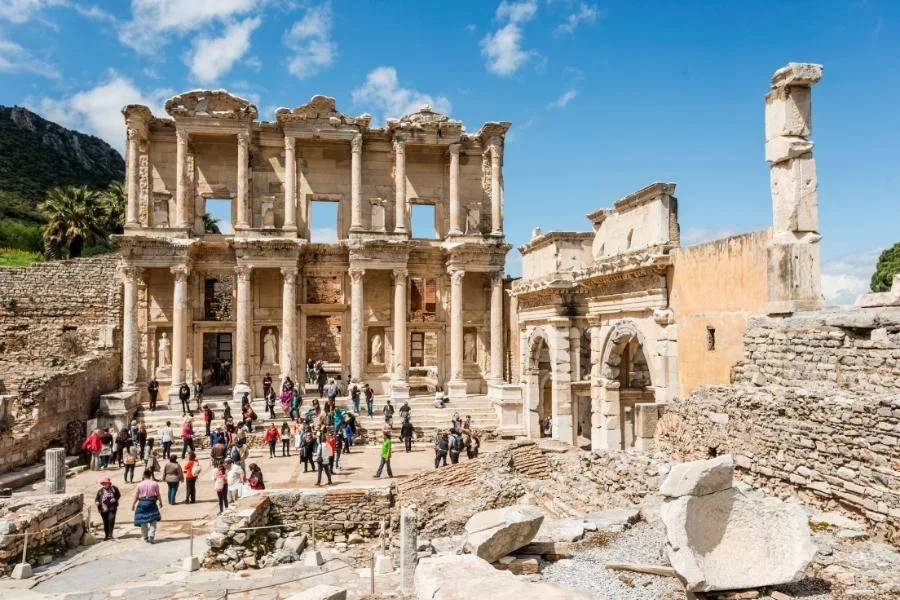
The Library of Celsus is one of the route’s key landmarks. UNESCO identifies it among Ephesus’s major Roman Imperial monuments. The surviving façade draws visitors who stop for photographs, so step clear of the main flow if you want to wait for a better view. For more background on the building, see our Library of Celsus guide.
Build in time for the walk between buildings, not only the photo stops. The route’s length, crowds, and how often you pause all affect how much time you’ll have after reaching the lower end.
End the main walk at the Great Theatre
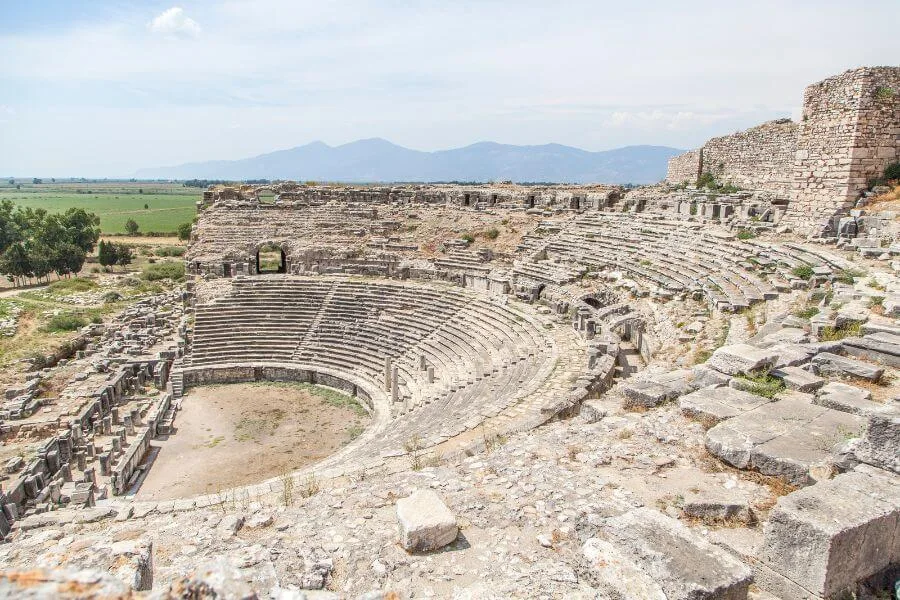
Continue downhill to the Great Theatre. The site’s tour itinerary describes seating for about 25,000 people. From the lower area, you can take in the scale without climbing to the highest rows. Stone steps and surfaces need care, so don’t feel you have to go to the top to appreciate the structure.
Use this point to decide whether Ephesus is enough for the day. The ancient city is the most substantial stop, and visitors often underestimate how much time they spend walking, examining details, and waiting for space at popular views. If you’re already tired or behind schedule, head to lunch rather than adding another stop just to complete a list.
Which nearby sights can you add after Ephesus?
After the main walk, have lunch in Selçuk and choose nearby visits based on your remaining time. These sites add religious and later architectural context, but each requires leaving the archaeological city and arranging transport.
House of the Virgin Mary
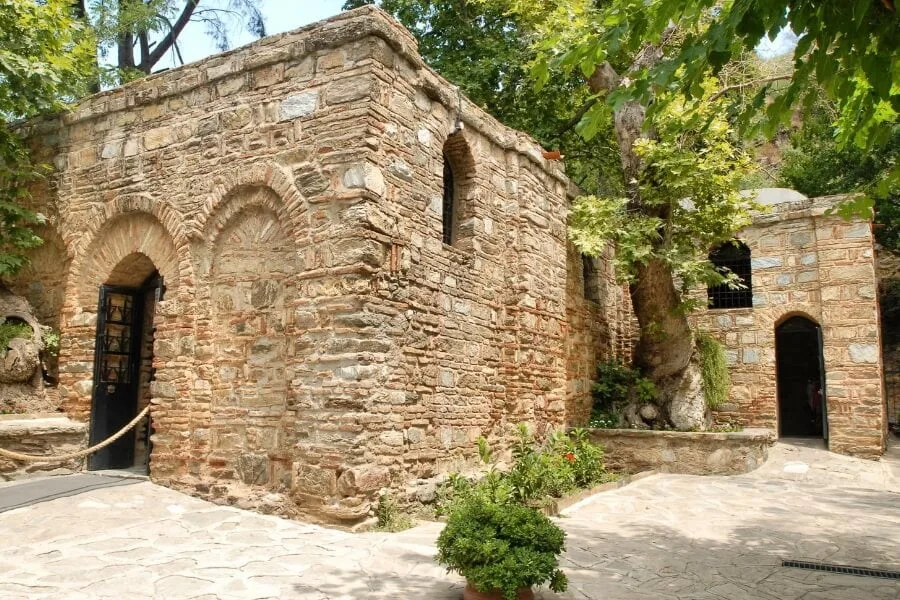
The House of the Virgin Mary is a chapel in the hills outside Ephesus. UNESCO notes that it became an important Christian pilgrimage site from the fifth century and places it about seven kilometers from the ancient city. It suits travelers interested in religious history, but allow for the transfer and visitor access rather than treating it as part of the ruins walk. See our House of the Virgin Mary visitor guide for more context, and check current access information before going.
Basilica of St. John and Isa Bey Mosque
The Basilica of St. John and Isa Bey Mosque are on Ayasuluk Hill in Selçuk. UNESCO describes the basilica as part of Ephesus’s early Christian heritage and identifies the mosque as marking the arrival of Selçuk and Ottoman Turkish periods in the area. They offer a different perspective from the Roman streets, but they need their own time and transport.
Dress respectfully when visiting religious sites and follow any instructions in place on the day. Visitor access can be affected by site conditions or religious use, so don’t assume every stop will be open throughout your visit.
Temple of Artemis
The Temple of Artemis is worth considering if you’re interested in the history of the sanctuary. UNESCO notes that it was one of the Seven Wonders of the ancient world and that little remains today. Treat it as a brief stop to understand the site’s importance, not as a second large ruin complex. If you’re short on time, prioritize Ephesus or the Basilica of St. John instead. Our Temple of Artemis page has more background.
Where can you stop for lunch?
Selçuk is a practical place to eat after the ruins, particularly if you plan to visit another nearby site. Menus and restaurant availability vary. Çöp şiş and gözleme are familiar Turkish dishes you may see, but check the menu rather than assuming a particular restaurant serves them. Give yourself a proper sitting break and time to drink water; lunch squeezed between transfers can make an already long day feel more tiring.
If you’re on a guided day trip, check whether lunch is included and whether drinks cost extra. The Ephesus Day Trip from Izmir includes lunch, transport, an English-speaking guide, and entrance fees to the listed attractions. Its itinerary includes the House of the Virgin Mary, Temple of Artemis, and Isa Bey Mosque, as well as a shopping stop. Drinks and personal expenses aren’t listed as included. Confirm the current itinerary and inclusions on the tour page.
How do you get to Ephesus for one day?
Ephesus is near Selçuk. From Izmir, the catalog itinerary estimates roughly an hour by road to the ancient city. The Ephesus Day Trip from Izmir starts with pickup from a centrally located hotel, airport, or cruise port, and includes transport, a guide, lunch, and listed entrance fees. Its group itinerary also has a shopping stop. Check pickup arrangements and the route before booking.
From Istanbul, a same-day visit means an early hotel pickup, domestic flights, and ground transfers. That leaves less flexibility than staying near Selçuk, and the return is late in the evening. The Ephesus Day Trip from Istanbul starts from €328 per person. The catalog lists round-trip domestic flights, European-side hotel pickup and airport transfer before departure, an English-speaking guide, lunch, and entrance fees mentioned in the itinerary. The return transfer from either Istanbul airport to your hotel isn’t included. The regular group tour includes a shopping stop. Prices vary by date and party size; check the tour page for current availability and details.
For independent visits, check current admission, access conditions, and site information before setting out. Don’t rely on an old fee or assume every building shown in a guide will be open for entry on your date.
What should you prepare for at Ephesus?
Most of the main route is exposed, and the stone surfaces are uneven. Summer heat can make the walk harder, especially when you’re adding more stops after the ruins. Bring water, sun protection, and shoes that stay secure underfoot. Take breaks when needed; rushing through the site to fit in one more attraction may leave you with less time to notice its details.
Keep the order simple: visit Ephesus first, have lunch in Selçuk, then add nearby sights according to your pace and interests. If you’re visiting a mosque or chapel, dress respectfully and follow any posted visitor requirements. For Isa Bey Mosque, be prepared to remove your shoes and follow the instructions in place that day.
Frequently Asked Questions About Ephesus
Is one day enough to visit Ephesus?
Yes. One day is enough for the main archaeological route and selected nearby sights. If you want to add the House of the Virgin Mary, Basilica of St. John, and Temple of Artemis, choose priorities so the afternoon doesn’t become rushed.
Which entrance should you use at Ephesus?
The upper entrance near Magnesia Gate works well for a downhill walk through the ruins toward the Great Theatre. Check current access information before your visit in case entrance arrangements change.
How long does it take to walk through Ephesus?
Allow a substantial part of the day for the site. The visit takes longer than the walk alone because you’ll stop at major buildings, examine details, and may need to wait for space at popular viewpoints.
Can you visit the House of the Virgin Mary and Ephesus in one day?
Yes, if you allow time for transport between the sites. The House of the Virgin Mary is outside the archaeological city, so account for the transfer before deciding whether to add other Selçuk sights.
What should you wear for a day at Ephesus?
Wear closed shoes with a good grip for uneven stone and marble. Bring water and sun protection because much of the route is exposed, and dress respectfully if you plan to visit religious sites.
Are entrance fees included on an Ephesus day trip?
It depends on the tour. The listed Izmir and Istanbul day trips include entrance fees mentioned in their itineraries; independent visitors should check the official ticket information for current fees and access conditions.
Is the Temple of Artemis worth adding to a one-day itinerary?
Consider it if you’re interested in the sanctuary’s history and have time after Ephesus. Little of the ancient structure remains, so prioritize it according to your interests and the other stops you want to visit.
For one day in Ephesus, spend the morning on the downhill route through the ancient city, then use lunch in Selçuk to decide whether you have time for a nearby stop. Check current site information before you go, and choose a guided day trip if you want transport and the main visits arranged together.
About the author
All Istanbul Tours is a TÜRSAB-licensed travel agency (no. 6073) based in Istanbul, planning private and group tours across Türkiye.
Plan your trip
Turkey tours
 4 days
4-Day Cappadocia, Pamukkale and Ephesus Tour from Istanbul By Plane & Bus
From €728 per person
 3 days
3-Day Cappadocia and Pamukkale Tour from Istanbul by Air & Bus
Double occupancy €615 per person
 4 days
4-Day Cappadocia, Pamukkale & Ephesus Tour from Istanbul with Flights
From €905 per person
Not sure which tour fits your dates? Ask us on WhatsApp
Keep reading
More Turkey guides
 Turkey
How to Visit Cappadocia, Pamukkale & Ephesus in 4 Days from Istanbul (Step-by-Step Plan)
Fly Istanbul to Cappadocia, Pamukkale and Ephesus in just 4 days. Full day-by-day plan, 2026 costs from €863, balloon tips and booking advice.
 Turkey
European Side vs Asian Side of Istanbul: Which Should You Visit?
Compare Istanbul’s European and Asian sides, including where to stay, how to cross the Bosphorus, costs, timing, and tours.
 Turkey
Is Istanbul Safe for Tourists? Honest Safety Tips for 2026
Istanbul safety advice for 2026: neighborhoods, airport transfers, common scams, family tips, and guided tour costs.