CappadociaTravel guide9 min read
10 Fun Facts You Might Not Know About Cappadocia
Learn 10 facts about Cappadocia’s fairy chimneys, underground towns, cave churches and popular stories, with reliable context for your visit.
 By All Istanbul ToursPublished · Updated
In this guide 4 sections
These 10 fun facts about Cappadocia explain how volcanic rock became a lived-in landscape of fairy chimneys, cave churches and underground settlements. They also help you tell documented history from popular stories, including a much-repeated claim about Star Wars.
This guide is for travelers who want context for what they’ll see in Cappadocia, whether they’re visiting rock-cut churches, walking through a valley or looking up at balloons before breakfast.
What makes Cappadocia’s landscape and history unusual?
Cappadocia’s most recognizable features are not separate from its history. The same rock that erosion shaped into pinnacles was cut into homes, churches and places of refuge. UNESCO describes Göreme and the surrounding rock sites as a landscape formed by erosion, with human settlements dating back to the fourth century. The 10 facts below connect those natural forms with the ways people used them.
1. Fairy chimneys are the work of erosion, not construction
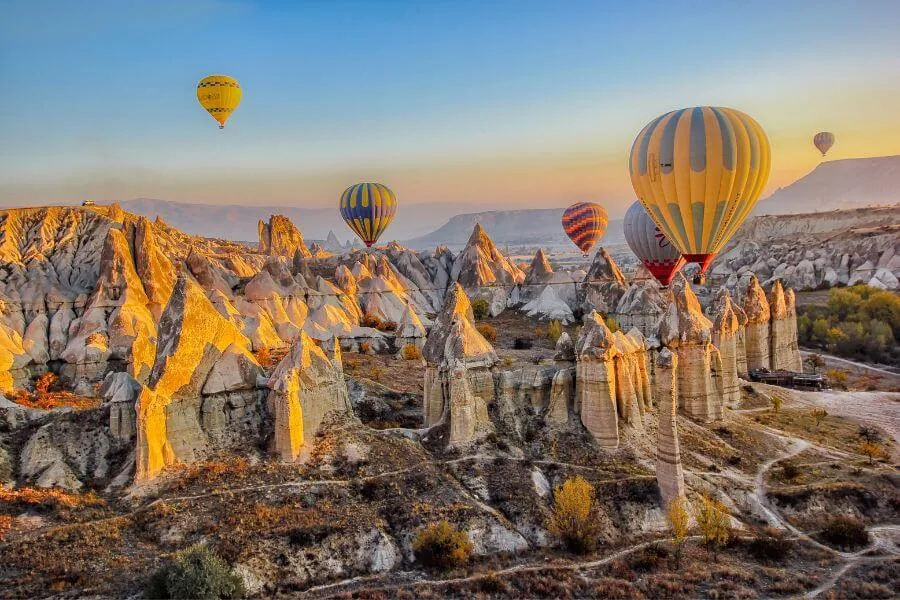
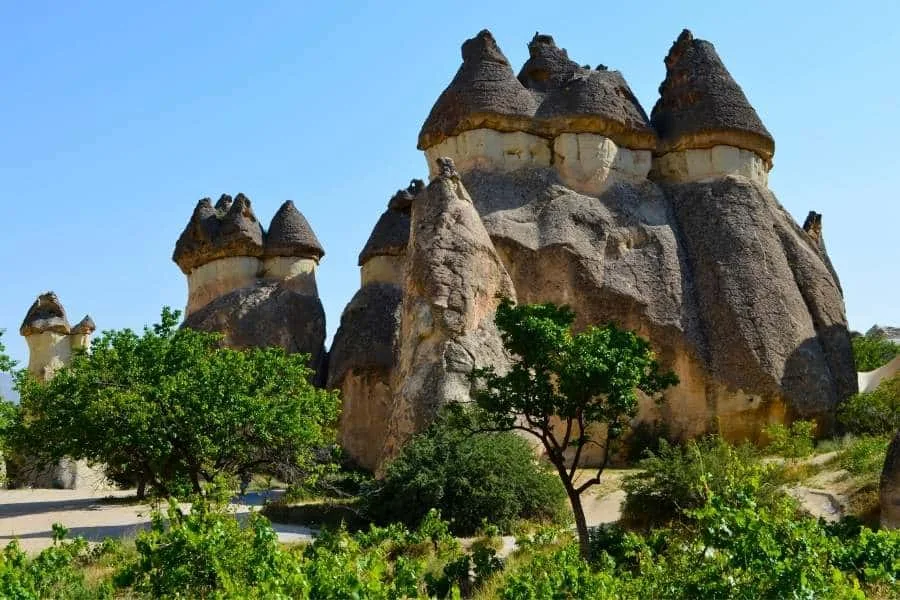
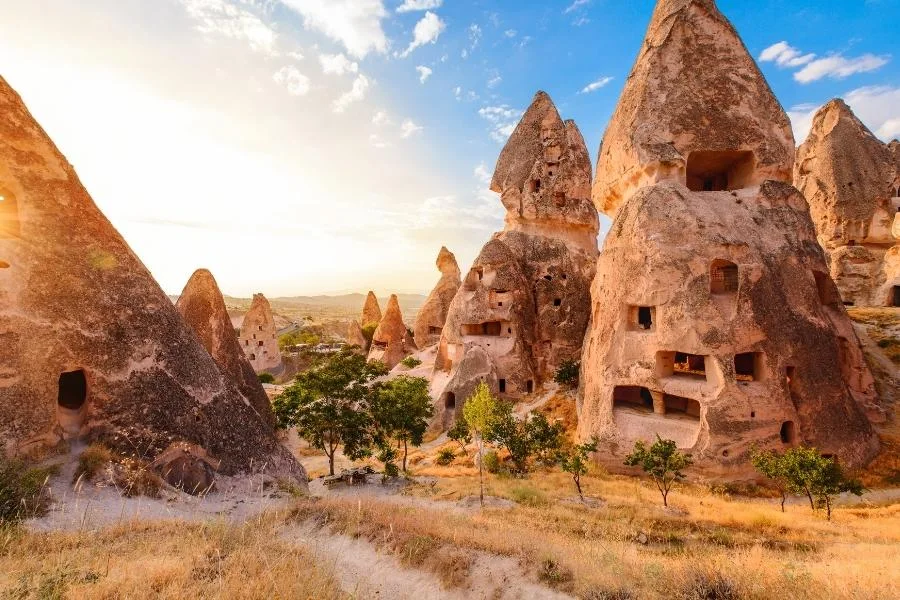
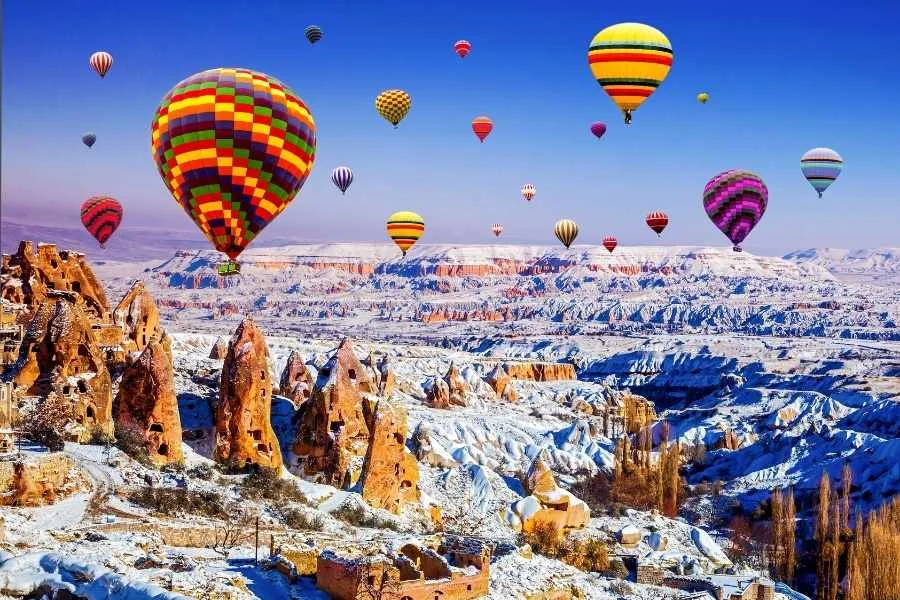
Cappadocia sits in a volcanic landscape. Over time, erosion shaped its soft rock into ridges, pinnacles and hoodoo formations known locally as fairy chimneys. Some formations have harder caps that protect the softer rock beneath them, but the shapes vary across the region.
That means the name describes a landform, not a building style. You’ll see different examples in places such as Paşabağı and Devrent Valley. The forms are part of a landscape still affected by erosion, so they’re not permanent sculptures. UNESCO identifies the area’s pinnacles and ridges as products of erosional forces. [UNESCO’s description of Göreme National Park and the Rock Sites of Cappadocia]
2. Cappadocia includes underground towns, not just cave rooms
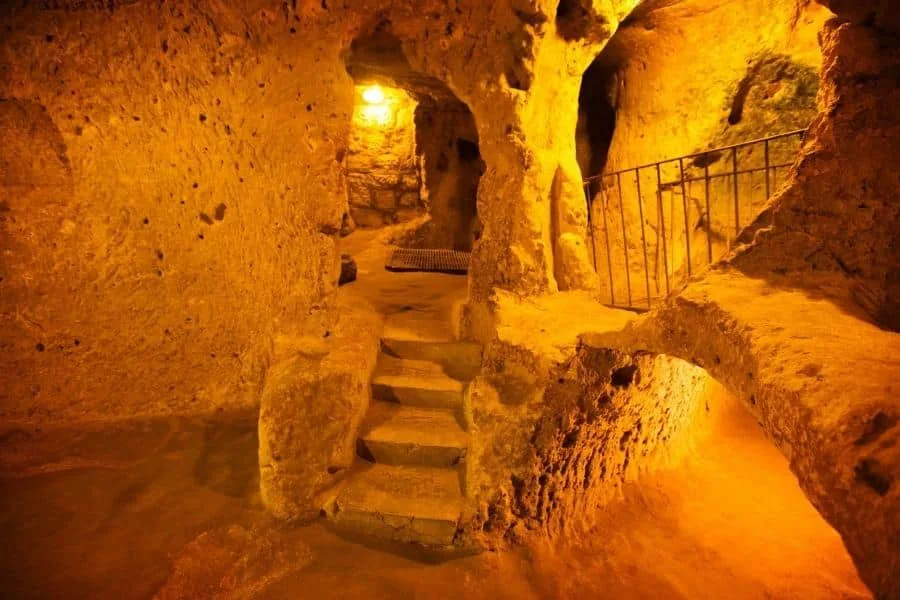
People carved settlements into the region’s rock both above and below ground. UNESCO includes the underground towns of Kaymaklı and Derinkuyu in the listed property and describes such places as refuges used during periods of danger. These were more than isolated hiding spots: underground spaces could connect rooms used for daily life and shelter.
Don’t assume every underground city has the same layout or that every passage is easy to navigate. Some sections have low ceilings and narrow routes. If you’re uncomfortable in enclosed spaces or have mobility concerns, check current access details for the specific site before visiting.
3. Hot-air balloons depend on the day’s flying conditions
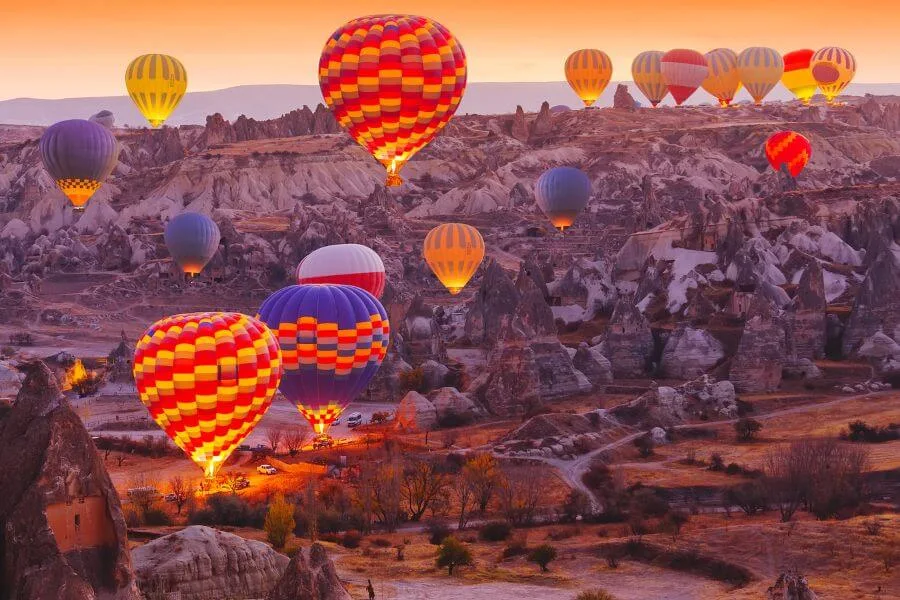
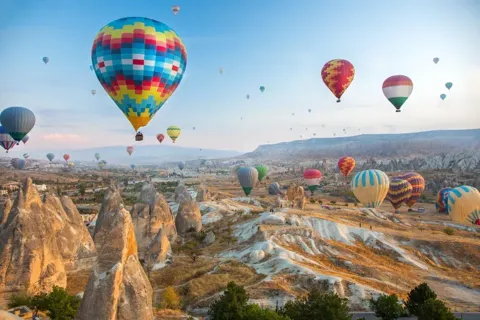
Balloon flights are part of Cappadocia’s modern travel scene, but a scheduled booking doesn’t guarantee a flight. Weather and flight approvals can affect whether balloons take off, so leave room in your plans if a flight is important to you. An early start is part of the experience; it’s worth considering whether you’re comfortable waking before sunrise.
From the ground, you can still see balloons when flights operate. But a balloon ride and watching one are different activities, and an image of balloons in the sky isn’t a promise that they’ll fly on your dates. Check the operator’s current terms and the local flight status close to your visit.
4. The UNESCO listing covers a wider area than Göreme alone
The official name is Göreme National Park and the Rock Sites of Cappadocia. It covers a broad cultural landscape that includes places beyond Göreme, with rock-hewn churches, villages and underground settlements among its features. UNESCO describes the property as both a natural landscape shaped by erosion and a record of human settlement.
That distinction matters when planning a visit. A ticket to one museum or one underground city does not mean you’ve seen the whole UNESCO-listed property. Different locations show different parts of the story, and visiting them can involve separate travel and admission arrangements. Check the current official information for each site you plan to enter.
5. Cappadocia’s churches preserve Byzantine art in the rock
Rock-cut churches are among the region’s most important cultural features. UNESCO describes Cappadocia’s sanctuaries as evidence of Byzantine art, including richly decorated churches created after the period of iconoclasm. The paintings and spaces are part of the site, not decorations added to an ordinary cave.
At Göreme Open Air Museum, the Turkish Ministry of Culture and Tourism describes a long monastic presence, from the fourth century through the thirteenth century. It lists churches including Elmalı, Saint Barbara, the Serpent Church, Dark Church and Tokalı Church. The ministry also notes two painting techniques: paint applied directly to rock and fresco-secco, or tempera. [Göreme Open Air Museum information from Türkiye’s Ministry of Culture and Tourism]
What are the stories behind Cappadocia’s everyday traditions?
Not every striking detail is a monument. Some features make more sense when you connect them to farming, local materials and the practical use of the landscape.
6. Rock-cut spaces have served more than one purpose
Rock-cut architecture in Cappadocia includes homes, churches, monasteries and storage spaces. UNESCO describes dwellings, troglodyte villages and underground towns as traces of traditional settlement in the region. The variety is a reminder that “cave” doesn’t mean one specific kind of building.
Some old spaces have been adapted for modern uses, including accommodation. But don’t assume that every cave-like building is ancient or that every historic space is open to visitors. Look for the site’s own description to understand what you’re seeing, and follow posted access rules. These structures are cut from rock and can be vulnerable to erosion and visitor pressure.
7. Cappadocia has a long association with wine
Grapes are part of Cappadocia’s agricultural and food culture, and wine is one way travelers encounter that tradition today. Volcanic terrain is a defining feature of the region, but don’t reduce the story to a claim that one soil type guarantees a particular flavor or quality. Growing conditions and wines vary.
If you’re curious, treat wine as a local product to ask about rather than a required stop on every visit. A tasting is an optional activity, not a substitute for learning about the rock-cut settlements and churches that define much of the region’s documented heritage.
8. “Land of beautiful horses” is a popular translation of the name
The phrase “land of beautiful horses” is often repeated as an explanation of the name Cappadocia. It’s a memorable line, but it’s safer to treat it as a popular interpretation than as a settled translation. The UNESCO and museum sources cited here describe the region’s landscape, settlements and religious art; they do not establish that translation.
For a useful conversation starter, share the phrase with that qualification. It avoids turning a familiar saying into a confirmed historical fact.
9. Pigeon Valley’s dovecotes had a practical use
Pigeon Valley takes its name from pigeon houses carved into the cliffs. The old dovecotes are a reminder that these valleys were working landscapes, not only places to admire rock formations. Pigeon droppings were used as fertilizer, linking the birds to local farming.
When you look at a cliff, notice the small openings rather than expecting one large pigeon house. The dovecotes are part of the rock face, and their scale can be easy to miss from a distance. A closer look makes the agricultural use of the landscape easier to understand. [Read more about Pigeon Valley]
10. The Star Wars filming story is not confirmed
You may hear that Cappadocia was considered as a filming location for Star Wars, or that scenes were filmed here. The striking landscape makes the story easy to repeat, but the available evidence here doesn’t establish it as fact. Don’t present the claim as a confirmed filming history.
It’s more useful to compare the landscape with the story than to treat the story as a reason for visiting. Cappadocia’s rock formations and settlements have a documented history of their own, including the religious and domestic spaces recorded by UNESCO. [UNESCO’s account of the site’s cultural and natural features]
How can you make sense of these facts during a visit?
Choose a few types of places rather than trying to fit every fact into one stop. A rock-cut church helps explain the region’s religious history; an underground settlement shows how people used the rock for shelter; and a valley walk makes the effects of erosion easier to see. These are different experiences, so one doesn’t stand in for the others.
Allow time for uneven paths and steps at rock sites. Underground passages can be low and narrow, while exposed trails may have little shade. Check current admission, opening and access details on the relevant official site before you go. If you’re visiting several places, check their locations and opening information first so you don’t assume they’re all within easy walking distance of one another.
The clearest way to understand Cappadocia is to connect its natural forms with how people used them. That perspective turns the fairy chimneys, cave churches, pigeon houses and underground towns into parts of one landscape rather than a list of unrelated sights.
Frequently Asked Questions About Cappadocia
How were Cappadocia’s fairy chimneys formed?
They are volcanic rock formations shaped by erosion over time. Their shapes vary across the region, and they are natural landforms rather than constructed towers.
Is Cappadocia a UNESCO World Heritage Site?
Göreme National Park and the Rock Sites of Cappadocia are on UNESCO’s World Heritage List. The property includes both natural features and cultural remains such as rock-hewn sanctuaries and underground towns.
Are Cappadocia’s underground cities easy to visit?
Some sections have narrow passages, low ceilings and steps. Check current access details for the particular site and consider whether enclosed spaces or uneven footing will be comfortable for you.
Are the Star Wars filming claims about Cappadocia true?
The claim is often repeated, but the sources available for this guide don’t confirm it. It’s best described as an unverified story, not an established filming fact.
Does the name Cappadocia mean “land of beautiful horses”?
That phrase is a popular interpretation of the name. The official sources cited here don’t verify it as a definitive translation, so treat it as a saying rather than settled fact.
Can you count on seeing hot-air balloons in Cappadocia?
No specific morning’s flight is guaranteed. Balloon operations depend on suitable conditions and approvals, so check current flight information and leave flexibility in your plans.
These 10 facts show why Cappadocia is more than a collection of unusual rock shapes: its geology, settlements and religious art are closely connected. Check the current details for the sites you want to enter, then choose the places that best match your interests.
About the author
All Istanbul Tours is a TÜRSAB-licensed travel agency (no. 6073) based in Istanbul, planning private and group tours across Türkiye.
Plan your trip
Cappadocia tours
 4 days
4-Day Cappadocia, Pamukkale and Ephesus Tour from Istanbul By Plane & Bus
From €728 per person
 3 days
3-Day Cappadocia and Pamukkale Tour from Istanbul by Air & Bus
Double occupancy €615 per person
 4 days
4-Day Cappadocia, Pamukkale & Ephesus Tour from Istanbul with Flights
From €905 per person
Not sure which tour fits your dates? Ask us on WhatsApp
Keep reading
More Cappadocia guides
Cappadocia The Essential Guide to Cappadocia, Turkey
Fairy chimneys, cave churches and sunrise balloons: how to reach Cappadocia, what it costs in euros, when to go and which tour fits your trip.
 Cappadocia
 for Couples: The Complete Romantic Getaway Guide for 2026
Discover the ultimate romantic Cappadocia guide for couples in 2026, with balloon rides, cave hotels, wine tastings, and sunset hikes.
Cappadocia Best Things to See and Do in Cappadocia: Hot Air Balloons to Caves
Cappadocia things to do, hot air balloon ride Cappadocia, Cappadocia caves, fairy chimneys, Goreme Museum, ATV tour Cappadocia