
 Pin it
Pamukkale travel guide: the white travertine terraces, warm mineral water, and ruins of Hierapolis make this one of Turkey’s most practical natural-and-historical stops to combine in a single day. The five reasons Pamukkale should be on your travel bucket list are straightforward: unusual geology, an ancient spa city, thermal bathing, a walkable site, and good road and flight connections from Istanbul and western Turkey.
This guide is for travelers deciding whether Pamukkale fits their Turkey route, how much time to allow, and whether to visit independently or with a tour. It’s especially useful if you are coming from Istanbul, Izmir, Ephesus, Antalya, or Cappadocia.
Quick Facts
| Best time to visit | Spring and fall for cooler walking weather; arrive early for fewer people on the terraces. |
| Time needed | About 3–5 hours for the terraces and Hierapolis; allow a full day if you also want the Antique Pool and museum. |
| Getting there | Fly to Denizli Çardak Airport, then continue by road to Pamukkale; it is also reached by road from Izmir, Antalya, Ephesus, and Cappadocia. |
| Entry / typical cost | Site entry is about €20; the Cleopatra Antique Pool is an extra charge. Check current prices before you go. |
| Good for | History fans, couples, families with older children, photographers, and travelers building a route through western Turkey. |
Why visit Pamukkale and Hierapolis?
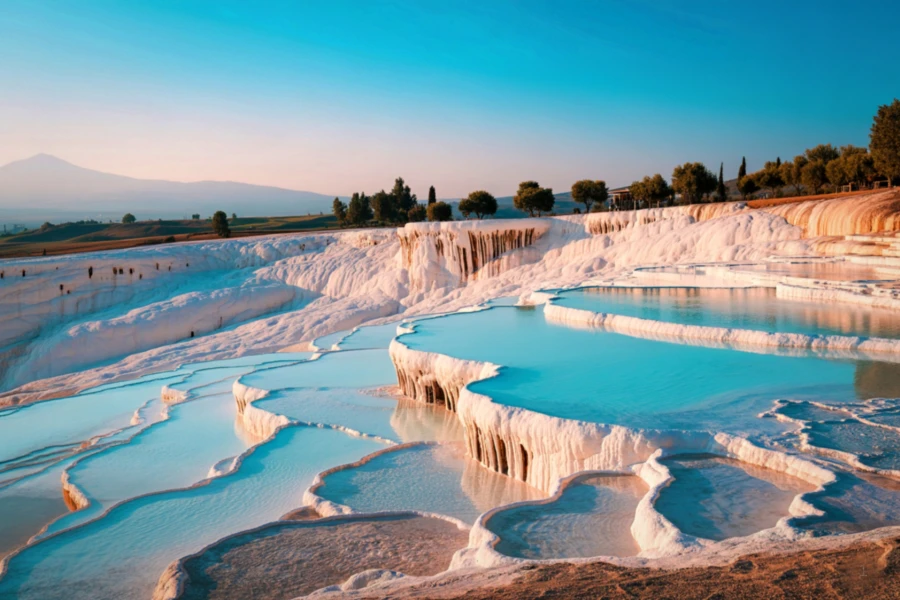
Pamukkale sits in southwestern Turkey near Denizli. Its name means “cotton castle,” referring to the pale mineral terraces that run down the hillside. Warm water rises from springs above the slope and leaves calcium carbonate deposits as it flows, gradually forming shelf-like pools and channels.
The terraces are only part of the visit. Above them stands Hierapolis, an ancient city founded in the 2nd century BCE. It developed as a spa center because of the same thermal springs visitors come to see today. Pamukkale and Hierapolis have been a UNESCO World Heritage Site since 1988.
Reason 1: The travertines are unlike a regular beach or hot spring
The white surface is natural limestone, not snow or salt. You can walk barefoot along designated parts of the terraces, where shallow water runs through channels and pools. Water levels and open sections can change because the site managers direct the flow to protect the formations, so do not expect every terrace to be filled on every visit.
For a closer look at routes, footwear rules, and the terrace entrances, read our Pamukkale Travertines visitor guide.
Reason 2: Hierapolis gives the landscape historical context
Walk uphill from the terraces and you reach the remains of Hierapolis. The site includes a large necropolis, Roman baths, the Temple of Apollo area, and a Roman theater. The theater takes a little effort to reach because the site is spread over a slope, but it is one of the strongest stops if you have the time and steady footing.
Many visitors make the mistake of treating Pamukkale as a quick photo stop. If you leave after the terraces, you miss the reason this place became important in antiquity: people were traveling here for bathing and recovery long before modern tourism.

Reason 3: You can bathe in an ancient thermal setting
The Cleopatra Antique Pools, also called the Antique Pool, are within the Hierapolis area. This is a separate paid swimming pool with warm mineral water and fallen ancient columns beneath the surface. It is a pool experience rather than a quiet natural bath, and it can be busy during the middle of the day.
The mineral water has a long association with wellness, but treat it as a pleasant bathing stop rather than medical treatment. If you have a health concern, ask your doctor before using hot pools.
Reason 4: It fits a larger Turkey itinerary
Pamukkale works well between Ephesus and Antalya, or as part of a route linking Istanbul, Cappadocia, and the Aegean coast. It is more convenient as an overnight stop than a rushed return day trip from Istanbul, especially if you want time for Hierapolis and the pool.
Reason 5: The town is simple to navigate
Pamukkale town is compact, with accommodation, cafés, small shops, and entrances close to the main visitor area. You will still walk a lot inside the archaeological site, but you do not need to deal with a large-city commute once you arrive.
How do you get to Pamukkale from Istanbul, Izmir, Antalya, and Cappadocia?
Most travelers arrive by road from Denizli or use Denizli Çardak Airport for domestic flights. The best route depends on where Pamukkale sits in your itinerary.
| Starting point | Most practical route | Planning notes |
|---|---|---|
| Istanbul | Domestic flight to Denizli Çardak Airport, then road transfer | A flight reduces the long overland journey, but transfers and airport time still make this a full travel day. |
| Izmir or Ephesus | Road transfer or organized tour via Denizli | Best for travelers moving inland after Ephesus rather than returning to Istanbul. |
| Antalya | Road transfer or bus route | Works well if you are traveling west from the Mediterranean coast. |
| Cappadocia | Flight-and-road or coach-based multi-day route | It is a longer connection, so an organized route can save you from coordinating separate legs. |
From Istanbul, a same-day Pamukkale visit is possible only with an early flight, reliable transfers, and a late return. It suits travelers with very limited time, but it is not the relaxed option. An overnight stay gives you better light on the terraces and time to see Hierapolis without watching the clock.
Pro Tip
If Pamukkale is one stop in a longer route, do not book a return flight to Istanbul immediately after your visit. Continue toward Ephesus, Izmir, Antalya, or Cappadocia instead. You will spend less time retracing the same road.
What should you see in Pamukkale in one visit?
A sensible route starts with the terraces and ends among the ruins. Arriving from the lower town entrance means you walk uphill, so save energy and carry only what you need.
- Enter early and walk the travertines. Remove your shoes where required and keep to marked paths. The surface can be slippery, particularly where water is running.
- Pause at the upper terrace viewpoint. This is a good place to look across the Denizli plain before heading into Hierapolis.
- Visit the Roman Baths and archaeological remains. These structures explain how the ancient spa city was organized around the springs.
- See the Temple of Apollo area. It is one of the key sacred areas at Hierapolis.
- Walk to the Roman theater. Go here before your energy drops. The theater is farther from the terrace entrance than many first-time visitors expect.
- Choose the Antique Pool only if you want to swim. Bring swimwear and allow extra time for changing, payment, and crowds.

If you want more options beyond the main route, use our Pamukkale things to do guide. It helps if you are staying overnight or have a second morning in town.
What does Pamukkale cost in 2026?
Ticket prices in Turkey can change during the year, and the exchange-rate value in euros moves as well. Use these as planning allowances, then check the current official price before travel or confirm what your tour includes.
| Item | Typical planning cost | What to know |
|---|---|---|
| Pamukkale and Hierapolis entry | About €20 | Check the current ticket price and opening arrangements before arrival. |
| Cleopatra Antique Pool | About €7 extra | Swimming is separate from the main site ticket. Bring swimwear. |
| 4-Day Cappadocia, Pamukkale and Ephesus group tour | From €728 | Travel is by plane and bus; review the itinerary for included services. |
| 5-Day Pamukkale, Ephesus and Cappadocia tour with flights | From €1,035 | Starts and ends in Istanbul with domestic flights included. |
| 9-Day Istanbul, Cappadocia, Antalya, Pamukkale and Ephesus tour | From €1,670 | Suited to travelers who want a wider Turkey route. |
Food, personal purchases, drinks, optional swimming, and tips are commonly separate unless your booked itinerary says otherwise. Independent visitors should also budget for the transfer from Denizli or the airport, which varies by vehicle type and group size.
When is the best time to visit Pamukkale?
Spring and fall are usually the easiest seasons for walking across exposed stone and exploring the archaeological site. Summer brings strong sun and hot surfaces. Winter can be quieter, but conditions are cooler and weather can affect the feel of an outdoor visit.
| When | What it is like | Best choice for |
|---|---|---|
| Early morning | Cooler temperatures and fewer tour groups | Terraces, photos, and a slower start |
| Late morning to mid-afternoon | More visitors and stronger sun, especially in summer | Travelers arriving on day tours |
| Late afternoon | Lower heat outside peak summer and softer light | Overnight visitors with flexible timing |
| Spring and fall | More comfortable for walking between ruins | Most first-time visitors |
| Summer | Hot, exposed, and crowded around peak hours | Travelers who can start early and carry water |
For a season-by-season breakdown, see our best time to visit Pamukkale guide. No matter the month, the crowd strategy remains the same: enter early, visit the terraces first, and explore Hierapolis before the midday heat.

What should you bring and know before visiting Pamukkale?
Pamukkale is easy to visit if you prepare for sun, wet stone, and more walking than the terrace photos suggest. The main problem is usually footwear, not navigation.
- Wear comfortable walking shoes for Hierapolis and carry a small bag for them when you walk barefoot on designated terrace sections.
- Bring swimwear, a towel, and dry clothes if you plan to use the Antique Pool.
- Carry water, sunscreen, sunglasses, and a hat. Shade is limited across the ruins.
- Use a waterproof pouch for your phone if you will be near running water.
- Keep your ticket until you are fully done with the site.
- Eat before entering or plan a meal in Pamukkale town. Do not rely on finding the exact food you want inside the archaeological area.
Families can manage Pamukkale well with children who are comfortable walking, but strollers are difficult on uneven archaeological paths and terraces. Travelers with limited mobility should focus on the accessible areas near entrances and arrange a vehicle-based tour or transfer where possible. The barefoot terrace route may not suit everyone.
Pro Tip
Do not wear your best sandals onto the terrace route. You may need to carry them, and the wet limestone can be slick. Shoes with good grip are more useful for Hierapolis than fashion footwear.
How can you combine Pamukkale with Ephesus, Cappadocia, and Antalya?
Pamukkale makes more sense as part of a route than as an isolated stop. Ephesus is the natural partner for travelers interested in ancient cities, while Cappadocia adds cave landscapes and Antalya adds a Mediterranean coast stay.
For a fast Istanbul-based route covering three major destinations, consider the 4-Day Cappadocia, Pamukkale and Ephesus Tour from Istanbul By Plane & Bus. It is a practical fit if you accept a faster pace and some coach travel.
If domestic flights and an extra day matter more to you, the 5-Day Pamukkale, Ephesus & Cappadocia Tour from Istanbul with Flights gives more time across the same broad route. Travelers wanting Istanbul included can look at the 6-Day Istanbul, Pamukkale, Ephesus & Cappadocia Tour with Flights.
For a longer itinerary that adds the coast, the 9-Day Istanbul, Cappadocia, Antalya, Pamukkale and Ephesus Tour is better suited to travelers who do not want to piece together each transfer themselves. If Ephesus and Pamukkale are your main priorities, this 3-day Ephesus and Pamukkale itinerary can help you compare route options.
Independent travel gives you freedom to stay overnight and enter early. A group tour is usually the better value when you want fixed logistics and do not mind a schedule. A private tour suits travelers who want a later start, shorter walks, family flexibility, or time at the Antique Pool without holding up a group.
🎫 Recommended Pamukkale Tours
Licensed guide, transport and entrance logistics handled — pick the one that matches your dates.
- 4-Day Pamukkale, Ephesus and Cappadocia Tour from Istanbul by Plane →4 Days / 3 Nights · from €905.00
- 9-Day Istanbul, Cappadocia, Antalya, Pamukkale and Ephesus Tour →9 Days · from €1,670.00
- 7-Day Cappadocia, Pamukkale & Antalya Tour from Istanbul →7 Days / 6 Nights · from €1,195.00
- 6-Day Istanbul, Pamukkale, Ephesus & Cappadocia Tour with Flights →6 Days · from €1,418.00
Frequently Asked Questions About Pamukkale
How much does it cost to enter Pamukkale?
Allow about €20 for entry to Pamukkale and Hierapolis, but check the current price before your visit. The Cleopatra Antique Pool costs extra, usually about €7 as a planning allowance.
How long should I spend in Pamukkale?
Allow 3–5 hours for the terraces and the main Hierapolis ruins. Add more time if you want to swim in the Antique Pool, visit at a slow pace, or walk through the extensive necropolis.
What is the best month to visit Pamukkale?
Spring and fall are generally the most comfortable periods because walking conditions are cooler. Summer is workable if you arrive early, but the site is exposed and the stone paths can become hot.
Can children visit Pamukkale?
Yes, children can visit, especially if they are used to walking outdoors. Keep them close on wet terrace areas, bring sun protection and water, and remember that stroller use is limited on uneven ground.
Can you visit Pamukkale from Istanbul in one day?
It is possible with an early domestic flight to Denizli and carefully arranged transfers, but it is a long day. Staying overnight or combining Pamukkale with Ephesus, Cappadocia, or Antalya is usually a better use of your travel time.
Do I need to buy Pamukkale tickets in advance?
Check current ticket arrangements before you travel, particularly during busy periods. If you join an organized tour, confirm whether site entry is included or paid separately, as tour inclusions differ.
Can I combine Pamukkale and Ephesus?
Yes. They are commonly paired on multi-day western Turkey routes because both offer major archaeological sites but very different settings. Allow at least two days if you want to visit both without rushing.
Ready to turn Pamukkale into a workable Turkey route? Use our Turkey trip planner to compare the right sequence, transfer style, and tour length for your dates.


