
 Pin it
Pamukkale is a UNESCO World Heritage site in southwestern Turkey where hot mineral water has built white travertine terraces down a hillside, with the ruins of the Roman city of Hierapolis sitting on the plateau above them. You walk the terraces barefoot, you can swim among fallen marble columns in the Cleopatra Antique Pool, and one ticket covers both the terraces and the archaeological site. Most people need three to five hours; a full day if you want to swim and see the theatre properly.
This guide is for anyone deciding how to fit Pamukkale into a Turkey trip: whether to come from Istanbul, Izmir, Antalya or Cappadocia, which gate to enter, what to budget in euros, and which tour format actually suits how you travel. It also covers the unglamorous parts, like the barefoot walk on wet limestone and the midday heat in July.
Quick Facts
| Best time to visit | April to June and September to November; early morning or the last two hours before closing |
| Time needed | 3–5 hours for terraces and Hierapolis; a full day with a swim and lunch |
| Getting there | Fly Istanbul–Denizli (about 1 hour 15 minutes), then roughly 45–60 minutes by road; or overnight bus, or a multi-day tour |
| Entry / typical cost | Combined Hierapolis-Pamukkale ticket about €30; Cleopatra Antique Pool extra (check the current price) |
| Good for | First-time Turkey visitors, families with older kids, photographers, thermal-spa travelers |
What is Pamukkale and why does it matter?
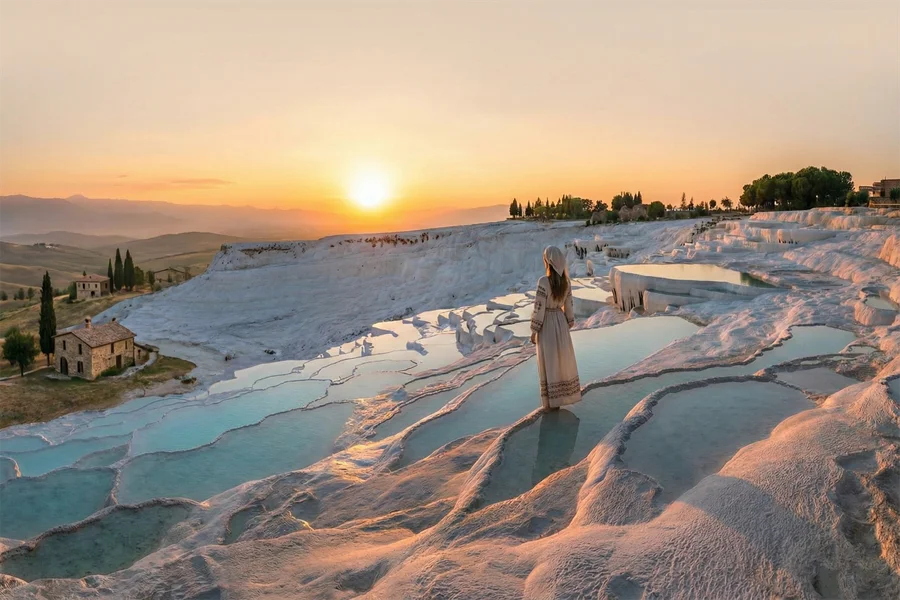
Pamukkale means “cotton castle” in Turkish. Calcium-rich water surfaces from underground springs, runs down the slope, and leaves behind calcium carbonate that hardens into white ledges and shallow basins. That process has been going on for thousands of years, which is why the hillside looks the way it does from the road below: a white cliff with turquoise water pooled across it.
The water arrives between roughly 35°C and much hotter at source, so the pools you can stand in feel like a warm bath rather than a hot tub. People have been coming here for the water since antiquity. Hierapolis was founded in the 2nd century B.C. and became a Roman spa and healing center, and its ruins still spread across the plateau: a theatre carved into the hillside, the remains of the Temple of Apollo, Roman baths, and one of the largest necropolises in Anatolia.
The pairing is the point. You get a geological formation and a Roman city on the same ticket, ten minutes’ walk apart. Our full Pamukkale things to do guide breaks the individual sites down further.

How to get to Pamukkale
Pamukkale village sits below the terraces. The nearest city is Denizli, about 20 kilometers away, and that is where flights and long-distance buses arrive.
From Istanbul
The fastest option is a domestic flight to Denizli Çardak Airport, roughly an hour and fifteen minutes in the air, then about an hour by road to Pamukkale. Overnight buses from Istanbul take somewhere around 10–11 hours and save a hotel night, but you arrive tired and the terraces deserve fresh legs. Several of our packages, including the 5-Day Pamukkale, Ephesus & Cappadocia Tour from Istanbul with Flights, use the Denizli flight and handle the transfers so you don’t lose half a day on logistics.
From Izmir, Ephesus and the coast
Izmir to Pamukkale is roughly a three-and-a-half to four-hour drive. From Selçuk, next to Ephesus, it’s around three hours. That’s why the two sites are almost always sold together, and why a 3-day Ephesus and Pamukkale itinerary works so well.
From Antalya and Cappadocia
Antalya is about four hours by road over the mountains. Cappadocia is a long haul, roughly nine to ten hours by bus, which is why most travelers fly one leg or let a tour coach handle the overnight stops. The 7-Day Cappadocia, Pamukkale & Antalya Tour from Istanbul strings all three together without you booking a single ticket.
What to see at Pamukkale, in a sensible order
There are three entrances: the South Gate, the North Gate, and the lower gate in Pamukkale town at the foot of the terraces. Which one you use changes your whole day.
- Enter at the South Gate if you have a car or a tour bus. It puts you near the Temple of Apollo, the Plutonium and the theatre while your legs are fresh.
- Walk the theatre first. It’s the steepest climb on site and much easier before the midday sun. The seating is well preserved and the stage building still carries its carved reliefs.
- Cross to the Cleopatra Antique Pool. Warm mineral water, submerged column drums, and a separate fee on top of your ticket. Details in our Cleopatra Antique Pools visitor guide.
- Descend the travertines barefoot. Shoes come off at the marked point; this is a rule, not a suggestion. The surface is ridged and slippery in places, so go slowly.
- Exit at the lower gate into Pamukkale village for lunch, or turn around and climb back if your transport waits at the top.
If you have extra time, the necropolis at the northern end is worth thirty minutes, and Karahayit, a few kilometers away, has red-tinted iron-rich springs that make an easy add-on.

Pro Tip
Walk down the terraces, not up. Most day-trippers are dropped at the lower gate and climb barefoot in the heat, which is uncomfortable and slow. Entering at the South Gate and finishing at the bottom means gravity does the work and you meet the crowds head-on rather than queueing behind them.
What does Pamukkale cost?
Prices are set by the Ministry of Culture and Tourism and change most years, so treat these as planning figures and check the current price before you go.
| Item | Approximate cost |
| Hierapolis-Pamukkale combined entry | about €30 |
| Cleopatra Antique Pool (extra) | about €20–25 |
| Locker and towel rental at the pool | a few euros |
| Denizli–Pamukkale transfer, one way | about €5 by minibus, €35–50 by private car |
| Lunch in Pamukkale village | €10–20 per person |
| Mid-range hotel with thermal pool, per night | €50–90 |
| Multi-day tour including Pamukkale, per person | from about €728 |
Children’s and student discounts apply at the gate, and the Museum Pass covers entry if you’re already carrying one for Istanbul and Ephesus.
Best time to visit Pamukkale
By season
| Season | What to expect |
| April–June | Mild days, green hills, water at its best colour. The strongest window. |
| July–August | Hot, often above 35°C, and the white surface reflects it. Go at opening or after 16:00. |
| September–November | Warm, thinner crowds, comfortable walking. Our other favourite window. |
| December–March | Cool and sometimes wet, but the thermal water still feels warm and the site is quiet. |
By time of day
Tour coaches from Izmir and Antalya land between roughly 11:00 and 15:00. Arrive at opening and you’ll have the terraces near-empty for the first hour. Late afternoon is the other good slot: the crowds thin, the light turns warm, and sunset over the valley from the upper terraces is the shot everyone wants. For a longer breakdown month by month, see our guide on the best time to visit Pamukkale.
Practical tips before you go
- Bring a small towel and swimwear. Wear the swimsuit under your clothes; changing facilities exist but queues form.
- Pack a bag for your shoes. You carry them the whole way down the terraces.
- Sun protection matters more here. White limestone reflects light upward. Hat, sunglasses, sunscreen on the underside of your chin included.
- Water and cash. There are cafés on site, but a refillable bottle saves money and steps.
- Accessibility. The upper plateau near the South Gate has flat, paved sections and the Cleopatra Pool area is manageable with help. The terrace descent, the theatre and the necropolis involve uneven ground and are difficult with a wheelchair or unsteady footing.
- Food. Pamukkale village does grilled meats, meze plates and gözleme well. Denizli is known for its kebab; the local version is slow-cooked lamb.
- Respect the barriers. Some terrace pools are closed on rotation so the mineral crust can rebuild. Stepping into a roped-off basin damages it.
Pro Tip
Book a hotel in Pamukkale village rather than Denizli. Many have their own thermal pools, you’re a ten-minute walk from the lower gate, and you can be at the terraces at opening time while the day-trip coaches are still an hour away.
How to combine Pamukkale with nearby places
Pamukkale is rarely a standalone trip. The natural pairing is Ephesus, three hours west, giving you a Roman spa town and a Roman port city in two days. Add Cappadocia and you have the classic Turkey triangle. The 4-Day Cappadocia, Pamukkale and Ephesus Tour from Istanbul covers that route by plane and bus for travelers on a tight schedule, while the 10-Day Istanbul, Gallipoli, Troy, Pergamon, Ephesus, Pamukkale & Cappadocia Tour adds the northern Aegean sites for those with more time.
Closer options: Karahayit’s red springs, the ruins of Laodicea about ten kilometers away, and Denizli’s markets. If you’re driving in from central Anatolia, our post on the road from Cappadocia to Pamukkale covers the stops worth making.

Which Pamukkale tour type suits you?
Independent
Works if you’re comfortable with domestic flights and minibus timetables, and want to stay overnight for sunrise. Cheapest per person, but you’ll spend a day on transfers.
Small group multi-day
The best value for first-time visitors. Flights, hotels, entrance coordination and guiding are handled, and you get Ephesus and Cappadocia in the same trip. The 5-Day Cappadocia, Pamukkale, Ephesus, Troy & Gallipoli Tour is a good example of the format.
Private
Right for families with young kids, travelers with limited mobility, or anyone who wants to reach the South Gate at opening rather than on a coach schedule. Costs more, controls the clock.
Whichever you choose, check what’s included: most packages cover site entry to Hierapolis-Pamukkale but treat the Cleopatra Antique Pool as an optional extra paid on the day. Browse everything in our Pamukkale Tours collection.
🎫 Recommended Pamukkale Tours
Licensed guide, transport and entrance logistics handled — pick the one that matches your dates.
- 9-Day Istanbul, Cappadocia, Antalya, Pamukkale and Ephesus Tour →9 Days · from €1,670.00
- 4-Day Cappadocia, Pamukkale and Ephesus Tour from Istanbul By Plane & Bus →4 Days / 3 Nights · from €728.00
- 5-Day Pamukkale, Ephesus & Cappadocia Tour from Istanbul with Flights →5 Days / 4 Nights · from €1,035.00
- 7-Day Cappadocia, Pamukkale & Antalya Tour from Istanbul →7 Days / 6 Nights · from €1,195.00
Frequently Asked Questions About Pamukkale
How much does it cost to visit Pamukkale?
The combined Hierapolis-Pamukkale entry ticket runs around €30, and the Cleopatra Antique Pool is a separate charge of roughly €20–25. Add transfers and lunch and a self-guided day comes to about €50–70 per person. Prices are revised most years, so confirm the current rate before you travel.
How long do you need at Pamukkale?
Three to five hours covers the terraces and the main Hierapolis ruins at a comfortable pace. Add an hour if you swim in the Cleopatra Pool, and plan a full day if you also want the necropolis, lunch in the village and sunset from the upper terraces.
What is the best month to visit Pamukkale?
May and October are the sweet spots: mild temperatures, manageable crowds and good water levels. July and August work if you arrive at opening, but midday heat on white limestone is genuinely hard going. Winter is quiet and the thermal water still feels warm.
Can you swim at Pamukkale?
Yes, in designated areas. Shallow wading is allowed in some of the open terrace pools, and full swimming is at the Cleopatra Antique Pool, where Roman columns lie on the bottom. Other basins are roped off on rotation so the mineral surface can recover. Our post on the Pamukkale hot springs explains where the water comes from.
Is Pamukkale good with kids?
Yes, especially ages six and up. Kids like the warm shallow water and the barefoot walk. Bring water shoes for the walk back if little feet complain, keep a close hold on the steeper terrace edges, and skip the theatre climb with toddlers.
Can you visit Pamukkale from Istanbul in one day?
It’s possible with the first morning flight to Denizli and a late return, but it makes for a 15-hour day with very little time on site. One overnight in Pamukkale village turns it into a relaxed trip, and a multi-day tour that also covers Ephesus is usually better value.
Do I need to book tickets in advance?
Tickets are sold at the gates and advance purchase isn’t usually required. In July and August queues at the lower gate can be long around midday, so arriving early or entering at the South Gate saves waiting. Guided tours handle entry for you.
Ready to slot Pamukkale into a wider Turkey route? Tell us your dates and travel style through the Turkey trip planner, or compare departures directly in our Pamukkale travertines guide and pick the itinerary that matches your timing.