
 Pin it
Exploring Istanbul’s Historic Old City means spending time in Sultanahmet, where Hagia Sophia, the Blue Mosque, Topkapi Palace, the Basilica Cistern, and the Grand Bazaar sit within a walkable area. Plan at least two full days if you want to enter the major sights without racing through ticket lines, prayer times, and crowds.
This Istanbul Old City guide is for first-time visitors who want a sensible route, realistic costs, and clear choices between walking independently and booking a guide. The Old City is easy to reach, but uneven paving, security checks, and busy midday streets can make a poorly planned day tiring.
Quick Facts
| Best time to visit | April to May and September to October for milder weather; arrive early for major sights. |
| Time needed | Two full days for the main sites; three days if you also want a hammam, Süleymaniye, and unhurried shopping. |
| Getting there | Use the T1 tram to Sultanahmet from central European-side neighborhoods, then walk between most sights. |
| Entry / typical cost | About €0 to enter the Blue Mosque; allow about €25 for Hagia Sophia’s visitor gallery and €50–60 for Topkapi Palace, subject to current prices. |
| Good for | First-time visitors, history fans, families with older children, and travelers who prefer a walkable sightseeing day. |
What is Istanbul’s Historic Old City?
Istanbul’s Historic Old City covers the former Byzantine and Ottoman capital on the peninsula south of the Golden Horn. Sultanahmet is the district most visitors mean when they talk about the Old City. It contains the former Hippodrome, Hagia Sophia, Sultan Ahmed Mosque, Topkapi Palace, and the Basilica Cistern.
These places explain why the city changed hands and religions over many centuries. Hagia Sophia began as a church, later served as a mosque, became a museum, and is now a functioning mosque again. Topkapi Palace was the Ottoman sultans’ main residence and administrative center for nearly four centuries. The Basilica Cistern was built in the 6th century under Emperor Justinian I to store water for Constantinople.
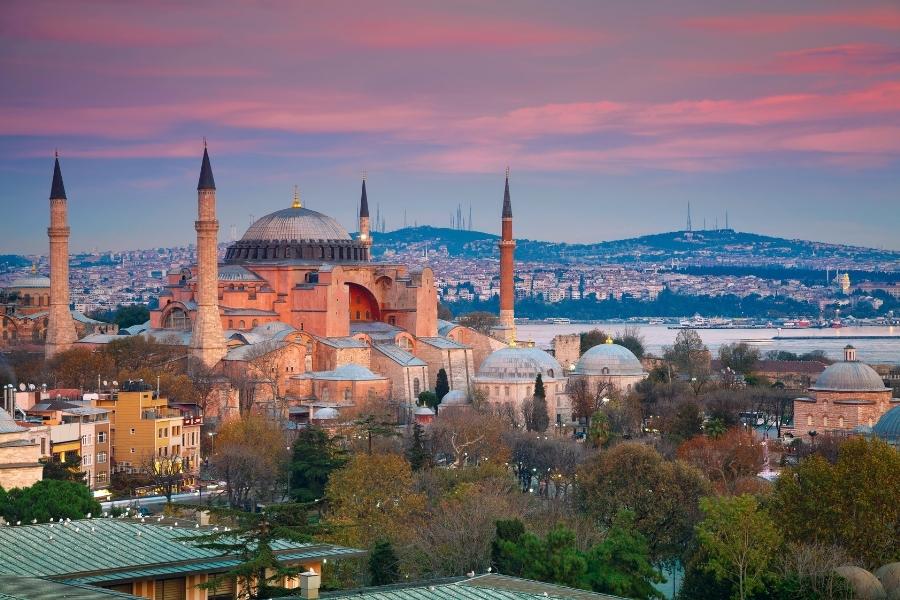
The district is not a preserved open-air museum. People pray at the mosques, trams run along the edge of the area, and many streets are filled with hotels, restaurants, souvenir shops, and tour groups. That mix is part of the experience, but it also means you should start with your priority sight before browsing.
How to get to Sultanahmet from Istanbul’s main hubs
Sultanahmet is on Istanbul’s European side. The T1 tram is usually the simplest public-transport option because it stops at Sultanahmet and runs close to the Grand Bazaar at Beyazıt-Kapalıçarşı.
From Taksim, Galata, and Karaköy
From Taksim, take the F1 funicular down to Kabataş, then change to the T1 tram toward Bağcılar and get off at Sultanahmet. From Galata or Karaköy, walk or use local transport to the T1 line at Karaköy, Eminönü, or Kabataş. Allow extra time during the morning and evening commute, when trams can be crowded.
From the airport
From Istanbul Airport, an airport transfer, taxi, or airport bus connection is usually more practical if you have luggage. From Sabiha Gökçen Airport on the Asian side, leave a larger time buffer because crossing the Bosphorus adds distance and traffic can be unpredictable. If you have a long layover and want sightseeing without handling transport, the Private Istanbul Tour – Pick up and Drop-off Istanbul Airport is designed for travelers arriving or departing that day.
Once you are in the Old City
Walk. Hagia Sophia, the Blue Mosque, the Hippodrome, and the Basilica Cistern are only a few minutes apart. Topkapi Palace is a short uphill walk from Hagia Sophia. The Grand Bazaar is farther west, so save it for the end of the day or take the tram one stop toward Beyazıt if your feet are done.
Pro Tip
Do not try to see Hagia Sophia, Topkapi Palace, the Basilica Cistern, the Blue Mosque, and the Grand Bazaar in one short afternoon. Pick two paid sights and one mosque for day one, then finish the remaining places the next morning.
What to see in Istanbul Old City in the best order
A sensible route starts in Sultanahmet Square before the busiest part of the day. It avoids retracing your steps and leaves the Grand Bazaar for later, when you are ready to shop or simply walk through.
- Start at Hagia Sophia. Arrive early and check the current visitor route before you go. Since it is an active mosque, access arrangements and prayer-time restrictions can affect visits. Read our Hagia Sophia Complete Visitor Guide before choosing your time slot.
- Cross to the Blue Mosque. Officially called Sultan Ahmed Mosque, it is known for its six minarets and interior tiles. Entry is free, but visitors must dress appropriately and may need to wait during prayer times.
- Walk through the Hippodrome. This was Constantinople’s chariot-racing arena. Look for the Egyptian Obelisk and the German Fountain rather than treating the square as just a route between two mosques.
- Go underground at the Basilica Cistern. Its marble columns and two Medusa-head bases make it one of the area’s most memorable stops. The damp floor and low light can be uncomfortable for some visitors, but the walkways are straightforward.
- Give Topkapi Palace a full afternoon or separate morning. The palace contains several courtyards, museum collections, the Imperial Council area, and the Harem. Rushing through it after a full morning in queues is a common mistake.
- End at the Grand Bazaar. Its covered lanes contain thousands of shops, but not all sell local or handmade products. For practical buying advice, see our Grand Bazaar Istanbul visitor guide.

Do not skip Topkapi Palace’s Harem
The Harem is where many visitors learn most about palace life, family politics, and the household that surrounded the sultan. It was historically sold as an add-on, and ticket arrangements can change, so verify what your current ticket includes before joining the main queue. The palace also holds major collections, including the Topkapi Dagger.
Make time for the Basilica Cistern
The cistern is often treated as a quick photo stop. Allow enough time to walk its full visitor route, inspect the reused column bases, and find the Medusa heads at the far end. It works especially well in the middle of a hot or rainy day because it is indoors.

What does Istanbul Old City cost in 2026?
Costs change regularly in Istanbul, especially museum tickets set for foreign visitors. Use the figures below for planning, then check current official prices shortly before your visit. Mosques are free, while palace and museum tickets can account for most of a DIY sightseeing budget.
| Item | Typical cost | What to know |
|---|---|---|
| Blue Mosque | Free | Donations are optional. Dress rules apply. |
| Hagia Sophia visitor gallery | About €25 | Visitor access and ticket rules can change because the building is an active mosque. |
| Topkapi Palace | About €50–60 | Check whether the Harem and other sections are included in the current ticket. |
| Basilica Cistern | About €15–20 | Prices may differ by time of day and visitor category. |
| Grand Bazaar | Free entry | Set a budget before shopping; quoted prices are not fixed in many stalls. |
| T1 tram ride | Low-cost with Istanbulkart | Buy and load an Istanbulkart for public transport. |
| Full-day shared guided tour | From about €165 | Check the itinerary for admissions, lunch, and cruise inclusions. |
For a guided day focused on the central monuments, the Istanbul Byzantine and Ottoman Relics Tour starts from €165 and suits travelers who want the historical context alongside practical help navigating the center. Always read the current inclusions before booking, since entrance tickets and meals can be listed separately.
When is the best time to visit Istanbul Old City?
Morning is the strongest choice for Sultanahmet. You get cooler walking conditions in warmer months and a better chance of reaching your first ticketed sight before long lines form. Midday is best used for the Basilica Cistern, lunch, or a less time-sensitive stop.
| Period | What it is like | Best approach |
|---|---|---|
| April to May | Milder temperatures, busy spring travel period. | Book tours early and start outdoor sites in the morning. |
| June to August | Hot weather, strong sun, and heavy visitor numbers. | Begin early, carry water, and place the cistern in the middle of the day. |
| September to October | Comfortable walking weather, still busy. | Good for a two-day Old City plan; reserve timed entries where available. |
| November to March | Cooler days and possible rain, with fewer visitors outside holiday periods. | Bring a waterproof layer and use indoor museums to break up the day. |
Friday deserves special attention. Mosques are active religious spaces, and Friday prayers can affect tourist access and crowd levels around Sultanahmet. Visit the Basilica Cistern or Topkapi Palace first if your schedule puts you there on a Friday.
Practical tips for visiting Hagia Sophia, mosques, and the bazaar
Comfortable shoes matter more here than a formal sightseeing outfit. Pavements can be uneven, Topkapi has slopes and courtyards, and the Grand Bazaar is larger than it first appears. Carry a light layer for mosque visits, even in summer.
- Wear clothing that covers shoulders and knees for mosque visits. Women should bring a scarf for hair covering when required.
- Remove shoes before entering mosque prayer areas and follow staff instructions on photography.
- Check daily prayer times before visiting the Blue Mosque or Hagia Sophia.
- Bring water, sunscreen in warm months, and a compact rain layer in winter.
- Keep cash and cards secure in crowded shopping lanes and tram stops.
- Agree on a price before accepting a taxi ride or purchasing an item without a marked price.
- At the Grand Bazaar, compare several shops before buying carpets, jewelry, ceramics, or leather goods.
The Old City can work for families, especially if you choose fewer sights and schedule breaks. The cistern’s dim setting may unsettle very young children. Strollers are possible on main streets but inconvenient on cobbles, steps, and crowded bazaar lanes. Visitors with limited mobility should consider a private guide who can adapt the route and avoid unnecessary slopes or long waits.
Pro Tip
For the Grand Bazaar, decide what you actually want before entering. A guide can help with orientation, but no one can guarantee a “best price.” Ask about materials, origin, returns, and delivery before you negotiate.
How to combine Sultanahmet with nearby places
If you have three days in Istanbul, keep the first two around Sultanahmet and add the areas outside the main square afterward. This prevents a common first-timer mistake: spending half the day crossing the city instead of seeing the places you came for.
Süleymaniye Mosque and Beyazıt
Walk west from the Grand Bazaar toward Süleymaniye Mosque. The route is uphill, but the mosque complex gives you a different view of Ottoman Istanbul from the palace-focused story at Topkapi. Build in time to stop for tea or a simple lunch near the bazaar rather than trying to force another paid museum into the same day.

Galata, the Bosphorus, and a cruise
After the Old City, cross toward Eminönü for the waterfront, then continue to Karaköy or Galata on another day. A Bosphorus cruise changes the perspective from monuments and interiors to the city’s waterfront neighborhoods. The Full Day Istanbul Classic & Bosphorus Cruise Combination Tour is a useful choice when you have limited time and want central history plus time on the water in one organized day.
For help arranging your hotel around your priorities, compare the practical pros and cons in our guide to where to stay in Istanbul for first-time visitors.
Should you visit Istanbul Old City independently or on a tour?
Independent travel works well if you are comfortable using trams, checking opening arrangements, and accepting that you may wait in lines. It is the lower-cost option if you focus on free mosques and choose one or two paid sites. A guide is more useful if the differences between Byzantine, Roman, and Ottoman periods matter to you, or if you only have one full day.
| Travel style | Best for | Trade-off |
|---|---|---|
| DIY walking day | Budget-minded travelers and repeat visitors | You manage tickets, routing, prayer-time changes, and historical context. |
| Shared group tour | First-time visitors who want a planned route | Fixed pace and set itinerary. |
| Private guide | Families, mobility needs, photographers, and travelers with specific interests | Higher cost, but the day can be adjusted around your pace. |
| Multi-day Turkey tour | Visitors combining Istanbul with Cappadocia, Ephesus, Pamukkale, or Antalya | Less free time in each destination than a fully independent trip. |
The 8-Hour Private Guided Tour in Istanbul, from €210, is the better fit if you want to focus on the Old City but need control over stops and walking pace. If Istanbul is only the beginning of your trip, consider the 6-Day Istanbul, Pamukkale, Ephesus & Cappadocia Tour with Flights, which connects the country’s main historic and geological sites with domestic flights.
🎫 Recommended Istanbul Tours
Licensed guide, transport and entrance logistics handled — pick the one that matches your dates.
- Full Day Istanbul Classic & Bosphorus Cruise Combination Tour →from €180.00
- Istanbul Byzantine and Ottoman Relics Tour →from €165.00
- 9-Day Istanbul, Cappadocia, Antalya, Pamukkale and Ephesus Tour →9 Days · from €1,670.00
- Bursa Day Trip from Istanbul →from €119.00
Frequently Asked Questions About Istanbul
How many days do you need for Istanbul Old City?
Allow two full days for Hagia Sophia, the Blue Mosque, Topkapi Palace, Basilica Cistern, and the Grand Bazaar at a reasonable pace. Add a third day if you want Süleymaniye Mosque, a hammam, shopping time, or a Bosphorus cruise.
Is Hagia Sophia free to enter in 2026?
Hagia Sophia is an active mosque, but international visitors generally pay to use the designated visitor gallery route. Budget about €25 and check the current entry policy before you go, as access rules can change.
What is the best month to visit Sultanahmet?
April, May, September, and October are usually the most comfortable months for walking between sights. Summer is workable if you begin early, but expect heat and larger crowds.
Can you visit Istanbul Old City with children?
Yes, but plan shorter days and include food and restroom breaks. The Blue Mosque and outdoor square are easy with children; Topkapi Palace is better for older children interested in history, while the Basilica Cistern can feel dark for younger ones.
Do you need a tour for Sultanahmet?
No. The central sights are close together and easy to reach by tram. A guided tour is worthwhile when you want historical explanation, help organizing a short stay, or a route adapted for your group.
Can you combine the Grand Bazaar and Topkapi Palace in one day?
You can, but start Topkapi Palace early and reserve at least several hours for it. Visit the Grand Bazaar afterward, when you can browse without worrying about a palace closing time.
Use our Turkey trip planner to map Istanbul into a wider route, or compare the available Istanbul Tours if you would rather have transport, timing, and local guidance arranged in advance.