
 Day Trips From Istanbul
1-Day Gallipoli Battlefields Tour from Istanbul
Explore the Gallipoli Peninsula on this fully guided full-day trip from Istanbul, crossing Thrace and the Dardanelles to reach the…
Gallipoli (Gelibolu) is a windswept peninsula on Turkey's northern Aegean coast where one of the defining campaigns of the First World War was fought, and today it is a place of pilgrimage, remembrance, and quiet natural beauty. Beyond its battlefields, memorials, and cemeteries, visitors find pine-covered ridges, calm coves, and easy access to the Dardanelles Strait and nearby ancient Troy. It rewards travelers who come to reflect on history while enjoying the peaceful, uncrowded landscapes of the Turkish coast.
The experiences and sights worth your time, from icons to local favourites.
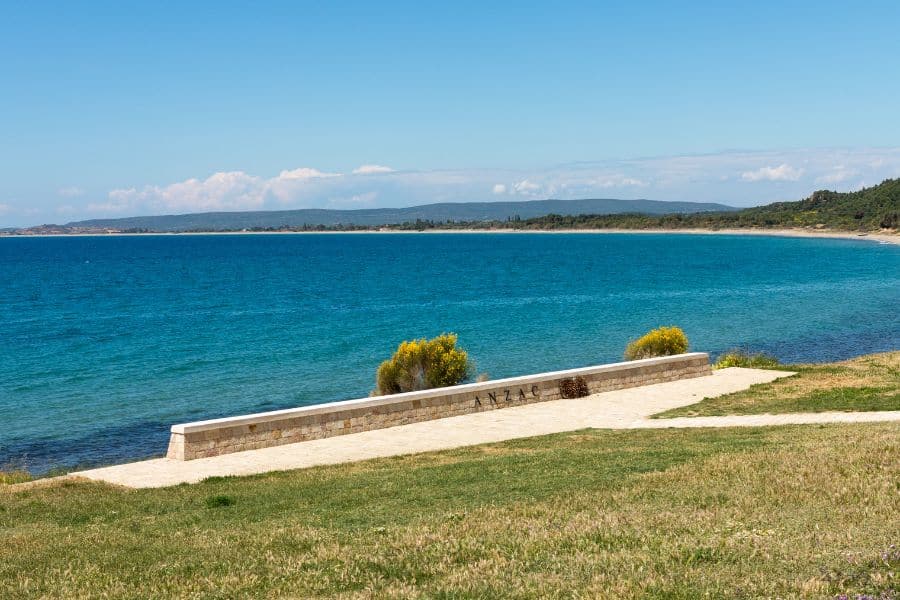
The small beach where Australian and New Zealand troops landed on 25 April 1915, now a solemn memorial site and the focus of the annual Anzac Day dawn service. The narrow shoreline backed by steep cliffs makes the ordeal the soldiers faced immediately clear.
The principal Australian memorial on the peninsula, commemorating those with no known grave at the site of ferocious 1915 fighting. Rows of headstones sit among the pines on the ridge where opposing trenches once ran only meters apart.
A commanding hilltop that was the objective of the August 1915 offensive and where Mustafa Kemal (later Ataturk) played a decisive role. It holds the New Zealand Memorial and a towering statue of Ataturk, with sweeping views over the battlefields and the strait.
A monumental structure over 40 meters tall at Morto Bay, honoring the roughly 253,000 Turkish soldiers who defended the Dardanelles. It is the main Turkish national memorial on the peninsula and a deeply important site of remembrance.
A modern, largely underground interpretive museum near Kabatepe that uses 3D simulations, films, and immersive galleries to tell the campaign's story. It offers essential context before or after touring the battlefields.
A tiny, exposed ridge where waves of Australian Light Horsemen were cut down in a doomed 1915 charge, a story known worldwide through film and memoir. Preserved trench lines nearby show just how close the opposing front lines really were.
A well-curated museum displaying weapons, uniforms, letters, and poignant personal artifacts recovered from the battlefields. It gives a human, moving perspective on the soldiers of every nation who served here.
At the southern tip of the peninsula stands the main British and Commonwealth memorial, alongside V Beach and other landing sites and cemeteries. This quieter area marks where the British-led landings took place on the same April morning.
The narrow, strategically vital waterway linking the Aegean to the Sea of Marmara, whose control was the entire point of the campaign. Watching ships thread through the strait, or crossing by ferry to Canakkale, is a highlight in itself.
Just across the Dardanelles near Canakkale lies the legendary city of Homer's Iliad, a UNESCO World Heritage Site with layered ruins spanning millennia and a striking wooden-horse replica. Many visitors pair Gallipoli with Troy, and the modern Troy Museum nearby deepens the experience.
The peninsula's namesake harbor town offers a working fishing port, seaside cafes, and a chance to try local sardines and fresh Aegean seafood. Its relaxed waterfront and old Ottoman-era streets make a pleasant break from touring memorials.
The northern side of the peninsula fronts the clean, calm waters of the Gulf of Saros, popular for swimming and unhurried seaside days. It offers a gentle, restorative counterpoint to the emotional weight of the battlefield sites.
Guided tours that cover the highlights above, hassle-free.
Day Trips From IstanbulExplore the Gallipoli Peninsula on this fully guided full-day trip from Istanbul, crossing Thrace and the Dardanelles to reach the…
 4 to 5 Day Turkey Tours
Visit Istanbul, Ephesus, Gallipoli, and Troy on this 5-day tour through some of Turkey's most important historical sites. The journey…
 Turkey
Explore Istanbul, Cappadocia, Pamukkale, Ephesus, Pergamon, Troy, and Gallipoli on this 11-day tour through Turkey's history and landscapes. Begin in…
 Turkey
Eight days, one country, and a route that runs from Byzantine domes to volcanic rock valleys. You'll start in Istanbul,…
 Turkey Tour Packages
Discover Turkey's rich history and natural wonders on this 7-day tour. Visit Gallipoli’s poignant WWI battlefields, explore the ancient ruins…
 Ankara Tours
The 13-Day Highlights of Turkey Tour is a guided journey across Turkey, connecting Istanbul, Gallipoli, Troy, Pergamon, Ephesus, Pamukkale, Antalya,…
The battlefields are spread across a wide, hilly area with few on-site explanations, so a knowledgeable guide turns scattered sites into a coherent, moving story. A guide also handles the driving between distant memorials that is hard to manage independently.
Most visitors stay in Canakkale across the strait or in the smaller town of Eceabat right on the peninsula, both with easy ferry and road access. This makes it simple to combine a Gallipoli day with a visit to Troy.
The ridges and coves are exposed and can be surprisingly windy and cool even in warmer months, while summer sun on the open battlefields is intense. Bring layers, sturdy walking shoes, a hat, and water.
These are war graves and places of mourning, so quiet, considerate behavior is expected at cemeteries and memorials. If you want the atmospheric dawn service, come around 25 April, but expect large crowds and book far ahead.
Gallipoli is roughly a four to five hour drive southwest of Istanbul, and many travelers visit on a long day trip or overnight tour. You can also take an intercity bus to Eceabat or Canakkale, with a short ferry crossing over the Dardanelles.
A focused full day is enough to cover the main ANZAC and Turkish memorial sites, while a relaxed itinerary or one that adds Troy is better spread over two days. Staying nearby overnight lets you avoid rushing between the widely spaced sites.
Yes, and it is a very popular pairing since ancient Troy sits just across the strait near Canakkale. Many two-day tours cover Gallipoli's battlefields on one day and Troy and its museum on the next.
Spring and autumn offer mild weather and green or golden landscapes, making them ideal for walking the battlefields. Summer is warm and busy, while winter is quiet but can be cold and windy on the exposed ridges.
Absolutely. The peninsula honors soldiers of many nations, including Turkish, British, French, and Indian troops, and tells a story of shared loss and reconciliation. It is a meaningful destination for anyone interested in history, remembrance, or Turkey's coastal landscapes.
Skip the planning stress. All Istanbul Tours packages the best of Gallipoli with transfers, hotels, and licensed guides.