
 Pin it
Turkey: A Country of Wonders is best understood through its major contrasts: Byzantine and Ottoman landmarks in Istanbul, volcanic valleys in Cappadocia, Roman cities on the Aegean coast, and beaches and mountains along the south. A first trip works best when you choose a connected route rather than trying to cover the whole country at once.
This guide is for travelers who want history, local food, landscapes, and practical context without treating Turkey as one long checklist. You’ll find the strongest first-trip stops, the time each area needs, and the trade-offs behind a shorter or longer route.
Quick Facts
| Best first-trip route | Istanbul, Cappadocia, Ephesus, and Pamukkale |
| Time needed | Allow at least a week for those four areas; longer if you add Antalya or the southwest coast. |
| Best seasons for touring | Spring and fall are generally easier for long walks at archaeological sites and in Cappadocia’s valleys. |
| Currency | Turkish lira. Check current card acceptance and exchange rates before departure. |
| Best for | Travelers interested in archaeology, architecture, regional food, coastlines, and varied landscapes. |
What makes Turkey a country of wonders?
Turkey covers a large part of Anatolia and a smaller area in southeastern Europe. That geography matters to your trip. Istanbul sits on the Bosphorus, while Cappadocia lies inland, and Ephesus and Pamukkale are in western Turkey. The scenery, food, pace, and historical periods change substantially from one stop to the next.
Layers of history are visible, not confined to museums
Turkey’s historic sites span many periods, including Hittite, Greek, Roman, Byzantine, Seljuk, and Ottoman rule. You can see those layers most clearly when you pair places rather than visiting a single monument in isolation. Istanbul helps explain Byzantine and Ottoman imperial history. Ephesus shows the layout and public buildings of a major Roman-era city. Cappadocia combines volcanic geography with rock-cut churches, homes, and underground settlements.
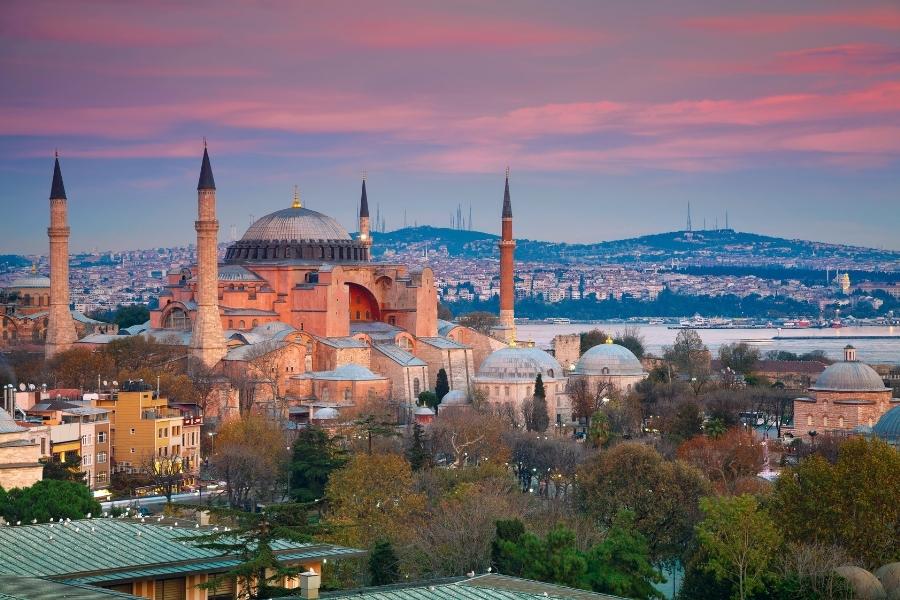
For first-time visitors, Istanbul is usually the logical starting point. Hagia Sophia, the Blue Mosque, Topkapı Palace, the Hippodrome, and the Grand Bazaar are concentrated on the European side of the city. They still require planning, though. Lines, prayer times, security checks, and the walk between sites can make an ambitious morning slower than expected.
Culture is shaped by region and routine
Turkey is not culturally uniform. Istanbul is a huge working city with commuter traffic, ferries, universities, galleries, markets, and residential districts far beyond the main visitor areas. Central Anatolia has a drier climate and a different landscape. The Aegean region is closely tied to olive oil, seafood, farming, and ancient port cities. Along the Mediterranean coast, beach time and archaeological visits often fit into the same day.
Daily customs are often easiest to notice in small moments. Turkish tea is commonly served in tulip-shaped glasses. Turkish coffee is prepared differently from filtered coffee and is usually served unstrained. At a local restaurant, breakfast may include cheese, olives, tomatoes, eggs, bread, and tea rather than a standard hotel buffet.
Food rewards specific ordering
It is easy to reduce Turkish food to kebabs and baklava, but those are only part of the picture. Ask for regional dishes when you can. In Istanbul, try meze alongside fish or grilled meat. In the Aegean, look for olive-oil dishes and seasonal vegetables. In Cappadocia, pottery kebab is a common local specialty. Along the coast, fish dishes depend on what is available that day.
Vegetarian travelers can usually find lentil soup, bean dishes, stuffed vegetables, grilled vegetables, salads, börek, and meze, but it is worth confirming whether dishes are made with meat stock. If you have food allergies, carry a clearly written explanation in Turkish and tell restaurant staff before ordering.
Pro Tip
Build your first Turkey itinerary around two or three regions, not every major name on the map. Istanbul, Cappadocia, and the Aegean route already involve different airports, roads, climates, and walking conditions.
Which places show the best of Turkey?
The most useful way to choose destinations is by interest and travel time. Istanbul gives you urban history and daily life. Cappadocia is the strongest fit for landscapes and hiking. Ephesus and Pamukkale work well together for archaeology and geology. Antalya and Fethiye suit travelers who want coast time alongside historical stops.
Istanbul for imperial landmarks, neighborhoods, and water views
Istanbul can easily take several days because the main sights are only one part of the city. Start around Sultanahmet for Hagia Sophia, the Blue Mosque, and the Hippodrome. Keep your schedule flexible around mosque access and worship times. Cover shoulders and knees for mosque visits, and women should bring a scarf for head covering where required.
The Grand Bazaar is better approached as a working shopping district than a quick photo stop. Give yourself time to compare quality and prices, particularly for ceramics, textiles, lamps, and jewelry. If you want bargaining advice before you go, read the Grand Bazaar Istanbul shopping guide.
A Bosphorus crossing or cruise offers a useful break from museum visits. The main practical point is timing: an afternoon on the water can be pleasant, but it may leave too little time for a major site that closes earlier. Plan landmark entries first, then use the Bosphorus for later in the day.
Cappadocia for volcanic valleys and rock-cut settlements
Cappadocia is known for its tuff rock formations, often called fairy chimneys, and for settlements carved into soft volcanic stone. Göreme, Avanos, Uçhisar, Pasabağ, Zelve, Red Valley, Rose Valley, and Pigeon Valley each show a different side of the region. You do not need to visit every valley. Choose the route that fits your walking ability and available time.
Hot-air balloon flights are optional, not the only way to experience Cappadocia. They usually happen early, depend on weather conditions, and can be canceled at short notice. Watching balloons from the ground can still be worthwhile, but do not build your whole schedule around one flight.

Underground cities such as Kaymaklı or Özkonak are another major draw. They are not a good fit for every visitor. Passages may be low, narrow, and uneven. Anyone with mobility concerns, claustrophobia, or difficulty on steps should ask in advance whether skipping that part of the visit is possible.
Pamukkale and Hierapolis for terraces and an ancient spa city
Pamukkale’s white travertine terraces were formed by mineral-rich thermal water. Above and around them lies Hierapolis, an ancient city with a theatre, baths, streets, and necropolis. Visit them as one site rather than treating the terraces as a short roadside stop. The archaeological area takes time, and exposed paths can feel hot in summer.
The Cleopatra Antique Pool is a separate experience from walking the travertines. Swimming availability, admission, and site rules can change, so confirm current conditions before you plan around it. Do not assume you will have a long pool visit on a day trip from Kuşadası or İzmir.

Ephesus for a full-scale ancient city
Ephesus near Selçuk is among the most substantial archaeological visits in Turkey. Its marble streets, Library of Celsus, Great Theatre, fountains, baths, and temples make more sense with a guide or a good route plan. Enter early if possible. There is limited shade, and the site requires steady walking over uneven ancient paving.
The nearby House of the Virgin Mary, Basilica of St. John, and remains of the Temple of Artemis can add context, but they are separate stops. They may be meaningful for Christian travelers and those with extra time. If Ephesus is your priority, avoid giving so much time to additional stops that you rush through the main ancient city.

The south coast for beaches, ruins, and active days
Antalya, Kaş, Fethiye, and Ölüdeniz are better choices when the coast is a real priority, not a spare day after a packed historical route. Antalya provides access to ancient sites such as Perge, Aspendos, and Side, while Fethiye and Ölüdeniz appeal to travelers considering boat trips, hiking, or paragliding.
Summer is the busiest and hottest period for the coast. It suits beach-focused trips, but midday sightseeing at exposed ruins can be difficult. If you want both archaeological visits and outdoor activity, start early, carry water, and leave the middle of the day for lunch, transport, or shade.
How should you plan a first trip to Turkey?
A connected route is more useful than a long list of destinations. Flights reduce travel time between Istanbul and Cappadocia, while western Turkey works well as a road-based sequence between Kuşadası, Ephesus, and Pamukkale. Adding the Mediterranean coast changes the pace because it requires another transfer and more nights.
Choose the season around your main activity
Spring and fall tend to suit mixed itineraries because you can spend long days outside at Ephesus, Hierapolis, Istanbul, and Cappadocia without the strongest summer heat. Summer favors the coast but demands earlier starts inland. Winter can bring cold conditions and occasional snow in Cappadocia, while Istanbul can be wet and windy.
There is no single best month for every route. A beach trip, a hiking-focused Cappadocia visit, and an archaeological itinerary have different priorities. Book accommodation and internal travel early for dates when schools are on holiday or major public holidays are expected.
Leave room for transfer days
Travel between Turkey’s headline destinations is often the part visitors underestimate. A domestic flight still includes airport transfers, security, baggage collection, and hotel check-in. A coach journey can be scenic but takes much longer than the map suggests. Avoid scheduling a major museum, a balloon ride, and a cross-country transfer all on the same day.
For a shorter trip, Istanbul plus Cappadocia is a practical pairing. For a wider first route, add Ephesus and Pamukkale. Antalya is worth adding when you can give the coast enough time rather than treating it as a quick overnight stop.
A guided route can reduce the moving parts
If you want Istanbul, Pamukkale, Ephesus, and Cappadocia in one trip, the 8 Days Seven Wonders of Turkey Tour follows that route over eight days and seven nights, starting in Istanbul and continuing through Kuşadası, Pamukkale, Ephesus, and Cappadocia. It suits travelers who prefer a scheduled route across several regions rather than organizing each domestic connection themselves. The itinerary includes optional activities in some locations, so check the current tour page before booking to confirm what is included and what costs extra.
Pro Tip
Keep arrival day light. International flights, Istanbul traffic, and hotel check-in can take longer than expected. Save major sights for your first full day, especially if your itinerary has an early domestic flight afterward.
What practical details matter most in Turkey?
Expect walking, steps, and uneven ground
Turkey’s best-known historical areas are rarely fully accessible. Istanbul’s older streets can be steep and crowded. Ephesus has uneven marble paving. Cappadocia includes dirt trails, loose ground, and rock-carved steps. Pamukkale and Hierapolis are exposed and involve a lot of walking. Bring shoes with grip rather than relying on sandals or fashion sneakers.
Travelers with limited mobility should ask hotels and tour operators about exact walking routes, vehicle access, steps, and restroom locations before booking. “Easy sightseeing” can still involve standing for long periods and covering considerable ground.
Use common-sense precautions in busy areas
Keep passports, cash, and cards secure in crowded transport hubs, markets, and major visitor areas. Use registered taxis or transport arranged by your hotel or tour provider where possible, and agree on practical details before setting off. Travel conditions and official advice can change, so check your government’s current travel guidance before departure.
For shopping, take your time. You do not need to buy at the first carpet, ceramic, leather, or spice shop you enter. Ask about shipping, return policies, and payment terms before committing to expensive purchases. A stop at a workshop can be informative, but you are not required to buy anything.
Plan with flexibility, not a fixed minute-by-minute schedule
Weather can affect balloon flights, ferry crossings, and outdoor activities. Museum access, religious services, road conditions, and local events can also reshape a day. Keep one unscheduled block in each destination for a delayed flight, a longer lunch, or a place you decide deserves more time.
Turkey rewards travelers who slow down enough to connect a meal, neighborhood, landscape, or archaeological site to the region around it. That is where the country’s variety becomes clear.
🎫 Recommended Turkey Tours
Compare the itinerary, inclusions and optional extras. Starting prices vary by date and party size.
- 8 Days Seven Wonders of Turkey Tour →8 Days / 7 Nights · from €1,460.00
Frequently Asked Questions About Turkey
How many days do you need for a first trip to Turkey?
A week is a reasonable minimum for Istanbul, Cappadocia, Ephesus, and Pamukkale, although it will be busy. Add more time if you want beach days in Antalya or Fethiye, slower travel, or independent exploration in Istanbul.
What are the best places to visit in Turkey for first-time travelers?
Istanbul, Cappadocia, Ephesus, and Pamukkale make a strong first route because they cover urban history, landscapes, and major archaeological sites. Antalya is a useful addition when the coast is part of your main plan.
Is Cappadocia worth visiting without a hot-air balloon ride?
Yes. Cappadocia has valleys, rock-cut churches, cave settlements, pottery traditions, and underground cities. Balloon flights are optional, weather-dependent, and usually take place very early in the morning.
Can you visit Ephesus and Pamukkale on the same trip?
Yes, and they are commonly paired on western Turkey itineraries. They are different experiences: Ephesus is a large Roman-era city, while Pamukkale combines travertine terraces with the ruins of Hierapolis.
What should you wear when visiting mosques in Turkey?
Wear clothing that covers shoulders and knees. Women should carry a scarf for head covering where required. Access arrangements may vary during prayer times and religious holidays, so keep your timing flexible.
Is Turkey suitable for travelers with limited mobility?
It depends on the destinations and your needs. Many major sites have uneven paving, steps, slopes, and long walking routes, especially Ephesus, Cappadocia, Pamukkale, and older parts of Istanbul. Confirm specific access arrangements before booking.
Turkey: A Country of Wonders is not one experience but several distinct regions connected by long history and practical travel choices. Pick a route that matches your available time, then give each stop enough room to be more than a photo break. For help building a route, explore our Turkey Tours.


