EgyptTravel guide11 min read
Top 10 Must-See Ancient Sites in Egypt for Travelers
Plan the 10 must-see ancient sites in Egypt, from Giza and Saqqara to Luxor, Aswan and Abu Simbel, with practical route advice.
 By All Istanbul ToursPublished · Updated
In this guide 5 sections
The 10 must-see ancient sites in Egypt range from the Pyramids of Giza and Saqqara to the royal tombs and temples of Luxor, Aswan, Edfu and Kom Ombo. They’re spread across the country, so the practical choice is whether to focus on Cairo and Luxor or follow the Nile south toward Aswan and Abu Simbel.
This guide is for first-time visitors and history-focused travelers deciding which sites to prioritize. It explains what makes each place distinct and how to group nearby stops without treating a long list of monuments as one easy day out.
Which ancient sites in Egypt should you prioritize?
These 10 sites are not all the same kind of visit. Giza and Saqqara show how pyramid building developed. The Valley of the Kings and Hatshepsut’s temple belong together on Luxor’s west bank. Karnak and Luxor Temple are on the east bank. Philae is in Aswan, while Edfu and Kom Ombo fit naturally into a journey along the Nile.
If your time is limited, choose a region rather than racing between far-apart places. Cairo is the practical base for Giza and Saqqara. Luxor can anchor visits to four of the sites on this list. Aswan is the base for Philae, and Abu Simbel requires a separate journey from the city. Edfu and Kom Ombo are often visited as part of a Nile route.
What are the 10 must-see ancient sites in Egypt?
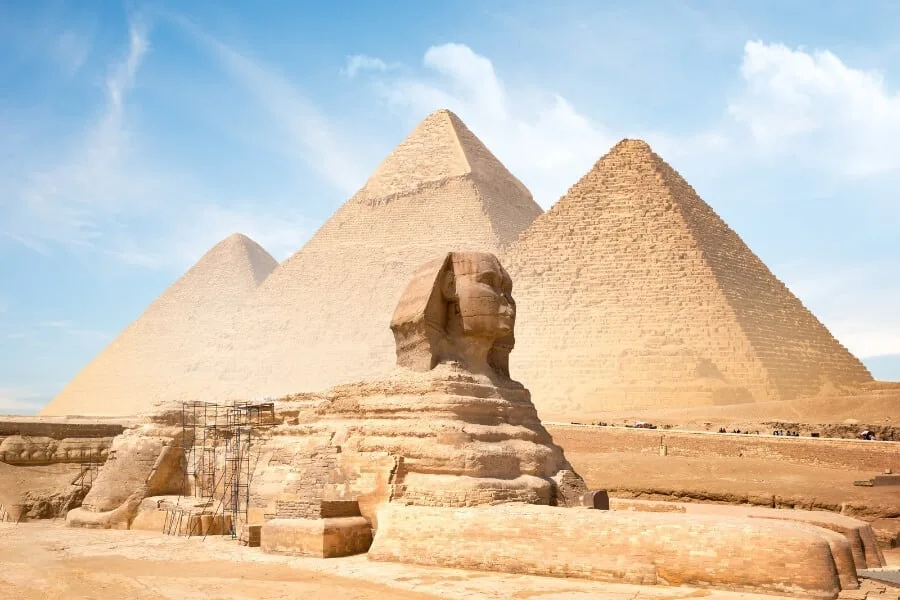
1. The Great Pyramids of Giza
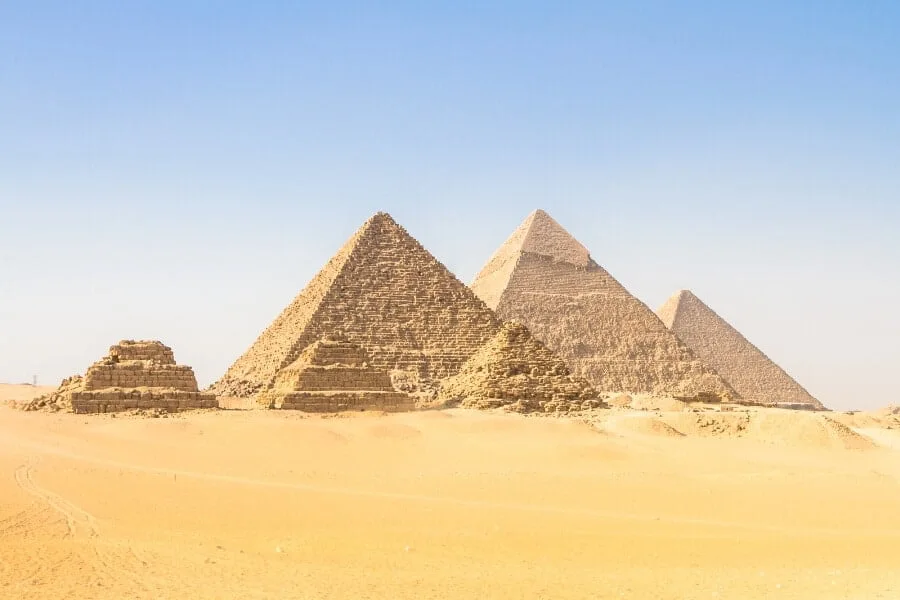
The pyramids of Khufu, Khafre and Menkaure stand on the Giza Plateau, alongside the Great Sphinx. Their scale is the obvious draw, but give yourself time to understand the site as a group of royal monuments, not just a single pyramid seen from a roadside viewpoint.
Giza is outside central Cairo, so plan the visit as a dedicated outing rather than squeezing it between city stops. Walking over exposed ground can mean heat and little shade. Wear comfortable shoes, carry water, and check current ticket and access information before deciding whether to enter a pyramid. Interior access is separate from viewing the exterior and may have its own rules.
2. The Valley of the Kings
On Luxor’s west bank, the Valley of the Kings is a burial ground for New Kingdom rulers. The tombs are cut into the hills, and their painted walls and passages make this a different experience from walking through a large open-air temple. The tomb of Tutankhamun is among the best-known, but don’t assume every tomb is included in a general admission ticket; check the current ticket conditions before you go.
Expect a walk between parts of the site and time spent inside tombs, where the space can be confined. A guide can help explain the decoration and the changing themes across the tombs. For practical planning, see our Valley of the Kings guide.
3. Karnak Temple Complex
Karnak is a large temple complex on Luxor’s east bank, built and expanded over many centuries. Its most famous area is the Great Hypostyle Hall, a forest of columns that can make the scale of the complex easier to grasp. Allow time to look beyond the first major structure: the complex covers a broad area, and a quick walk through the entrance does not show its full layout.
Karnak pairs well with Luxor Temple because both are on the east bank. Their relationship is part of the story: the Avenue of Sphinxes connected the two temple precincts. If you’re visiting both, keep the west-bank tombs and temples for a separate part of your Luxor plan rather than trying to cover everything at once.
4. Abu Simbel Temples
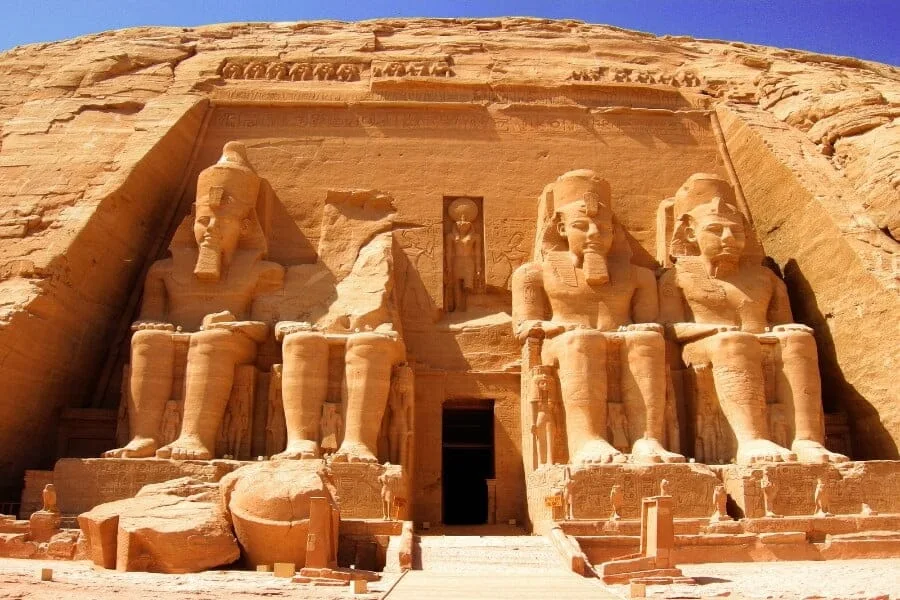
Abu Simbel’s rock-cut temples were commissioned by Ramses II and are known for their large seated statues carved into the façade. The complex was relocated in the 1960s to protect it from the rising waters associated with the Aswan High Dam. That relocation is a key part of the site’s modern history as well as its ancient setting.
Abu Simbel lies far south of Aswan, so it takes more planning than an ordinary city visit. Some tour itineraries make it an early start from Aswan; the long travel day is a real trade-off. Confirm departure arrangements and what is included before booking, and check current access information for your date.
5. The Temple of Hatshepsut
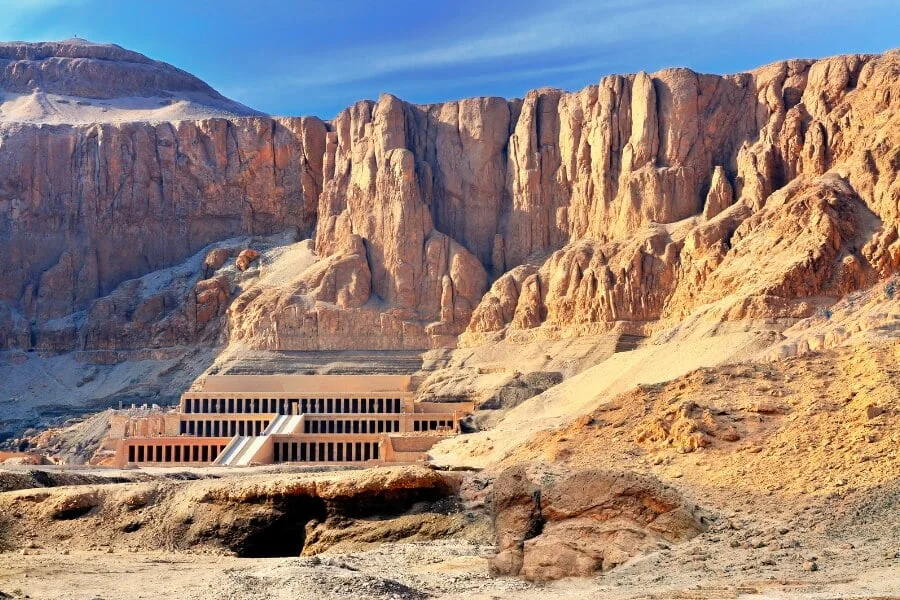
At Deir el-Bahari on Luxor’s west bank, the Temple of Hatshepsut is a mortuary temple built for the pharaoh Hatshepsut. Its terraces and colonnades rise against a cliff face, making it visually distinct from the tombs and temple halls elsewhere in Luxor. A visit makes most sense alongside the Valley of the Kings, since both are on the west bank.
The site involves walking between levels and across open ground. Take your time in the heat, and avoid treating the temple as a brief photo stop: its setting and layout are central to understanding why it differs from a rock-cut tomb.
6. The Step Pyramid of Djoser
The Step Pyramid is at Saqqara, south of Cairo. Built for Djoser, it is an early large-scale stone pyramid and a useful counterpoint to the smooth-sided pyramids at Giza. The surrounding archaeological area includes other tombs and structures, so the pyramid is best understood as part of a larger burial complex rather than a standalone monument.
Saqqara and Giza are different sites and should not be confused. They can be combined in a Cairo-area day plan, but the ground to cover is substantial. If the details of the earliest pyramid-building period interest you, allow more time at Saqqara instead of treating it as a quick add-on.
7. Luxor Temple
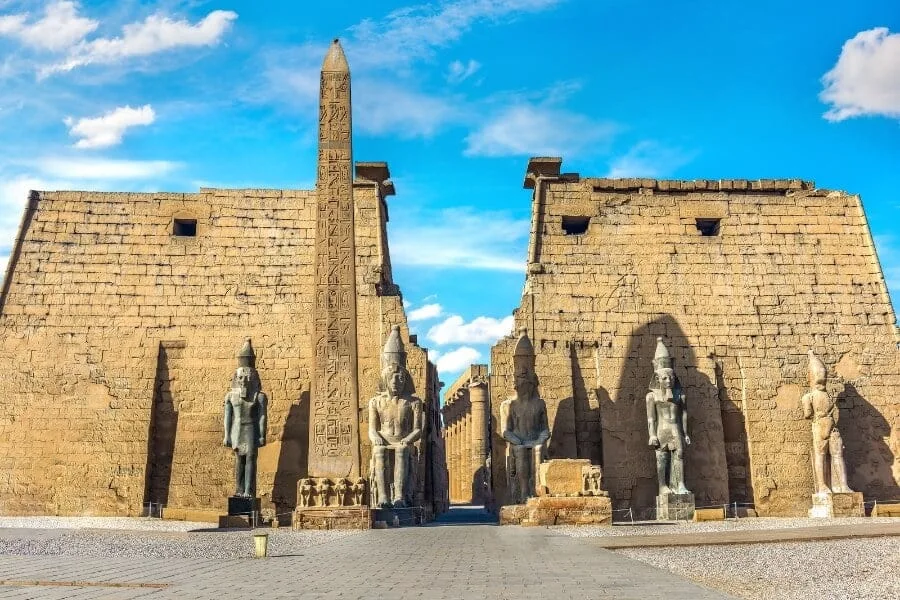
Luxor Temple is on the east bank, close to the modern city. It was a major religious complex at ancient Thebes, and its large statues, entrance pylons and temple courts offer a contrast with Karnak’s broader layout. The Avenue of Sphinxes once linked the two sites.
Because it is within Luxor, the temple can be easier to fit into a day than the west-bank monuments, but that does not mean you should rush through it. If you’re visiting Karnak too, consider how the order of your day affects the heat and your energy. Check current access arrangements before planning a visit near opening or closing time.
8. Philae Temple
Dedicated to Isis, Philae Temple is on Agilkia Island near Aswan. It was moved from its original island location as part of efforts to protect it from flooding after construction of the Aswan High Dam. The island setting means a visit involves reaching the site by water; confirm the current transport and ticket arrangements before setting out.
Philae is a strong choice if you want a temple visit in Aswan without traveling as far as Abu Simbel. Its reliefs and courtyards reward a slower visit, especially if you’re interested in the worship of Isis. Don’t assume a particular evening show or access schedule is available on your date; check directly before building it into your plans.
9. The Temple of Edfu
The Temple of Edfu is dedicated to Horus and is known for its well-preserved temple architecture and inscriptions. Its large halls and relief-covered walls give visitors a clear sense of how a temple complex was arranged. Look for the sequence from the entrance toward the inner sanctuary, rather than viewing the reliefs as disconnected decoration.
Edfu lies between Luxor and Aswan, which makes it a natural stop when traveling along the Nile. If you’re planning independently, check the practical details of reaching the site and confirm local opening and ticket information. A Nile itinerary may make the stop simpler to arrange, but verify that Edfu is included in the specific program you choose.
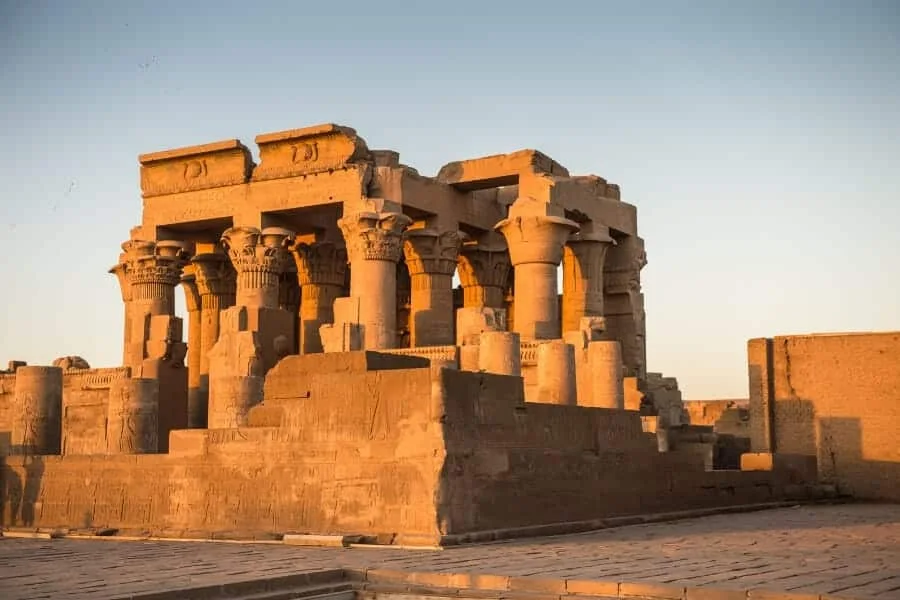
10. The Temple of Kom Ombo
Kom Ombo is a temple complex associated with Sobek and Horus. Its paired layout is the feature to look for: parts of the temple are arranged in a balanced way for the two deities. The on-site crocodile museum is often associated with the visit, but check what is open and included on your ticket when you plan your stop.
The temple sits along the Nile between Edfu and Aswan and is commonly worked into a river itinerary. That makes it convenient to combine with other stops, but don’t mistake a short scheduled visit for time to explore every carving. If the reliefs are your priority, leave room to pause and look closely.
How can you group these ancient sites into a practical route?
Start by placing the sites on a map. Giza and Saqqara are the Cairo-area visits. Karnak, Luxor Temple, the Valley of the Kings and Hatshepsut’s temple are all in Luxor, split between the east and west banks. Philae is near Aswan. Edfu and Kom Ombo sit along the Nile route, while Abu Simbel is a separate excursion from the Aswan area.
For a shorter trip, prioritize Giza and Luxor’s major sites. Add Saqqara if you want to compare pyramid sites, and add Aswan if Philae or Abu Simbel is high on your list. To include all 10, plan a multi-stop route and allow for the transfers between regions. Don’t count every site as a short stop: tombs, temple grounds and travel days require different amounts of time.
What should you know before visiting Egypt’s ancient sites?
Check official ticket information shortly before your visit. Admission, access to particular tombs, opening arrangements and any temporary restrictions can change. Don’t rely on an old price or assume a famous site’s standard ticket covers every tomb or additional area.
Plan for walking on uneven ground and in exposed areas. Comfortable shoes matter more than dressing for photographs, and midday heat can make a long outdoor visit tiring. Carry water and sun protection, and give yourself time between major sites rather than planning a full day with no breaks.
At crowded sites, take a moment to orient yourself before following the main flow of visitors. At the Valley of the Kings, decide which tombs you most want to see after checking the current access rules. At temples, look at the overall plan and repeated carvings as well as the most photographed columns. These small choices make a visit more informative without adding another destination to your schedule.
If you’d rather connect the sites with fewer separate transfers, the 7-Day Egypt Tour: Cairo, Nile cruise from Aswan to Luxor includes visits to Giza, Luxor’s east and west banks, Edfu and Kom Ombo, with Abu Simbel offered as an optional excursion at additional cost. The listed starting price is €1,790, varying by date and party size. Check the linked itinerary for current details, inclusions and availability before booking.
For a focused route, start with Giza, add Saqqara if early pyramid history matters to you, and use Luxor as your base for temples and royal tombs. Add the southern sites when your schedule can accommodate the travel between them.
Frequently Asked Questions About Egypt’s Ancient Sites
Which ancient sites in Egypt are best for a first visit?
Giza is the clearest starting point for the pyramids and Sphinx. In Luxor, combine Karnak and Luxor Temple with the Valley of the Kings and Hatshepsut’s temple if your schedule allows time for both banks.
Can I visit all 10 sites on one trip?
Yes, with a route that includes Cairo, Luxor and Aswan, plus travel to Abu Simbel. The sites are spread across Egypt, so plan around regional transfers rather than expecting to see them all on short day trips from one base.
Are Karnak and Luxor Temple the same site?
No. They are separate temple complexes on Luxor’s east bank. The Avenue of Sphinxes connected them, and visiting both helps explain their relationship without confusing one site for the other.
Is Abu Simbel close to Aswan?
Abu Simbel is far enough from Aswan to require a separate excursion and careful planning. Some itineraries depart early and include a long road journey, so confirm the schedule and transport details before you book.
Should I visit Saqqara as well as Giza?
Visit both if you’re interested in how pyramid building developed. Giza has the three major pyramids and the Sphinx; Saqqara adds the Step Pyramid of Djoser and a broader burial complex.
Do tickets include every tomb at the Valley of the Kings?
Don’t assume they do. Ticket coverage and access to individual tombs can change, so check the official ticket information before your visit and confirm any additional charges or restrictions.
About the author
All Istanbul Tours is a TÜRSAB-licensed travel agency (no. 6073) based in Istanbul, planning private and group tours across Türkiye.
Plan your trip
Egypt tours
 12 days
12-Day Turkey & Egypt Tour: Best of Both Continents
From €2,740 per person
 9 days
9-Day Highlights of Turkey and Egypt Tour
From €2,480 per person
 13 days
13-Day Tour of Egypt and Morocco
From €3,610 per person
Not sure which tour fits your dates? Ask us on WhatsApp
Keep reading
More Egypt guides
 Egypt
Discover Cairo: 5 Unforgettable Experiences in Egypt’s Vibrant Capital
The Great Pyramids, Egyptian Museum, Islamic Cairo, Khan El Khalili and Coptic Cairo — with timing, transfers, costs and tour options.
 Egypt
Best Ways to Get from Cairo to Alexandria: Trains, Buses & Taxis
Discover the best ways to travel from Cairo to Alexandria, including trains, buses, and taxis for a comfortable and budget-friendly journey.
Egypt The Ultimate Guide to Egypt: Exploring Ancient Wonders
Explore Egypt’s ancient wonders with our ultimate guide. From pyramids to Nile cruises, discover the best experiences and tours.