 Pin it
The best beaches in Antalya depend on where you’re staying: choose Konyaaltı for an easy city swim, Lara for sand and resort facilities, and Çıralı for a quieter coastal base. Kaputaş and Patara suit a stay near Kaş or Kalkan rather than a quick outing from Antalya city. These ten beaches span Antalya province, so travel time matters as much as the shoreline.
This guide is for travelers balancing beach days with sightseeing, including families, first-time visitors, and anyone adding Antalya to a longer Turkey trip. You’ll find practical choices for access, costs, swimming conditions, and nearby stops.
Quick Facts
| Best time to visit | May–October; June and September offer a useful balance of swimming weather and manageable crowds. |
| Time needed | A half-day for a city beach; a full day or overnight stay for more distant coastal stops. |
| Getting there | Fly into Antalya Airport for the city and central coast. Compare Dalaman Airport for Kaş, Kalkan, and Patara. |
| Entry / typical cost | €0 for public beach access at places such as Konyaaltı; loungers, clubs, parking, and archaeological sites cost extra. |
| Good for | Swimming, family holidays, coastal walks, and combining archaeological sites with beach time. |
Which are the 10 best beaches in Antalya?
Start with the city beaches if you’re staying in central Antalya. Alanya lies east; Phaselis, Çıralı, Adrasan, Kaputaş, and Patara lie along the coast to the west.
1. Konyaaltı Beach: best for a city-based beach day
Konyaaltı has a pebbly shoreline, mountain views, and a promenade with parks, shops, and restaurants. Public sections make it easy to swim without committing to a beach club. Bring water shoes, and check conditions before entering: the shore can deepen quickly, and waves sometimes make getting out awkward. The promenade is easier for strollers than the beach itself.
2. Lara Beach: best for sand and resort facilities
Lara’s sandy coast suits travelers who want loungers, food, and beach services close together. Distinguish the public beach area from the resort strip toward Kundu: staying nearby doesn’t automatically give you access to a hotel’s beach. Cafés and seasonal beach venues provide evening options, but check access rules and minimum spending before settling in.
3. Mermerli Beach: best for a swim near Kaleiçi
This small, managed beach beside Antalya’s Old Harbor fits around sightseeing in Kaleiçi, the Old Town. Expect steps, closely spaced loungers, and a paid-access arrangement rather than a broad public strand. Space is limited, so arrive early and confirm the current charge. Nearby restaurants make lunch easy after your swim.
4. Cleopatra Beach: best for an Alanya holiday
Cleopatra Beach, also called Kleopatra Beach, sits below Alanya’s castle area. Its name comes from a tradition associating the Egyptian queen with the shore, not a verified swimming visit. The sandy beach has extensive facilities, but waves and a steep entry can challenge small children. Stay in Alanya if you want repeated beach days here.
5. Phaselis Beach: best for ruins and swimming together
At Phaselis, ancient harbor bays sit beside streets, an aqueduct, and other remains of the port city. Explore the archaeological site before the hottest part of the day, then choose a permitted swimming area. Different bays offer different shelter, so inspect the water rather than assuming every beach is calm. Site admission and opening rules apply.
6. Olympos Beach: best for an archaeological approach to the sea
Olympos lies within the Beydağları Coastal National Park area. Its ancient city belongs to the Lycian region, with visible remains from several periods. Reaching the pebbly beach through the archaeological site means walking over uneven ground and following ticketing rules. Wear proper shoes for the ruins, then change into water shoes at the shore.
7. Çıralı Beach: best for a quieter family base
Çıralı shares a long sand-and-pebble shoreline with Olympos but has its own village access and smaller-scale accommodation. Families often prefer its less built-up setting, although parts of the shore deepen quickly. Nearby, the Chimaera’s naturally burning gas flames make an evening outing. Turtle nesting is a conservation responsibility, not a guaranteed wildlife show.
8. Adrasan Beach: best for staying by one bay
Adrasan’s roughly 2-kilometer beach has sandy and pebbly sections, with pine-covered slopes and mountains around the bay. It generally feels less developed than the main resort strips. Boat departures bring activity to parts of the waterfront, so choose your swimming spot away from vessel movements. An overnight stay gives you more beach time than a rushed city excursion.
9. Kaputaş Beach: best for a stop between Kaş and Kalkan
Kaputaş occupies a small cove below the coastal road between Kaş and Kalkan. A long staircase leads down to sand mixed with fine pebbles. The water can be rough, and parking beside the road is limited. Go early, use designated parking where available, and remember that every step down becomes an uphill climb after swimming.
10. Patara Beach: best for a long sandy shoreline
Patara extends for about 18 kilometers, with dunes and an ancient city behind the beach. It’s a protected nesting area for loggerhead turtles, so observe seasonal access restrictions and marked nesting zones. The open coast can be windy, with surf unsuitable for inexperienced swimmers. Combine the ruins and beach, but don’t treat the dunes as an unrestricted playground.
How do you get to Antalya’s beaches?
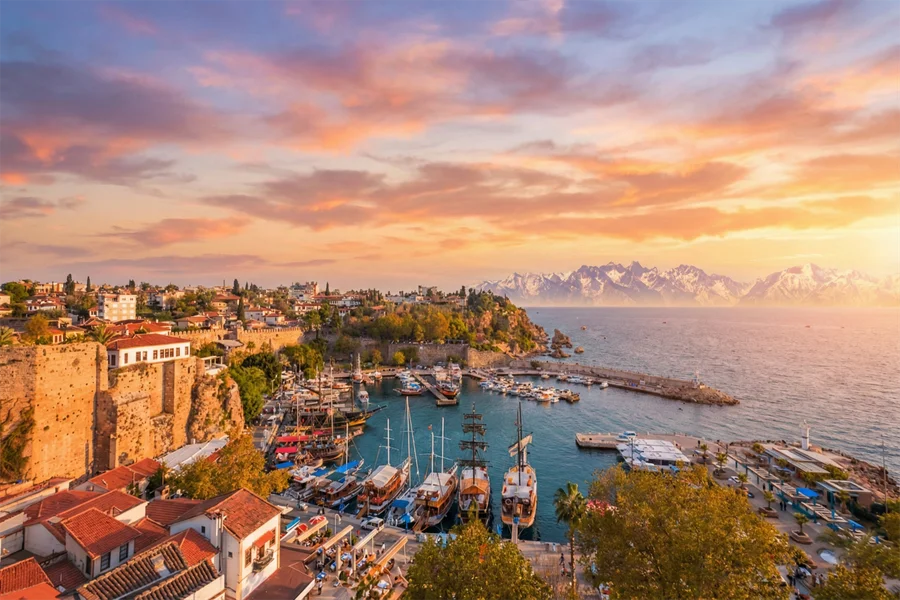
Antalya Airport is the usual arrival point for city stays. From Istanbul, a direct flight takes about 1 hour 20 minutes, excluding airport procedures and transfers. For Kaş, Kalkan, or Patara, compare flights and road transfers from Dalaman before booking.
| Route | Approximate travel time | Practical choice |
| Antalya Airport to Lara or central Antalya | About 30–60 minutes by car | Taxi or prebooked transfer; traffic and your exact hotel matter. |
| Central Antalya to Konyaaltı or public Lara Beach | About 20–45 minutes by car | City buses cost less but require more time. |
| Central Antalya to Phaselis | About 1–1.5 hours by car | Rental car, transfer, or a tour explicitly including the site. |
| Central Antalya to Çıralı, Olympos, or Adrasan | About 1.5–2.5 hours by car | Allow for winding access roads off the main highway. |
| Central Antalya to Alanya | About 2–3 hours by car | An overnight stay avoids a long return drive. |
| Central Antalya to Kaputaş or Patara | About 3.5–4.5 hours by car | Better as part of a west-coast stay. |
These are planning estimates, not guaranteed transfer times. Intercity buses and local minibuses can work, but some routes leave you at a highway junction rather than the beach. Confirm the final connection and the last return departure.
Pro Tip
Choose accommodation by the beach you’ll use most. A cheaper room in Antalya city can become poor value if you repeatedly pay for long transfers to Çıralı or Alanya.
What do Antalya beaches cost in 2026?
You don’t need a beach club to enjoy Antalya. Public access can be free, while managed beaches and archaeological coastlines follow different rules. Local charges are usually set in Turkish lira; request the current euro equivalent rather than relying on an old conversion.
| Expense | Euro price or budgeting rule |
| Public sections of Konyaaltı and Lara | €0 beach access; equipment and services extra. |
| Loungers, umbrellas, managed beaches | Variable; confirm the current € equivalent and whether the charge is per person or per set. |
| Phaselis, Olympos, and Patara archaeological access | Check the current admission price with Türkiye’s museums authority. Don’t assume a beach visit bypasses site fees. |
| Bus, taxi, parking, or private transfer | Route-dependent; ask for a current € equivalent or written transfer quote. |
| 6-Day Istanbul & Antalya Tour by Plane | From about €1,180; confirm the price for your dates. |
| 5-Day Ephesus, Pamukkale & Antalya Tour from Istanbul | From about €910; confirm occupancy and inclusions. |
For paid beach venues, ask whether showers, towels, and food are included. At archaeological sites, check ticket validity and re-entry before leaving for lunch.
When is the best time to visit Antalya beaches?
May through October is the main beach season, but the sea, heat, and crowds vary. September is a strong choice if swimming matters more than peak-summer nightlife.
- May: Less intense heat for ruins and coastal walks; seawater can still feel cool.
- June: Longer beach days before the busiest summer holiday period.
- July–August: Strong heat, busy roads, and high demand for loungers. Plan sightseeing early.
- September: The sea usually retains summer warmth, though popular beaches remain busy.
- October: Swimming is often possible, but rain, rough seas, and reduced seasonal services become more likely.
Arrive in the morning for easier parking at Kaputaş and more space at Mermerli. Weekdays generally work better than weekends. Never assume clear water means safe water: follow flags, lifeguard instructions, and local warnings.
How can you combine beaches with nearby sights?
Pair places on the same side of Antalya rather than crossing the province in one day. These routes leave room to eat and actually swim.
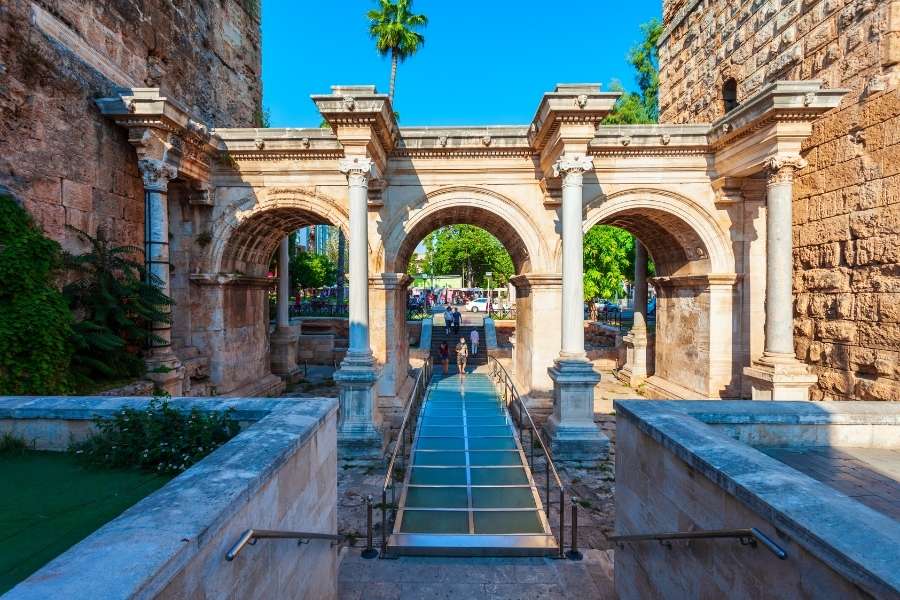
- City half-day: Walk through Hadrian’s Gate and Kaleiçi, continue to the Old Harbor, then use Mermerli if its price and steps suit you.
- East-side history and sand: Visit Perge Ancient City early, then head to Lara. Add Aspendos Theater only if you’re comfortable shortening beach time.
- West-coast ruins and bays: Spend the morning exploring Phaselis and swim afterward. Avoid adding Çıralı unless you have a full day and your own transport.
- Çıralı overnight: Swim during the day, explore Olympos when temperatures ease, and plan a separate evening walk to the Chimaera with a flashlight and sturdy shoes.
What should you bring, and which beaches suit families?
Facilities are easiest to find at Konyaaltı, Lara, and Cleopatra Beach. Smaller coastal settlements have food and beach services too, but availability can shrink outside the main season.
- Bring water shoes for pebbles, plus walking shoes for ruins and rocky paths.
- Pack sunscreen, a hat, drinking water, and a reusable bag for rubbish.
- Carry a card and some local cash for small purchases, transport, and parking.
- Keep valuables out of sight in parked cars.
- Respect turtle-nesting markers; avoid lights, disturbance, and digging in protected areas.
For lunch, look for gözleme, grilled fish, or Antalya-style piyaz with tahini. Check menu prices before ordering at waterfront restaurants, and ask about sesame if you have an allergy.
With children: Choose the day’s safest water conditions, not just the sandiest beach. Çıralı can suit a slower family stay, while Lara offers more services. Neither guarantees shallow, wave-free swimming.
With limited mobility: Konyaaltı’s promenade is easier to navigate than Kaputaş’s staircase or Olympos’s uneven paths. A level promenade doesn’t guarantee step-free sea access. Confirm accessible toilets, beach platforms, and assistance with the specific venue.
Should you book a tour, private transfer, or DIY beach trip?
DIY works well for city beaches reached by bus or taxi. A private car or transfer suits families carrying equipment and travelers combining ruins with swimming. Agree on waiting time, parking charges, and the return pickup before departure.
A group package makes more sense for a multi-stop Turkey holiday than a beach-only outing. Our 6-Day Istanbul & Antalya Tour by Plane, from about €1,180, keeps the trip focused on two destinations. Use our Istanbul neighborhood guide if you’re adding independent nights before the tour.
For archaeological stops, consider the 5-Day Ephesus, Pamukkale & Antalya Tour from Istanbul, from about €910. The 9-Day Istanbul, Cappadocia, Antalya, Pamukkale and Ephesus Tour, from about €1,670, covers more regions.
The 10-Day Istanbul, Ephesus, Pamukkale, Antalya & Cappadocia Tour, from about €1,690, is another longer-route option. Check the actual daily schedule rather than assuming more days automatically mean more beach time.
Pro Tip
Before booking, ask which flights, transfers, hotel nights, guided visits, admissions, and meals are included. Treat beach clubs, loungers, water sports, and extra coastal transfers as additional costs unless your written itinerary explicitly includes them. Request a free beach day if swimming is a priority.
🎫 Recommended Antalya Tours
Licensed guide, transport and entrance logistics handled — pick the one that matches your dates.
- 9-Day Istanbul, Cappadocia, Antalya, Pamukkale and Ephesus Tour →9 Days · from €1,670.00
- 7-Day Pamukkale, Antalya & Cappadocia Tour from Istanbul →7 Days · from €1,195.00
- 6-Day Istanbul & Antalya Tour by Plane →6 Days · from €1,180.00
- 4-Day Cappadocia, Pamukkale and Antalya Tour from Istanbul →4 Days · from €940.00
Frequently Asked Questions About Antalya
Are Antalya’s beaches free?
Public sections of Konyaaltı and Lara have €0 beach access. Loungers and clubs charge separately, while Mermerli and archaeological-site approaches have their own admission arrangements.
Which month is best for swimming in Antalya?
September usually balances warm seawater with less intense heat than July and August. June is another good choice; weather and wave conditions still need checking each day.
Which Antalya beach is best for children?
Lara suits families wanting sand and nearby services, while Çıralı suits a quieter stay. Check the entry slope, waves, shade, and lifeguard provision at your chosen section before swimming.
Can you visit Antalya’s beaches from Istanbul?
Yes. A direct flight to Antalya takes about 1 hour 20 minutes, but airport procedures and ground transfers make an overnight stay more practical than a beach day trip.
How long should you spend at an Antalya beach?
Allow a half-day for a city beach, including travel and lunch. Give distant beaches a full day, or stay nearby if you’re choosing Kaputaş, Patara, or Alanya.
Do you need tickets to combine beaches with ruins?
Archaeological admission rules apply at Phaselis, Olympos, and Patara when entering through the sites. Check current prices, hours, and re-entry rules; a beach visit doesn’t automatically exempt you from admission.
Choose your beach base first, then build the sightseeing around it. Tell us your dates, preferred pace, and how much swimming time you want through the Turkey trip planner, and we’ll help you shape a workable route.