EgyptTravel guide10 min read
Explore Timeless Pyramids and Temples in Egypt
Pyramids and temples in Egypt, planned by region: pair Giza and Saqqara near Cairo, then head south to Luxor, Edfu, Kom Ombo, and Abu Simbel.
 By All Istanbul ToursPublished · Updated
In this guide 3 sections
Explore Timeless Pyramids and Temples in Egypt by pairing the Giza Plateau and Saqqara near Cairo with Luxor’s temples and royal tombs, then continuing south to Edfu, Kom Ombo, Aswan, and Abu Simbel. The sites span a long distance, so grouping them by region helps you spend less time retracing your route and more time looking at the monuments.
This guide is for travelers choosing which ancient sites belong on an Egypt itinerary and how to connect them. It focuses on the pyramids and temples named here, with practical notes on route order, walking, and the trade-offs between a quick visit and a longer exploration.
How to explore the pyramids at Giza and Saqqara
Start with Cairo’s pyramid sites. Giza and Saqqara are both part of the wider story of ancient Egyptian burial architecture, but they are separate archaeological areas. Seeing them together makes geographic sense; trying to squeeze them into a rushed stop can leave you with little time to understand either place.
What to look for at the Giza Plateau
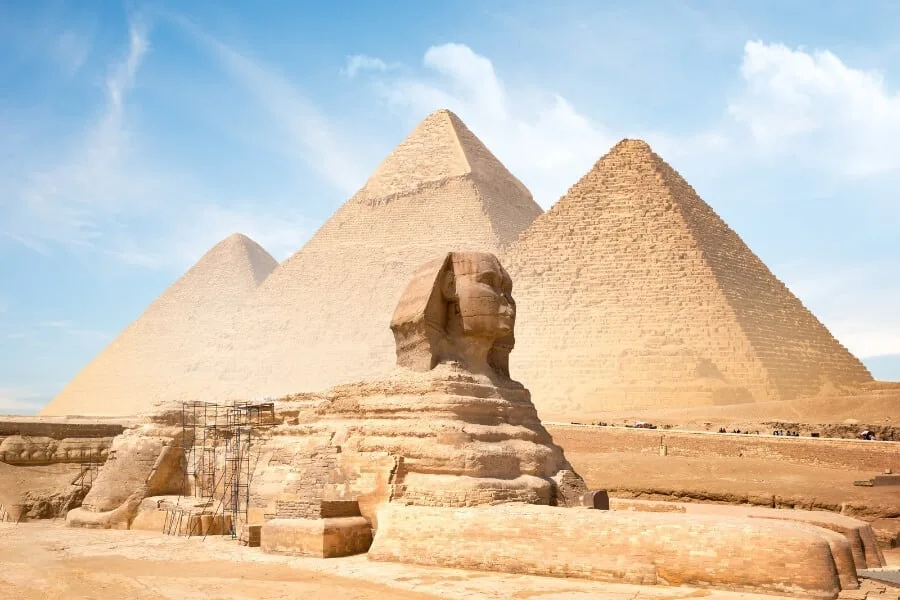
The Giza Plateau is the best-known pyramid site, with the pyramids of Khufu, Khafre, and Menkaure and the Great Sphinx. The pyramids served as royal tombs. Their scale is clear from outside, but the exterior view and an interior visit are different experiences: entering a pyramid involves an additional ticket where available, and the passageways can feel confined. Check current entry arrangements and ticket options before deciding.
Give yourself time to look at the site from more than one viewpoint. The pyramids are not simply three identical structures lined up for a photograph. Their sizes and profiles differ, and the Sphinx and nearby Valley Temple add context to the wider complex. A guide can help explain what you’re seeing, but you can also prepare by choosing a few details to look for rather than trying to absorb every fact on the spot.
Outdoor conditions matter here. The plateau involves walking in exposed areas, and the ground is not a smooth indoor museum floor. Wear shoes you can walk in and plan for direct sun. If you have limited mobility, ask about the route and walking distances before booking a visit; do not assume a vehicle can take you to every viewpoint or entrance.
Why add Saqqara to a Giza visit?
Saqqara is a large burial ground south of Cairo and gives you a different stage in the development of pyramid construction. Its best-known monument is the Step Pyramid of Djoser, an early stone pyramid complex that predates the Giza pyramids. The broader site also includes tombs and other monuments, so it rewards a visit that isn’t reduced to a quick photograph and departure.
If you have one full sightseeing day, Giza and Saqqara can be combined, but the day will be substantial. The sites cover separate areas, and the time needed at each depends on your interest, walking pace, and whether you enter any monuments. A tour listing these stops may help with transport between the areas; check its itinerary to see exactly which tombs and entrance tickets are included.
One common mistake is treating Saqqara as a small add-on immediately beside the pyramids. It is a separate site, and its scale means you may need to choose between a broad overview and a more focused visit. If you care most about the architecture, spend time comparing the Step Pyramid’s stepped form with the later, smooth-sided pyramids at Giza. If tomb decoration is your priority, confirm which tombs are open and included on your date.
For travelers who want Giza and Saqqara covered with a guide, the 9-Day Egypt Tour: Explore Cairo, Luxor, Aswan and Majestic Abu Simbel includes the Giza pyramids, Great Sphinx, and Saqqara’s Step Pyramid and tombs. Its listed itinerary also connects Cairo with Luxor, Aswan, and Abu Simbel; check the tour page for the current schedule, inclusions, and availability.
Which temples to see from Luxor to Abu Simbel
The southern monuments are spread along the Nile and aren’t a single compact temple area. Luxor is a useful base for Karnak, Luxor Temple, and the West Bank tombs. Edfu and Kom Ombo lie farther south, while Abu Simbel is a separate excursion from Aswan. Planning by location helps you avoid imagining that these sites are a short walk or quick drive apart.
Luxor: Karnak, Luxor Temple, and the West Bank
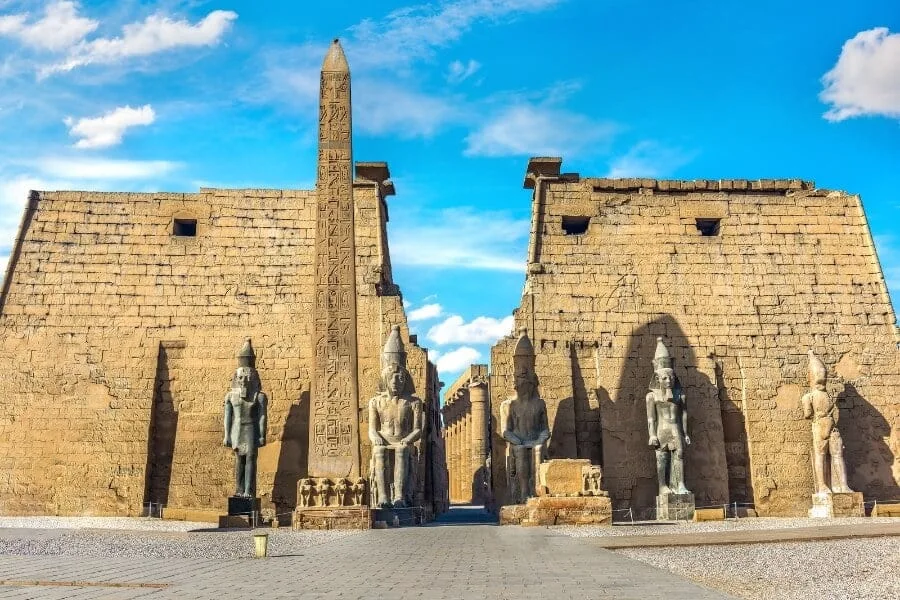
Karnak is a large temple complex rather than one isolated building. Its pylons, courtyards, and columned spaces make it a place to explore slowly. The Hypostyle Hall, with its dense ranks of columns, is one of the most recognizable parts of the complex. Give yourself enough time to notice how the site unfolds instead of walking straight through to a single photo stop.
Luxor Temple offers a different experience and is often visited as a separate stop from Karnak. The two are in the same city, but they are distinct monuments with their own entrances and grounds. If your schedule allows, seeing both helps you understand Luxor’s role as an ancient religious center. Do not assume that a ticket or guided visit for one automatically covers the other; confirm the current arrangements.
Across the Nile, the West Bank includes the Valley of the Kings, the Temple of Hatshepsut, and the Colossi of Memnon. The Valley of the Kings is a group of royal tombs, not a single tomb, and the tombs available to enter can vary. The tomb of Tutankhamun is especially well known, but entry arrangements and any extra charge should be checked before your visit. The Valley of the Kings guide can help you plan that part of the Luxor visit.
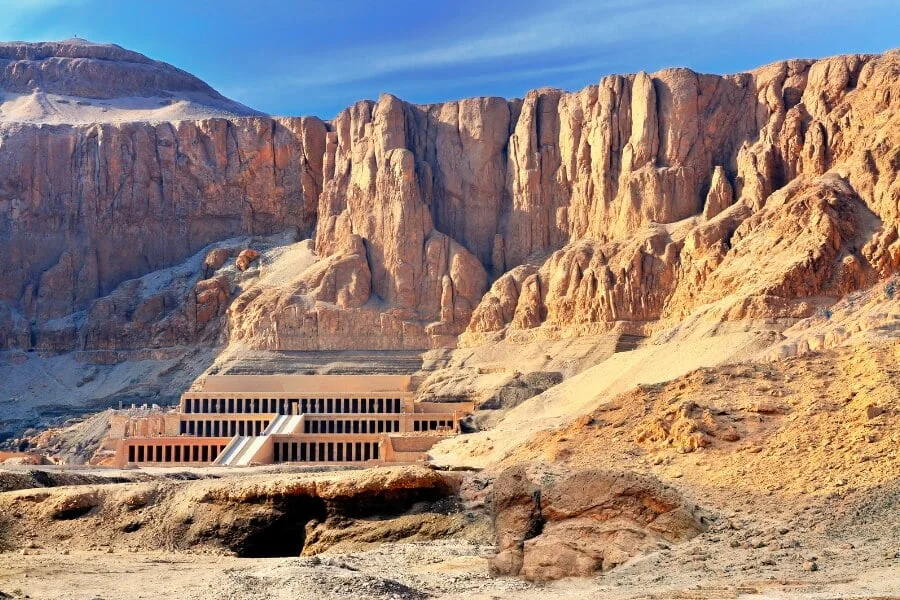
Walking and heat are part of the practical picture on both banks. The temple grounds and tomb areas involve time on foot, often outdoors. A guide can provide context about the figures, inscriptions, and purpose of each monument; without one, choose a small number of features to focus on so the visit doesn’t become a sequence of names without a clear story.
Route order can vary. Some itineraries visit the East Bank temples and then cross to the West Bank; others arrange the stops around transport, opening schedules, or onward travel. Keep your plans flexible enough to accommodate changes, and check current access details for individual sites before setting a fixed schedule.
Edfu and Kom Ombo on the route south
The Temple of Edfu is dedicated to Horus, the falcon god, and is among the best-preserved temples in Egypt. Its reliefs and inscriptions are easier to appreciate when you look beyond the main entrance and take time in the courtyards and interior spaces. The visit is often combined with onward travel between Luxor and Aswan, including Nile cruise itineraries, but confirm the actual stop order and time ashore with your operator.
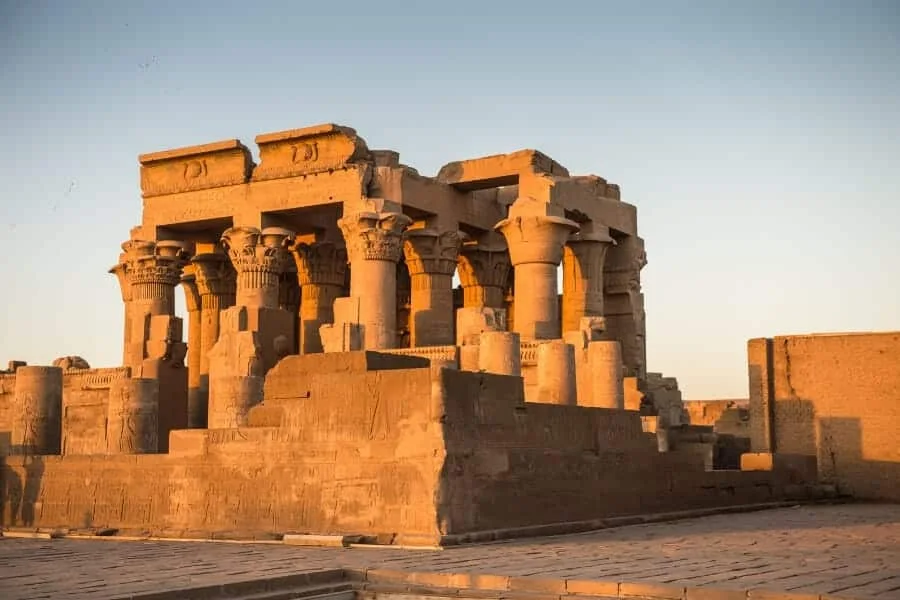
Kom Ombo is dedicated to Sobek and Horus and is known for its paired layout. That symmetry is a useful detail to look for as you move through the temple. A photograph can show the broad form, but the carved walls and the relationship between the two sides are what make the visit distinctive.
These stops are not interchangeable with Luxor’s larger temple complexes. Edfu and Kom Ombo are worthwhile additions if your route already passes through them, but building a visit around all the sites requires more than a quick day trip from Cairo. A Nile cruise can connect several riverbank sites, while a land itinerary may arrange separate transfers. Compare the included sites and travel legs rather than choosing based on the word “temples” alone.
Abu Simbel: a separate visit from Aswan
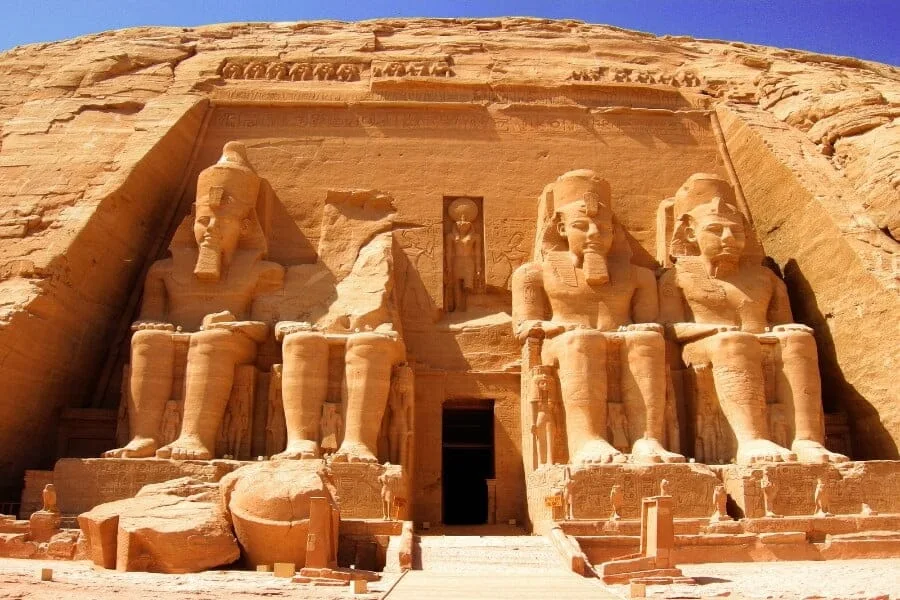
Abu Simbel stands apart from the Nile temples closer to Luxor and Aswan. The complex includes the larger temple associated with Ramses II and a second temple dedicated to Queen Nefertari. Its rock-cut façade and colossal statues make it an important stop for travelers interested in royal monuments, but reaching it takes additional planning from Aswan.
Some itineraries schedule Abu Simbel as an early departure, while others list it as an optional excursion. That distinction matters: an optional visit may cost extra and may not be part of the standard price. Confirm the departure arrangements, transport, guide, entrance fee, and return plan before you book. If you’re comparing itineraries, check whether Abu Simbel is included or simply offered as an add-on.
The temple complex was relocated when the area was threatened by the rising waters of Lake Nasser. This history gives the site an important modern conservation story as well as its ancient one. The solar alignment within the temple is also widely discussed, but don’t plan a visit around a specific event without checking current dates and access information.
How to choose a route that fits your time
If pyramids are your priority, begin with Giza and add Saqqara if you can give both sites adequate time. If temples and tombs are the main reason for your trip, plan a separate Luxor-and-south leg rather than trying to fold the whole route into a single Cairo day. The sites are spread across the country, so domestic travel or a multi-day itinerary is needed to connect them practically.
A shorter visit can focus on one region, but it means leaving other major monuments for another trip. A longer route can join Cairo’s pyramids with Luxor, Edfu, Kom Ombo, and Aswan, though it involves multiple transfers and busy sightseeing days. Tour schedules can also change with flight availability and site operations, so use the published sequence as a plan to confirm, not a guarantee that every day will run identically.
There’s no need to treat every monument as a checklist item. Choose sites based on what interests you: pyramid design at Giza and Saqqara, large temple architecture at Karnak, royal tombs on Luxor’s West Bank, or the rock-cut temples at Abu Simbel. That choice will make the route more manageable and give each visit a clearer purpose.
Frequently Asked Questions About Egypt’s Pyramids and Temples
Can you visit Giza and Saqqara in one day?
Yes, they can be combined, but they are separate sites and the day can feel full. Your time at each depends on transport, walking pace, and whether you enter any monuments or visit additional tombs.
Which temples should you see in Luxor?
Karnak and Luxor Temple are the main East Bank temple visits. The West Bank adds the Temple of Hatshepsut and the tombs of the Valley of the Kings, so plan for separate areas and outdoor walking.
Is Abu Simbel close to Aswan?
It’s a separate excursion from Aswan, not a temple stop within the city. Check the transport schedule, departure time, and whether the visit is included or optional on your chosen itinerary.
Do you have to enter a pyramid at Giza?
No. You can see the pyramids from the plateau without entering one. Interior access has separate arrangements and may involve an additional ticket; check current ticket information before your visit.
Are Edfu and Kom Ombo worth including?
They make good additions if your route already travels between Luxor and Aswan. Edfu is dedicated to Horus, while Kom Ombo is notable for its paired design and associations with Sobek and Horus.
How should you prepare for walking at the sites?
Wear comfortable shoes and plan for sun exposure and uneven outdoor surfaces. If mobility is a concern, ask about the route and access at each site before committing to a visit.
To explore Egypt’s pyramids and temples without rushing, group Giza and Saqqara near Cairo, then plan Luxor and the southern sites as a separate leg. Check current admission and access details for each monument before fixing your route.
About the author
All Istanbul Tours is a TÜRSAB-licensed travel agency (no. 6073) based in Istanbul, planning private and group tours across Türkiye.
Plan your trip
Egypt tours
 12 days
12-Day Turkey & Egypt Tour: Best of Both Continents
From €2,740 per person
 9 days
9-Day Highlights of Turkey and Egypt Tour
From €2,480 per person
 13 days
13-Day Tour of Egypt and Morocco
From €3,610 per person
Not sure which tour fits your dates? Ask us on WhatsApp
Keep reading
More Egypt guides
Egypt Discover Cairo: 5 Unforgettable Experiences in Egypt’s Vibrant Capital
The Great Pyramids, Egyptian Museum, Islamic Cairo, Khan El Khalili and Coptic Cairo — with timing, transfers, costs and tour options.
 Egypt
Best Ways to Get from Cairo to Alexandria: Trains, Buses & Taxis
Discover the best ways to travel from Cairo to Alexandria, including trains, buses, and taxis for a comfortable and budget-friendly journey.
Egypt The Ultimate Guide to Egypt: Exploring Ancient Wonders
Explore Egypt’s ancient wonders with our ultimate guide. From pyramids to Nile cruises, discover the best experiences and tours.