 Pin it
The top 10 things to see in Turkey split neatly into three groups: Istanbul’s Byzantine and Ottoman core (Hagia Sophia, the Blue Mosque, Topkapi Palace, the Grand Bazaar), the classical Aegean (Ephesus, Pamukkale and Hierapolis, Pergamon), and the landscapes and outliers (Cappadocia, Mount Nemrut, Sumela Monastery near Trabzon). Most first-time visitors see four or five of them in 8 to 10 days, using cheap domestic flights to skip the long overland stretches.
This guide is for travelers planning a first or second trip to Turkey who want to know what each place actually takes: how you get there, how many hours it eats, when the crowds show up, and which sites are worth a detour versus a later trip. If you have a week, you’ll want the first six. If you have two, the last four become realistic.
Quick Facts
| Best time to visit | April to early June and mid-September to late October; July and August are hot inland and busy on the coast |
| Time needed | 3 days for Istanbul alone; 5 days for Istanbul plus one region; 8–10 days for the classic four-stop loop |
| Getting there | International flights into Istanbul (IST or SAW) or Izmir; domestic flights of 1–1.5 hours link Istanbul with Kayseri/Nevşehir, Izmir, Antalya and Şanlıurfa |
| Entry / typical cost | Site admissions change regularly in Turkey — check the official ticket page for each museum before you go; multi-day guided packages start from around €418 per person |
| Good for | History-focused travelers, photographers, families with school-age kids, walkers comfortable on uneven stone |
What are the top 10 things to see in Turkey?
Here’s the short version, with the time each one realistically needs.
| Site | Where | Time to allow |
| Hagia Sophia | Sultanahmet, Istanbul | 45–75 minutes |
| Blue Mosque (Sultan Ahmed) | Sultanahmet, Istanbul | 30 minutes, outside prayer times |
| Topkapi Palace | Sultanahmet, Istanbul | 2–3 hours with the Harem |
| Grand Bazaar | Beyazıt, Istanbul | 1–2 hours |
| Cappadocia valleys and underground cities | Nevşehir province | 2 full days |
| Ephesus | Selçuk, near Kuşadası | Half day with the Temple of Artemis |
| Pamukkale and Hierapolis | Denizli province | 3–4 hours on site |
| Pergamon Acropolis and Asclepion | Bergama | Half day |
| Mount Nemrut | Adıyaman, southeast | Overnight trip |
| Sumela Monastery | Maçka, near Trabzon | Half day from Trabzon |
Istanbul: four sights, one walkable square
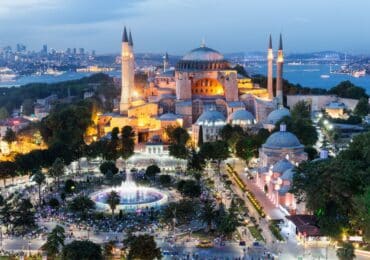
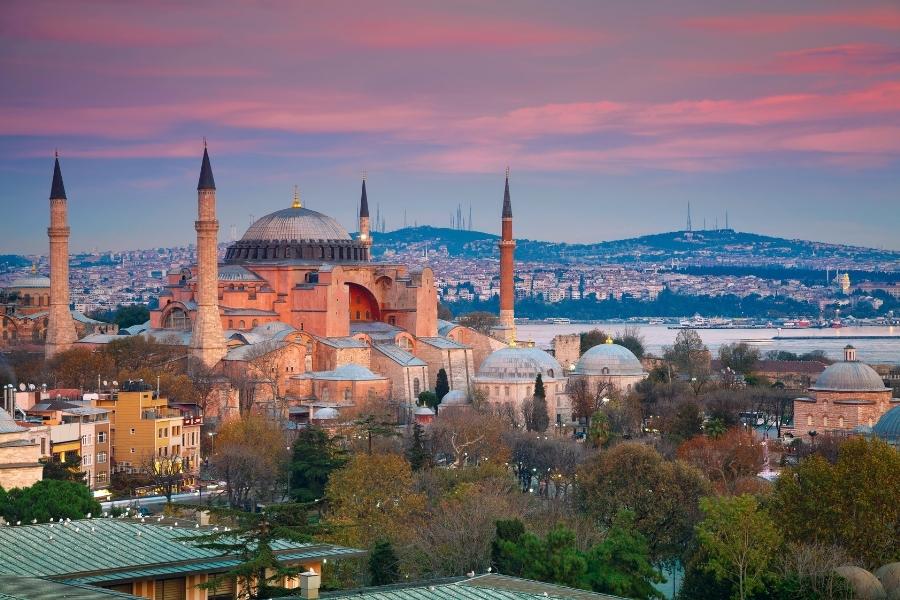
Hagia Sophia was built as a cathedral in the 6th century, converted to a mosque after 1453, served as a museum in the 20th century, and functions as a mosque again today. The dome and the surviving mosaics are the reason to go. Dress rules apply: shoulders and knees covered, and women should carry a scarf. Visitor routes and any ticketed sections for foreign visitors have changed in recent years, so confirm the current arrangement on the official site page before you queue.
Across the Hippodrome square sits the Blue Mosque, still an active place of worship, closed to tourists during the five daily prayers. Ten minutes uphill is Topkapi Palace, where four courtyards, the treasury and the Harem can swallow three hours. The Harem is usually a separate ticket. Finish at the Grand Bazaar, a covered market of thousands of shops that closes on Sundays. Prices are negotiable on carpets, ceramics and jewelry, less so on food.
Pro Tip
Do Sultanahmet in this order: Topkapi at opening, Hagia Sophia late morning, lunch, Blue Mosque between prayer times, Grand Bazaar last. Cruise-ship groups arrive at Hagia Sophia mid-morning and thin out after 3 pm, so late afternoon is the second-best window if you can’t start early.
Cappadocia: why it needs two full days, not one
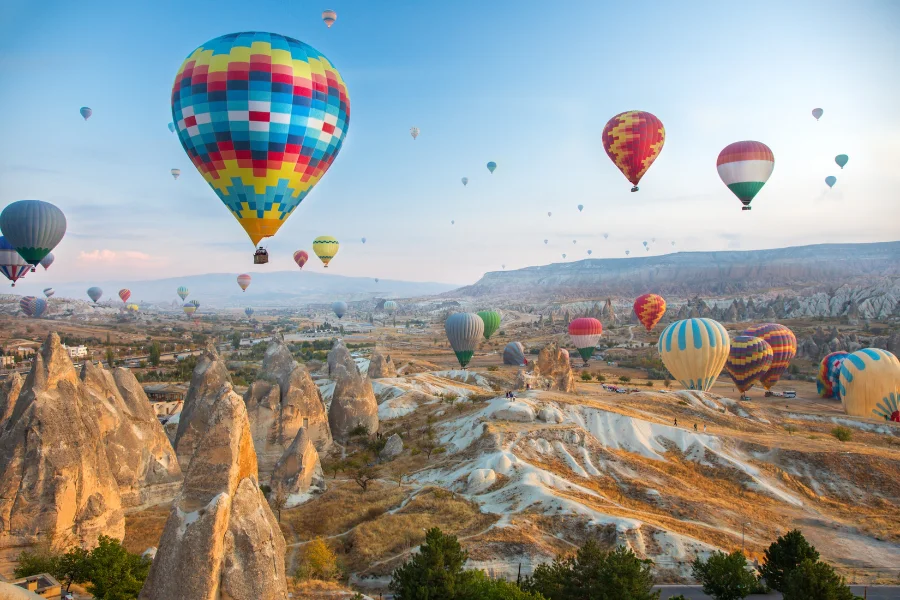
The fairy chimneys are only part of it. The region splits into a northern route (Devrent and Pasabag valleys, the pottery town of Avanos, Zelve Open Air Museum, viewpoints at Uchisar) and a southern route (Red Valley, a walking trail through Rose Valley, Cavusin village, Pigeon Valley and one underground city such as Kaymaklı or Özkonak). Standard group itineraries cover one route per day, which is why a single day here always feels clipped.
Balloon flights launch around dawn and are weather-dependent; operators cancel at short notice for wind. On our packages the flight is an optional add-on at extra cost rather than an inclusion, so book it early for your date. If you’d rather stay on the ground, the same light hits the valleys from the Göreme and Uchisar viewpoints.
Underground passages are low and narrow. If tight spaces bother you, tell your guide in advance and skip that section; the rest of the day continues as normal.
Ephesus, Pamukkale and Pergamon: the Aegean run
Ephesus is the best-preserved Roman city in the eastern Mediterranean: Curetes Street, the Library of Celsus, the Great Theatre, the Temple of Hadrian. Nearby are the Temple of Artemis site and the House of the Virgin Mary. Shade is scarce. Go early, carry water, and wear shoes with grip for polished marble.
Pamukkale is roughly three hours inland from Selçuk by road. The white travertine terraces are walked barefoot, and above them spreads Hierapolis with its theatre, Roman baths and necropolis. Swimming in the thermal Antique Pool is a separate paid extra where available — confirm it’s open for your date before counting on it, and don’t treat any spa claim as medical.

North of Izmir, Bergama holds the Pergamon Acropolis with its famously steep theatre, plus the Asclepion medical complex below. It’s the least visited of the three and rewards anyone who has already done Ephesus.
Mount Nemrut and Sumela: the two that need commitment
Mount Nemrut sits in the southeast, reached by flight to Adıyaman. The giant stone heads from the Commagene kingdom are usually visited at sunrise or sunset, and a two-day trip can pair them with Göbekli Tepe and Şanlıurfa’s museums. It’s cold and windy on the summit even in summer — bring a layer and proper shoes.
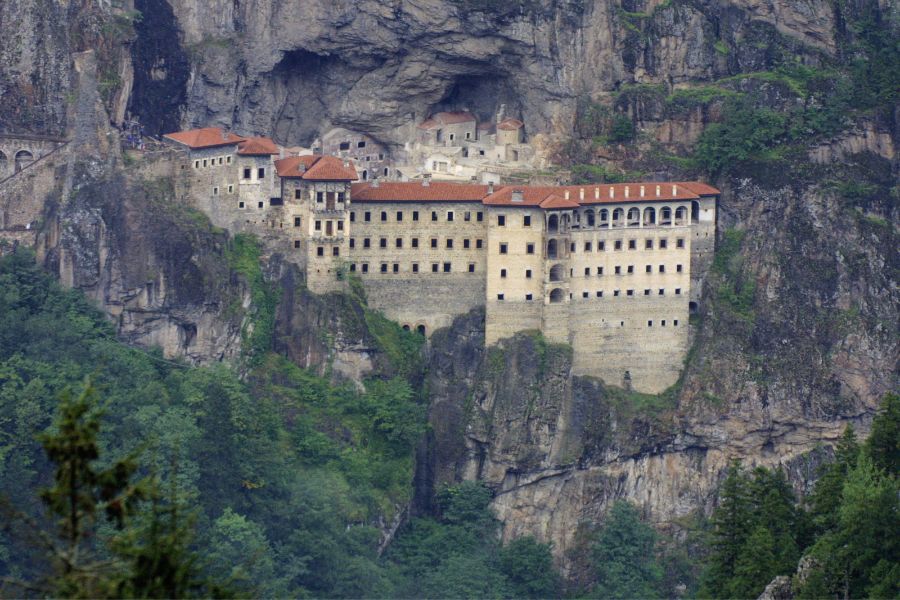
Sumela Monastery clings to a cliff in the Altındere valley near Trabzon, on the Black Sea coast. It has gone through long restoration phases with partial access, so check current opening and which sections are walkable before planning a trip around it.
What does it cost to see Turkey’s highlights?
Turkish site admissions are priced in lira and revised regularly, so we don’t publish figures that go stale — check each official ticket page close to your travel date. What we can give you is our own starting prices, which vary by season and party size.
| Option | Length | From (per person) |
| Cappadocia from Istanbul with flights and cave hotel | 2 days | €418 |
| Ephesus, Pamukkale and Cappadocia from Izmir | 5 days | €815 |
| Mount Nemrut and Göbekli Tepe from Istanbul | 2 days | €1,418 |
| Istanbul, Pamukkale, Ephesus and Cappadocia | 8 days | €1,460 |
| Turkey Highlights including Konya and Antalya | 10 days | €1,630 |
Budget separately for dinners, drinks with meals, the balloon ride, and airport drop-off transfers in Istanbul, which sit outside most package inclusions. For a line-by-line example of one region, see our Pamukkale cost breakdown.
Best time to visit and when to go each day
- April–early June: wildflowers in Cappadocia, comfortable ruins weather, moderate crowds. Best all-round window.
- July–August: 35°C-plus at Ephesus and Pamukkale with no shade. Coastal towns are full. Start sightseeing at opening and rest midday.
- Mid-September–October: warm sea, cooler ruins, clear balloon mornings. The second-best window and often better value.
- November–March: quiet and cheap, with snow possible in Cappadocia and a higher balloon cancellation rate. Istanbul is grey but fully functional.
Within a day: ancient sites are best in the first two hours after opening, Istanbul mosques are calmest mid-morning and late afternoon, and Pamukkale’s terraces glow best in the last hour of daylight.
Which trip style fits you
Short on time and based in Istanbul? The 2-Day Cappadocia Tour from Istanbul uses two domestic flights and a cave hotel night to cover both valley routes and an underground city, with a 4:00 am pickup from central European-side hotels. It suits travelers who accept an early start to avoid a 10-hour bus.
Arriving by cruise or flying into Izmir? The 5-Day Turkey Tour from Izmir runs Kuşadası to Pamukkale to Ephesus, then flies on to Cappadocia, with entrance fees for listed sites and daily lunches included. Want the full sweep including Istanbul’s Byzantine and Ottoman day plus a Bosphorus cruise? That’s the 8 Days Seven Wonders of Turkey Tour. Faith-focused travelers tracing Smyrna, Pergamon, Thyatira, Sardis, Philadelphia and Laodicea should look at the 4-Day Seven Churches of Revelation Tour, which starts and ends in Izmir. Group departures include shopping stops; private versions can be arranged at additional cost.
Common mistakes and practical notes
- Trying to drive Istanbul to Cappadocia to Ephesus in a week. Fly the long legs instead; domestic hops run about 1 to 1.5 hours.
- Packing one pair of smooth-soled shoes. Ruins, valley trails and travertine all need grip.
- Assuming mosques are open all day. Prayer times close them to visitors for roughly 30–45 minutes each.
- Booking a balloon for your last morning with no buffer day.
- Skipping the 15 kg checked and 8 kg carry-on limits on domestic flights used in packages.
- Not checking visa or e-Visa rules for your passport before booking.
Families do well in Cappadocia, where kids like the cave hotels and rock shapes, and in the Grand Bazaar. Mobility-wise, Ephesus has long stretches of uneven marble, Pergamon involves steep ground, and underground cities have low ceilings. Tell us about limitations before booking so we can plan around them. If you’re deciding where to base yourself in the city, our guide to Istanbul neighborhoods is a good next read.

🎫 Recommended Turkey Tours
Compare the itinerary, inclusions and optional extras. Starting prices vary by date and party size.
- 5-Day Turkey Tour from Izmir: Ephesus, Pamukkale & Cappadocia with Flights →5 Days / 4 Nights · from €815.00
- 8 Days Seven Wonders of Turkey Tour →8 Days / 7 Nights · from €1,460.00
- 5-Day Turkey Tour from Izmir: Ephesus, Pamukkale & Cappadocia with Flights →5 Days · from €875.00
- 2-Day Cappadocia Tour from Istanbul (Flights + Cave Hotel) →2 Days / 1 Night · from €418.00
Frequently Asked Questions About Turkey
How many days do you need to see Turkey’s top sights?
Three days covers Istanbul’s main four. Five days adds either Cappadocia or the Ephesus–Pamukkale pair. Eight to ten days gets you all four regions comfortably using domestic flights, which is why most of our multi-region packages sit in that range.
What does a Turkey trip cost?
Guided multi-day packages with domestic flights, hotels, guides and listed entrance fees start from around €418 for a two-day Cappadocia trip and from €1,460 for an eight-day, four-region itinerary. Site admissions booked independently change often, so check the official ticket page for each museum before you travel.
Can I visit Cappadocia from Istanbul in one trip?
Yes. Flights from Istanbul to Kayseri or Nevşehir take about 90 minutes, and a two-day package gets you the northern and southern valley routes plus an underground city with one cave hotel night. Pickup is around 4:00 am from eligible central European-side hotels.
What’s the best month to visit?
May and October balance weather, daylight and crowds best. April is lovely but can be wet, and September is still warm enough for the coast. Avoid mid-July to mid-August if heat at unshaded ruins bothers you.
Is Turkey good for families with children?
Very. Cappadocia’s cave hotels, valley walks and pottery workshops keep kids engaged, and Istanbul’s Bosphorus cruise breaks up museum time. Watch stair-heavy sites, narrow underground passages and summer heat, and tell us ages when booking so pacing works.
Do I need to book tickets to Hagia Sophia and Topkapi in advance?
Advance booking helps at peak times, and visitor arrangements at Hagia Sophia have changed in recent years. Confirm current ticketing and access rules on the official site pages, or join a guided Istanbul day where listed entrance fees are handled for you.
Can I swim in the Pamukkale thermal pool?
Swimming in the Antique Pool is an optional paid extra and is not part of the included tour price. Availability varies, so confirm the pool is open for your date. Walking on the travertine terraces themselves is done barefoot.
Pick your regions first, then let flight times decide the order. Tell us your dates and we’ll shape the route in the Turkey trip planner, or browse departures in our Turkey tours collection.