
 Pin it
What are the must-see sights in Turkey? Start with Istanbul’s Hagia Sophia and Topkapı Palace, then continue to Ephesus, Pamukkale and Hierapolis, Cappadocia, Pergamon, Mount Nemrut, Sumela Monastery, Antalya, and Ölüdeniz. These places are spread across the country, so the best choice depends on whether you want Ottoman and Byzantine landmarks, ancient cities, unusual geology, hiking, or coastal time.
This guide is for travelers planning a first or second trip to Turkey who want to choose carefully rather than race through a long list. Several of these sights need their own overnight stop, and some involve steep paths, uneven stone, early departures, or long road journeys.
Quick Facts
| Best first-trip priorities | Istanbul, Ephesus, Pamukkale, and Cappadocia give you the broadest introduction to Turkey’s major historic and natural sites. |
| How to plan the route | Group Istanbul sights together, then link Ephesus and Pamukkale in western Turkey. Cappadocia is best treated as a separate stop. |
| Walking conditions | Expect cobblestones in Istanbul, exposed ancient streets at Ephesus and Pergamon, white mineral terraces at Pamukkale, and uneven trails in Cappadocia. |
| Best for | History-focused travelers, photographers, couples, families with older children, and anyone willing to balance city visits with longer transfers. |
How do you choose the must-see sights in Turkey?
Turkey is too large to treat as a single city-break destination. A practical first itinerary usually picks one Istanbul section, one western Anatolia section, and one Cappadocia section. Mount Nemrut, Sumela Monastery, Antalya, and Ölüdeniz make more sense when you have additional time or a particular interest in the southeast, Black Sea region, or Mediterranean coast.
Choose Istanbul if you want major imperial landmarks in a walkable historic district. Choose Ephesus, Pergamon, and Pamukkale if Roman and Greek sites are your priority. Choose Cappadocia for rock-cut churches, valleys, and underground settlements. Choose Antalya and Ölüdeniz if you want archaeology alongside swimming, boat time, or walking routes.
| Sight | Why it belongs on the list | What to plan for |
|---|---|---|
| Hagia Sophia and Topkapı Palace | Two major Istanbul landmarks from Byzantine and Ottoman periods | Dress respectfully for religious sites and allow time for security and queues |
| Ephesus and Pergamon | Large archaeological areas with theaters, streets, temples, and public buildings | Sun exposure and uneven stone underfoot |
| Pamukkale and Hierapolis | Travertine terraces beside an ancient spa city | Walking between natural terraces and ruins |
| Cappadocia | Fairy chimneys, rock-cut spaces, valleys, and underground cities | Early starts, rough paths, and weather-dependent balloon flights |
| Mount Nemrut and Sumela Monastery | Two remote sites with very different mountain settings | Longer travel days and route-specific access planning |
Pro Tip
Don’t try to see every place on this list in one short holiday. Istanbul, Ephesus, Pamukkale, and Cappadocia already require changes of hotel or domestic transport. Pick the places that match your interests, then leave room for transfer days.
What should you see in Istanbul first?
For many travelers, the essential Istanbul pairing is Hagia Sophia and Topkapı Palace. They are close enough to combine in the same historic district, but they answer different questions about the city.
Hagia Sophia began as a cathedral and later served as a mosque. Its vast central space, dome, inscriptions, and surviving Christian imagery help explain why Istanbul’s religious history cannot be reduced to one period. Access arrangements and visitor rules can change, so check current admission and worship-time guidance before you go.
Topkapı Palace was the residence of Ottoman sultans for nearly four centuries. Its courtyards, state rooms, collections, and Harem section explain how the Ottoman court operated. The Harem should not be treated as an afterthought; it is a separate part of the palace complex and often needs additional planning.
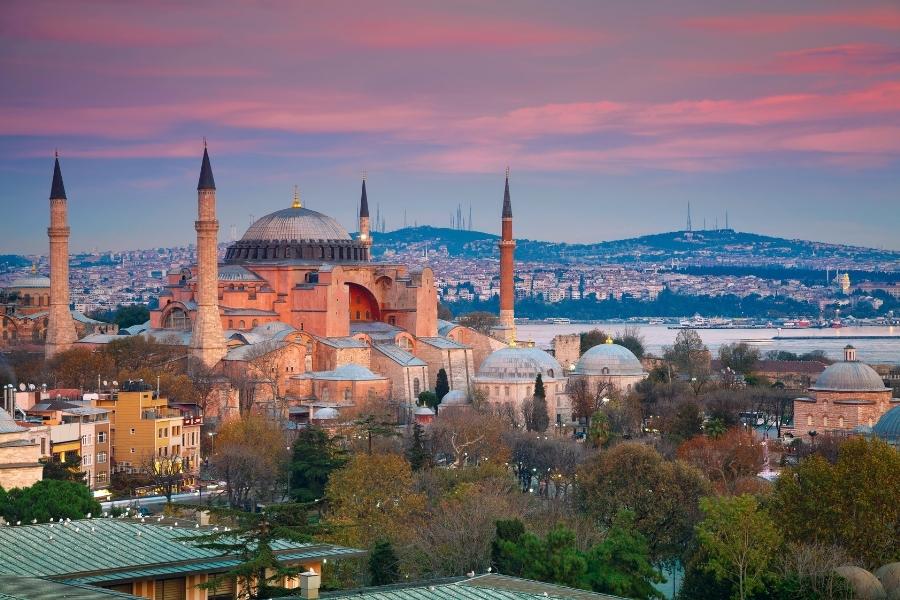
Visit these places early in the day if you dislike waiting in dense crowds. You will also need clothing that covers shoulders and knees for mosque visits; carrying a light scarf is useful. Avoid assuming that every interior will be open when you arrive, especially on religious holidays or during services.
Why are Ephesus and Pergamon two of Turkey’s leading ancient sites?
Ephesus, near Selçuk, is the easier choice if you want a clear introduction to an ancient Mediterranean city. You can follow marble-paved streets past the Library of Celsus, the Great Theater, and the Temple of Hadrian. The nearby Temple of Artemis site adds context, although you should not expect a complete standing temple.
Pergamon, in modern Bergama, has a different layout and feel. Its Acropolis sits above the town, with remains connected to the Temple of Trajan, a theater, and the ancient city’s public life. The site is strongly associated with the Great Altar of Pergamon. Pair it with the Asclepieion of Pergamon, an ancient medical center associated with the physician Galen.
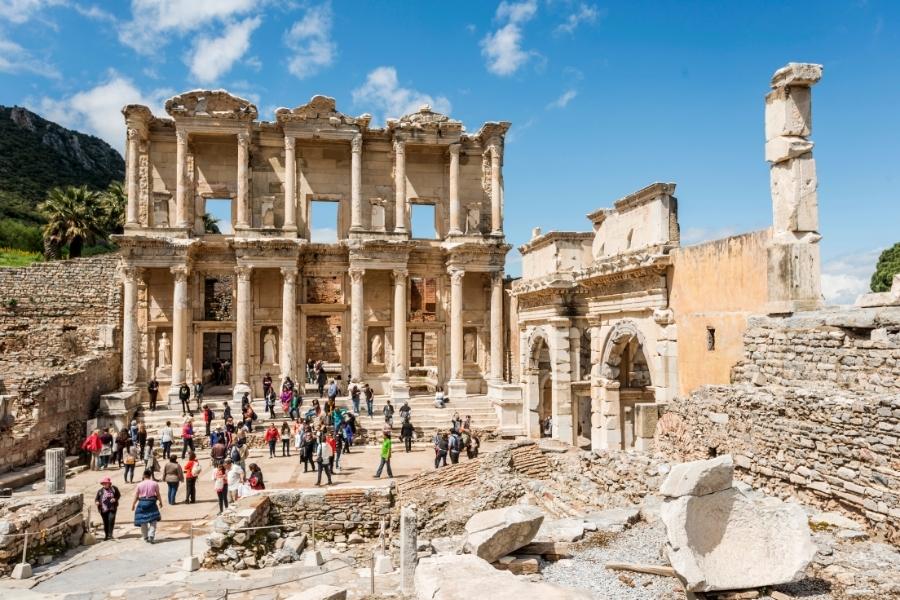
Ephesus generally suits first-time archaeology visitors because its route is easy to understand visually. Pergamon suits travelers who want another major ancient city and are comfortable with a hilltop setting. Both are exposed in warm weather, so sturdy shoes, water, a hat, and sun protection matter more than fashionable sandals.
What makes Pamukkale and Hierapolis worth visiting together?
Pamukkale’s white travertine terraces are formed by mineral-rich thermal water. Above and beside them is Hierapolis, an ancient settlement with a theater, necropolis, Roman Baths, and other remains. Seeing both places together is the point: one is a natural formation, while the other explains why this thermal landscape drew people in antiquity.
The terraces can look very different according to light, water flow, and visitor conditions. Don’t plan your day around the assumption that every basin will be full or that swimming will be available. The Cleopatra Antique Pools are sometimes offered as an optional activity on organized routes, but entrance and operating conditions should be confirmed for your travel date.

Pamukkale is often paired with Ephesus because both are in western Turkey, but it is not a quick add-on. Give the site enough time to walk the terraces and explore Hierapolis rather than treating it as a roadside photo stop.
How much time does Cappadocia need?
Cappadocia needs at least an overnight stay if you want to see more than one valley. The region’s best-known features include fairy chimneys, cave dwellings, rock-cut churches, open-air museums, and underground cities. Göreme, Zelve, Paşabağ, Avanos, Uçhisar, Red Valley, Rose Valley, and Pigeon Valley each show a different side of the landscape.
A hot-air balloon flight is popular, but it is optional rather than required. Flights depend on weather and safety conditions, and a cancellation can happen at short notice. If a balloon ride is important to you, keep more than one morning free if your schedule allows. You can review options for a hot air balloon ride separately.

Underground cities such as Kaymaklı or Özkonak are not ideal for everyone. Passages can be narrow and low, and there may be steps. Tell your guide in advance if enclosed spaces, limited mobility, or uneven ground are a concern. A valley walk can also mean dirt paths with little shade, so this is one place where proper walking shoes are worth packing.
Pro Tip
Build Cappadocia around the ground-level sights first. A balloon ride is an extra experience, not a substitute for seeing the valleys, open-air museums, and underground city that make the region distinctive.
Which lesser-visited sights are worth adding to a Turkey trip?
Mount Nemrut, in Adıyaman Province, is best known for the large stone heads and statues commissioned by King Antiochus I of Commagene in the first century BC. The setting is part of the appeal, and many itineraries time the visit for early or late light. It is a serious detour from Turkey’s standard Istanbul–Ephesus–Cappadocia route, so add it because the Commagene site genuinely interests you.
Sumela Monastery, in the Altındere Valley near Trabzon, is a cliffside monastery complex associated with Orthodox Christian history. It is a strong choice for travelers heading to the Black Sea region, but it does not fit naturally into a western Turkey itinerary. Confirm current access conditions before building a trip around it.
Antalya works well if you want a city base near archaeological sites and the Mediterranean coast. In Kaleiçi, look for Ottoman-era houses and Hadrian’s Gate. From the area, Perge, Aspendos Theater, and Termessos are major ancient-site options. Antalya is a better choice than Istanbul if your priority is mixing ruins with beach time.
Ölüdeniz, near Fethiye, is known for its lagoon, swimming, and paragliding. It also suits walkers using part of the Lycian Way and travelers interested in nearby Kayaköy or the rock-cut tombs of Fethiye. Go here for the coast, not because it is convenient to Ephesus or Cappadocia.
Which Turkey tour covers several must-see sights?
If you want Istanbul, Ephesus, Pamukkale, and Cappadocia in one scheduled trip, the 8 Days Seven Wonders of Turkey Tour is an eight-day, seven-night group route starting from €1,460 per person. It is a sensible fit if you prefer a set sequence across the four major first-trip areas rather than arranging each transfer yourself. Starting prices vary by date and party size, so check the linked itinerary for current departures and what is included.
Travelers focused on Cappadocia rather than a wider route can consider the 2-Day Cappadocia Tour from Istanbul, starting from €418 per person. The itinerary includes domestic flights, one cave-hotel night, guided sightseeing, and scheduled visits including one underground city. It starts very early, involves uneven ground, and the balloon flight is optional at extra cost.
For Mount Nemrut, the 2-Day Mount Nemrut and Gobekli Tepe Tour from Istanbul starts from €1,418 per person. It suits travelers who want a short, organized route to Nemrut with domestic flights and an overnight in Şanlıurfa. Check the full itinerary before booking, especially if you are planning an onward international flight after the return to Istanbul.
🎫 Recommended Turkey Tours
Compare the itinerary, inclusions and optional extras. Starting prices vary by date and party size.
- 8 Days Seven Wonders of Turkey Tour →8 Days / 7 Nights · from €1,460.00
- 2-Day Cappadocia Tour from Istanbul (Flights + Cave Hotel) →2 Days / 1 Night · from €418.00
- 2-Day Mount Nemrut and Gobekli Tepe Tour from Istanbul →2 Days · from €1,418.00
Frequently Asked Questions About Turkey
What are the top three must-see sights in Turkey?
For a first trip, Hagia Sophia and Topkapı Palace in Istanbul, Ephesus near Selçuk, and Cappadocia are strong starting choices. Add Pamukkale and Hierapolis if you have time for western Turkey beyond Ephesus.
Can you visit Ephesus and Pamukkale on the same trip?
Yes. They are commonly linked on western Turkey routes, often with Kuşadası or Selçuk used as a base for Ephesus. Allow enough time for travel because Pamukkale and Hierapolis are not a brief stop.
Is Cappadocia worth visiting without a balloon ride?
Yes. The valleys, rock-cut churches, open-air museums, cave dwellings, and underground cities are the main reasons to visit. Balloon flights are optional and may be canceled when weather conditions are unsuitable.
Which Turkey sights are best for ancient history?
Ephesus, Pergamon, Hierapolis, and the sites around Antalya are the strongest choices for Greek and Roman history. Mount Nemrut is especially rewarding if you are interested in the Kingdom of Commagene.
Are Turkey’s major sights suitable for travelers with limited mobility?
It depends on the site. Ancient cities, travertine terraces, Cappadocia valleys, and underground cities can involve steps, slopes, uneven stone, narrow passages, and limited shade. Ask about the exact route before booking a tour and discuss alternatives with your guide.
How should you dress for Hagia Sophia?
Dress modestly for a mosque visit by covering shoulders and knees. Women should carry a headscarf in case it is needed. Check current visitor guidance before you go, as access rules can change.
The must-see sights in Turkey are easier to enjoy when you choose a route with a clear focus: Istanbul for imperial history, western Turkey for ancient cities and Pamukkale, Cappadocia for its volcanic landscape, and the coast or eastern regions for a longer trip. For help matching these places to your available days, browse our Turkey tours.

